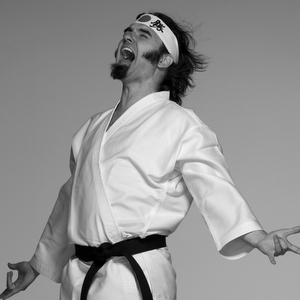
 Colin Marshall sits down in Pasadena with Pete Mitchell, visual artist, game designer, zombie enthusiast, and lead singer and co-founder of the band No More Kings, whose latest album III came out this year. They discuss now as an opportune time to be into zombies; how his mom got him into not just zombie movies but Dungeons & Dragons; the “love letter to the 1980s” he wrote with the first No More Kings album; his early forays into game design, typing in code line-by-line and saving it on a tape drive, later struggling against the limitations of software like Game-Maker; Game-Makerish limitations as the true drivers of art; the experience of growing up in Rhode Island, and who thrives there; being a big fish in a small pond, being a small fish in a big pond, and the appeal regardless of the ultimately more interesting big ponds; the eternal struggle to finish projects, and what we can learn from the examples of such “obsessive” creators as Francis Ford Coppola, Shane Carruth, Jerry Seinfeld, and Jiro Ono; the things you make as diamonds compressed from the coal of your time; the wide reach of No More Kings’ “Sweep the Leg” music video, which reunited the cast of The Karate Kid and continues to win the band most of its fans; his anxiety about becoming an “80s pop culture” act; specialized interests and the even more specialized places they overlap as the new stages for subculture; his time in Japan, motivated by the thought that he “can’t be the guy who only knows one language”; how, to learn languages or make things, you have to give yourself no choice in the matter; the “electric sense of potential” and “ambient ambition” in a city like Los Angeles, not often felt even in “nicer” places; this city as the most internet-like actual place yet established; and the reasons not to want to go back to Old Economy Steve‘s economy, or to the days of a powerful cultural mainstream — even if, as in the 80s, that mainstream produced a lot of neat stuff.
Download the interview here as an MP3 or on iTunes.
 Colin Marshall sits down in Highland Park with Javier Cabral, the “food, booze, and punk rock” writer formerly known as The Teenage Glutster, and currently known as The Glutster. They discuss his mission to change the official punk rock food of Los Angeles from the Oki-dog to the taco; the reasons for the taco’s current surge of general popularity; the reputation Mexican food has, even among the otherwise culinarily aware, as “just Mexican food”; the humbling his Mexican-food expertise received at the hands of his girlfriend; the singular form of “tamales”; what the bean-and-cheese burrito stands for in Los Angeles Mexican cuisine; his Korean food outing with Matthew Kang; how punk rock got him exploring Los Angeles first, and how looking for punk show listings exposed him to the food writing of Jonathan Gold; what kind of music develops in the backyards of east Los Angeles; the pots of food his mom made for the attendees at his free 21st birthday punk show; how much he enjoyed comped meals (and drinks) on La Cienega as a young, broke food writer, and why he swore off them; why the eastside and westside continually accuse one another of having no food; the cultural overlap he’s found between food and punk rock in the most logical city for those two to come together; his long-form Saveur piece “Mexico Feeds Me“, which took him back to his family’s home state of Zacatecas (and which finally got his parents understanding his job); his love of street food, and his refusal to write about it for fear of getting its purveyors shut down; how both street food and punk rock always come back, no matter who tries to stamp them out; the burden of listicle-writing; and the etymology of the word “Glutster”.
Download the interview here as an MP3 or on iTunes.
Wednesday, August 20, 2014
Los Angeles, the City in Cinema, my new series of video essays, examines the variety of Los Angeleses revealed in the films set there, both those new and old, mainstream and obscure, respectable and schlocky, appealing and unappealing — just like the city itself.
Its debut pays a visit to the punks, drunks, thugs, loners, feds, and aliens — all driving cars, and rarely the flashy kind — that populate the 24-hour industrial Los Angeles of Alex Cox’s own 1984 debut,
Repo Man.

I talk in Seoul, Korea with Krys Lee, author of the acclaimed short story collection Drifting House. We discuss her obsessions with violence and religion, “Koreanness” as an accidental unifier of her stories, her life between Korea, America, and England, and her next novel, which deals with the lives of North Korean refugees.
You can listen to the conversation on the LARB’s site, or download it on iTunes.

I talk with Lisa See, author of novels at the intersection of Chinese history, American history, and women’s history. Her novels include Peony in Love, Snow Flower and Secret Fan, Shanghai Girls, Dreams of Joy. Her latest is China Dolls, a story of the Chinese nightclubs of wartime America that takes place in the Chinatowns of both San Francisco and Los Angeles. You can listen to the conversation on the LARB’s site, or download it on iTunes.
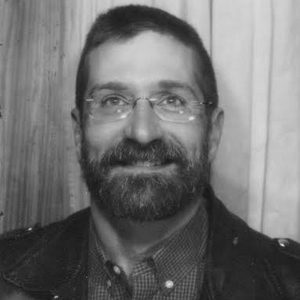 Colin Marshall sits down in Los Feliz with artist, filmmaker, and writer William E. Jones. They discuss what one learns by viewing a city through the prism of its gay porn; how Los Angeles gives away the least of itself in that form as in others; home he introduced Fred Halsted’s “gay porn masterpiece” L.A. Plays Itself to Los Angeles Plays Itself maker Thom Andersen, and how the movie helped fund Chantal Akerman’s first projects; Selma Avenue, once the “hustler central” of Los Angeles; the city as he came to know it in the movies before he came to know it in real life; the Los Angeles tendency to identify with specific neighborhoods; how truly coming to know the city somehow requires both driving and not driving; what made he and Thom Andersen decide to make a “useful” book of their conversations; his examination of the nonsexual elements of the gay porn, and the other work that got him a reputation for a time as “the porn guy”; his resolution not to create around any obvious unifying concept; why Morrissey’s robust Latino fandom confounds people, and how it ties into Los Angeles’ long strain of musical Anglophilia; the similarities between the industrial decay of northern England and the forlorn provinciality of Southern California suburbs; how city centers, to an extent excepting Los Angeles’, have fallen to “fabulous wealth and enormous corporate power”; the way places never turn out quite as intended here, and what it means for civic pride, the force that begins a city’s slide into decadence; what kind of a town Los Angeles has become for experimental film; the city’s ability, now at stake, to nurture “something like a bohemia,” which Glasgow has done where London hasn’t; and what traces of Fred Halsted’s Los Angeles survive today.
Download the interview here as an MP3 or on iTunes.
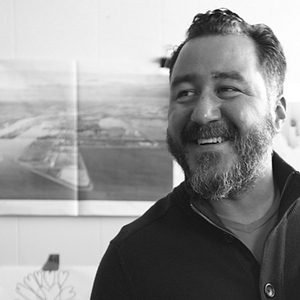 Colin Marshall sits down in Koreatown with Noé Montes, photographer and publisher of El Aleph Books. They discuss what MacArthur Park, that place “beyond any laws or organization,” means to him; what difference the much-discussed light of Los Angeles makes for a photographer; the city’s sunsets, beaches, palm trees, and the ultimate fact of its being “kind of ugly”; the New Yorker who told him he “just doesn’t get” Los Angeles; the pleasures of living in a city that doesn’t need defending; the impossible task he once considered upon photographing each and every block; the “synoptic vision” he gained upon seeing Los Angeles as a Borges-style “aleph”; when the LAPD took him up in a helicopter, and what understanding of the city he gained thereby; how Los Angeles works best at two levels, the very macro and the very micro; the “layering of information” in the city’s built environment; his work with Metro, an organization now in the process of “actually connecting the city”; how he first gained an awareness of Los Angeles. growing up in the agricultural parts of California, as a place from which others fled; the importance of the desert, not just as a photographic subject but as a boundary to the city; the contrast in pace and sense of possibility he found upon coming here from New York; the feeling that the definition of Los Angeles is happening right now; his realization, after becoming a full-time photographer, that “this is all I could have done”; the “extraordinary access to be nosy” provided by photography (and indeed interviewing) that allows him to discover the unknown “great work” going on in the city; the vast amounts of money he’s seen poured into photographic ephemeralities; the African family he once saw holding hands before a giant pyramid of cereal; the “failed modernism” and other supremely photographable qualities of Mexico City; and what we can learn about Los Angeles from the photography it produces.
Download the interview here as an MP3 or on iTunes.

A white guy living in L.A. like it’s Seoul. That’s Colin Marshall. Living in the Koreatown district of Los Angeles, a city where people drive to the park to take a walk, his main form of transportation is his two feet.
Marshall recently traveled across South Korea, from Seoul to Changwon to Busan, for six weeks and wrote a five-part series for The Guardian about his observations of the country. It was the Seattle native’s first time visiting Korea, though his depth of knowledge on its culture and current events makes him seem like a frequent visitor there, if not a native.
Marshall, 29, speaks conversational Korean. He has been studying the language ever since he got hooked on Korean films during his youth.
I met with Marshall, who had just returned from Korea, at a Koreatown cafe, and he shared his thoughts on Korea’s forward-thinking disposition, disregard for red lights and why the East Asian nation is “so close” to being the perfect country.
How was Korea?
That was actually my first time, but it wasn’t really surprising to me. I’ve been living in Koreatown here and studying Korean and all that, so it wasn’t like a shock. I was already familiar with the surroundings. People say that Koreatown here is like Seoul of 20 years ago. I saw a lot of similarities. In a way, some Koreans here are actually more conservative than the ones in Korea. They come to America and keep the level of conservatism they had back home, whereas the country itself has gotten more progressive.
You were born and raised in Seattle. What made you want to move to Koreatown in L.A.?
Language practice and Korean food. It’s also the densest neighborhood in L.A. That affords you a lot of advantages. I can walk everywhere. It’s usually walking, train or biking.
You’ve traveled in and written about London, Copenhagen, Osaka and Mexico City. What’s special about Korea?
Seoul is always forward-thinking and changing. That’s really nice. To an extent, it’s almost bothersome because the past isn’t always bad [laughs]. But to better understand that, you have to realize that to Korea, the past is poverty. It’s unpleasant. So it’s always looking forward. Europe is all about protecting what’s already there. And what’s there is often pretty nice, too. I mean, in London, a couple of those subway lines are UNESCO World Heritage Sites.
Read the whole thing at KoreAm.