Skip to content

KCET Movies: Alfred Hitchcock’s (Non-Existent) Los Angeles

The defining quality of Alfred Hitchcock’s Los Angeles is that he didn’t have one. Or rather, he had a Los Angeles in his life, but not in his work. By the time he passed away in his Bel-Air home in 1980, the Leytonstone-born director’s filmography had grown to include more than 50 features across a career spanning six decades. He made roughly half of them in Britain and half in America, the latter period accounting for the bulk of his reputation as the 20th century’s undisputed master of cinematic suspense. And though he embraced well-known American locations with the bravado of a thrilled new arrival – even those who’ve never seen “North by Northwest” know it features Cary Grant and Eva Marie Saint hanging off Mount Rushmore – he set not one of his films in the American city where he lived.

“Movies aren’t about places, they’re about stories,” says Thom Andersen’s narrator in an early passage of his documentary “Los Angeles Plays Itself.” “If we notice the location, we are not really watching the movie. It’s what’s up front that counts. Movies bury their traces, choosing for us what to watch, then moving on to something else. They do the work of our voluntary attention, and so we must suppress that faculty as we watch,” allowing the filmmakers to do their emotional work on us. But “what if suspense is just another alienation effect? Isn’t that what Hitchcock taught? For him, suspense was a means of enlivening his touristy travelogues,” though Andersen names him as the greatest of the “low tourist” directors, a group who “generally disdain Los Angeles. They prefer San Francisco and the coastline of northern California. More picturesque.”

And indeed, with 1958’s “Vertigo,” Hitchcock made what the latest Sight & Sound critics’ poll named the greatest motion picture of all time, and therefore the greatest San Francisco movie of all time as well. Sixteen years earlier, Hitchcock did set the first ten minutes of the less well-regarded “Saboteur,” the story of a framed airplane-builder on the run, in Glendale and elsewhere in greater Los Angeles, but as Andersen writes, “it could be anywhere in America where there is an aircraft factory. The scenes were shot in the studio, and there is nothing distinctive to the region in the sets.” At that time, the director had lived in America for only about three years, but according to Hitchcock scholar Dan Auiler, he felt the film failed to re-create “the real America he had been discovering on weekends.”

Read the whole thing at KCET.

From my interview archive: Charles Murray (2008), Jay Caspian Kang (2012), and “the Great Liberal Freakout of 2017”

This year, I’m listening again to selections from the archive of long-form interviews I conducted on the public radio program The Marketplace of Ideas and podcast Notebook on Cities and Culture between 2007 and 2015.

This week I enjoyed an essay called “The Great Liberal Freakout of 2017,” and while reading it I realized I’d interviewed both its author, journalist and novelist Jay Caspian Kang, and one of its subjects, political scientist Charles Murray. (If ever I need an example of my range as an interlocutor, I guess I know what to point to.) In the piece, Kang deals with the fallout of a recent incident in which Murray’s very presence at Middlebury College, where he’d been invited by the school’s conservative American Enterprise Institute Club, caused such a fuss that the scheduled on-stage debate, for the safety of all involved, had to be relocated to a closed room and live-streamed instead.

The clash drew incensed responses, incensed responses to the incensed responses, and incensed responses to the incensed responses to the incensed responses (with the next layer surely coming soon). Me, I just feel relieved that when I conducted my own interview with Murray on a college campus, I did it at a radio station over the phone rather than in front of an implacable chanting mob. He shows a sense of humor about the reactions he gets (Twitter bio: “Husband, father, social scientist, writer, libertarian. Or maybe right-wing ideologue, pseudoscientist, evil. Opinions differ”), but to this day I do wonder whether it wrong-footed him to take a call from someone at a university-based public radio station in California who didn’t proceed to attack him.

We talked about his then-new book Real Education, a critique of what Murray sees as the dominant form of less-than-real — or anyway less-than-realistic — education in America. I don’t remember particularly disagreeing with anything he wrote in it, and I often complain myself about the American (and increasingly international) practice of ramming as many students as possible through college and hoping for the best. We only talked a little bit about The Bell Curve, the book he co-authored in 1994 that his critics frame as a kind of jerry-rigged pseudoscientific justification for treating some races better than others due alleged differences in their innate intelligence level. How many of those critics, I wonder, read the book? And as Kang asks, does it even matter whether they did or not?

I, incidentally, did read the book. It’s pretty long and dry, all the controversy turned out to have centered on one chapter in particular, or at least the various floating interpretations thereof, and I can’t say I came out much changed by it. (If you’re looking for a fun reading experience, I recommend Kang’s novel The Dead Do Not Improve instead.) The conclusion that people of different races get significantly different scores on IQ tests — and I’m not sure to what extent it’s even true — would mean more to me if I gave a rat’s ass about IQ test scores. The charge of racism made against those who make such claims seems to me premised on a sort of “IQ-ism,” the unspoken assumption than someone with a higher IQ test score is better than someone with a lower IQ test score, and that, therefore, to ascribe a comparatively low average IQ test score to a race is to malign that race.

Personally, I’d rather submit to the rule of William F. Buckley’s first two thousand names in the Boston telephone book than that of the highest standardized test-scorers (known, in some quarters, as “meritocracy”), but that’s just me. Some of my fellow liberals disagree. And whether or not Murray’s own research holds up, I do think that Paul Graham had it right when he recently tweeted that “the people saying ‘Eppur si muove’ in our time are those studying the effect of biology on human behavior” (though sufficiently advanced research of that kind might not even have any use for the concept of “race”). Some of my fellow liberals disagree with that as well.

And though the Middlebury incident doesn’t strike me as any special threat to free speech in itself, I do believe that we have a problem with the concept overall, one deep enough that we may lack the tools even to acknowledge it. As David Bromwich put it in “What Are We Allowed to Say?”, for my money the most important essay of the past decade (the previous decade’s most important essay being Graham’s “What You Can’t Say”),

The heroic picture of the individual heretic standing against the church, the dissenter against the state, the artist against the mass culture, has been fading for a while and we have not yet found anything to put in its place. Asked in a late interview how he fell away from his belief in Catholic doctrine, Graham Greene said he had been converted by arguments and he had forgotten the arguments. Something like this has happened to left liberals where freedom of speech is concerned. The last two generations were brought to see its value by arguments, and they have forgotten the arguments.

Still, none of my fellow liberals have started a brawl with me over any of this. Civil discourse lives, I guess!

I talk about Seoul’s Ikseon-dong Hanok Village on Monocle 24’s The Urbanist podcast

Not long ago I sat down with reporter Jason Strother at a tea house in Ikseon-dong, a hanok village in downtown Seoul, for a conversation about the neighborhood’s development, revival, and future. He used it for a segment on Monocle magazine’s podcast The Urbanist which they describe as follows: “This week we head to Seoul to visit a neighbourhood that’s beaten the odds. Ikseon-dong was the country’s first real-estate development project back in the early 1930s – but there’s not much left in the city from that period.”

This follows up, in a sense, on the Ikseon-dong segment I did on TBS eFM’s Koreascape last year. Back in 2013, I made my first appearance on The Urbanist to discuss Los Angeles with host Andrew Tuck, and the year after that, I went to London and interviewed him for Notebook on Cities and CultureGiven that Monocle played an instrumental role in raising my own professional interest in cities in the first place, I suppose it makes sense that I’d subsequently have these encounters with it over over years in a different one each time. Where, I wonder, will the next one happen?

Korea Blog: Eating Korea, a Search for the Culinary Soul of an Ever-Changing Country

Koreans I meet for the first time tend to draw all their questions from the same well. What they ask starts out basic — why I came to Korea, what kind of work I do, how did I become interested in Korea in the first place — and then gets more culturally revealing. Having asked how long I’ve lived here, for instance, they often follow up with, “Until when will you live here?”, I question I wouldn’t even imagine asking a recent arrival in America. When the subject turns to matters of the table, as in this food-centric society it always does, they almost invariably ask not “Do you like Korean food?” but “Can you eat Korean food?” — a matter not of taste, they imply, but ability.

If Korean food is indeed a challenge, Graham Holliday can certainly rise to it, as extensively demonstrated in the new Eating Korea: Reports on a Culinary Renaissance. This eating-driven travelogue, which comes branded as “an Anthony Bourdain book,” has something of the swagger (a word now associated with that wisecracking, peripatetic celebrity chef with an admittedly wearying frequency) that name suggests. Holliday likens eating Korean soups to “entering a boxing ring. Red pepper arrived as a right hook, garlic a blow to the torso.” The stir-fried chicken dish dak galbk is “a violence, a mess, a mistake that works.” A soup, “thick, fiery,” and “bood-red,” drips “delicious violence.”  He observes his order of live hagfish as they “convulsed violently as they sizzled on the grill.”

Of his most gruesome dinner he writes that “ovaries, intestines, blood, cartilage, guts, and stomach smiled up at me like Carrie on prom night,” but elsewhere Korean food proves equally suited to metaphors of concupiscence as to those of carnage: a strong tofu dish is a “nuns and whores slutty swingers’ night,” a famous version of the rice-and-vegetable dish bibimbap a “nipple-tassle-wearing, cigarette-holder-flicking glamour puss.” After all that, a “hangover stew with clotted cow’s blood” strikes him as “an attractive-sounding proposition.” This language brings to mind Korea’s explosion onto the international cinema scene around the turn of the century, when Western distributors pitched Korean film, not quite accurately, as the next big source of the sex- and violence-saturated Asian “extreme.”

Read the whole thing at the Los Angeles Review of Books.

From my interview archive: consummate Los Angeles man of letters David L. Ulin (2008, 2011, 2012, 2015)

This year, I’m listening again to selections from the archive of long-form interviews I conducted on the public radio program The Marketplace of Ideas and podcast Notebook on Cities and Culture between 2007 and 2015.

I took the path I took, such as it is, in large part because of book reviews — not articles that review books, but the standalone newspaper book-review sections containing them. Remember those? The New York Times Book Review still exists, of course, and I’ve even subscribed specifically to it now and again, but I drew more formative influence from the Los Angeles Times Book Review.

Something about the combination of a smartly curated selection of book-related articles unified by tasteful graphic and layout design fired me up, especially from a paper based in a city that so fascinated me, and the content introduced me to a fair few of the topics I’ve pursued ever since. It first caught my attention under the editorship of Steve Wasserman, who got the boot (or he gave it the boot, or he gave himself the boot, I don’t really know) in 2005 and a couple years later published a 10,000-word Columbia Journalism Review essay about the decline of book reviewing that I printed out (like most book review-lovers, I wasn’t an early adopter of the smartphone) and obsessively read and re-read.

Shortly thereafter I launched The Marketplace of Ideas on KCSB-FM, an interview show but also a forum for talk on some of the topics I’d started to get interested in through book reviews: economics, philosophy, evolutionary psychology, wine, Los Angeles, even book reviewing itself. At that point I had more experience writing than interviewing, so in order to keep my hand in that game I sent some samples out to Wasserman’s replacement, a certain David L. Ulin. If memory serves, I bugged him more directly a few times afterward until he shut me right down, which wasn’t as bad as it sounds but almost always results in my declaring the shutter-down, however influential, officially dead to me on principle.

But I didn’t do that this time, possibly because I sensed something of a kindred spirit behind the rejection. Instead I invited him on my new show for a talk about books, book reviewing, book-review editing, Los Angeles (David had at that point edited a couple anthologies of the city’s writing and written a book on the highly Angelenous topic of earthquake prediction), and so on. The Times shut down the Book Review the very next year, which might explain some of my lack of success in writing for it. (The positive spin held that it would make the paper’s book coverage more relevant by bringing it out of its pull-out isolation, but I don’t know anyone who didn’t consider it a loss.)

Even post-Book Review, I found reasons to keep interviewing David: not only did we record a couple of conversations before I moved from Santa Barbara to Los Angeles, we talked again on my podcast Notebook on Cities and Culture right after I moved, and again on the Los Angeles Review of Books podcast (about Sidewalking, his Los Angeles book we’d all been waiting for) right before I took off for Seoul. He now stands as the individual I’ve interviewed the most times, unlikely to be surpassed any time soon. And though I live on the other side of the Pacific Ocean at the moment, I’m not done with Los Angeles — I’ve barely even started with Los Angeles — and so, even from this distance, I keep as close an eye on David’s work as ever.

From my interview archive: writer and entrepreneur Ben Casnocha (2007 and 2012)

This year, I’m listening again to selections from the archive of long-form interviews I conducted on the public radio program The Marketplace of Ideas and podcast Notebook on Cities and Culture between 2007 and 2015.

More than a decade ago, I read a post by economist Tyler Cowen on Marginal Revolution — still one of my favorite blogs, and indeed one of my few favorite blogs now left standing — called “Hire Ben Casnocha.” Cowen described this eighteen-year-old entrepreneur as “a living test of whether college education signals the dedication of students to hard work. If Ben does not get or indeed even start his degree, does it mean he is undisciplined?”

Despite having only, at that point, spent three minutes with Ben, Cowen declared that “I will bet my reputation as a judge of talent that Ben will be a future star of some kind. He is already a star. And someday he will own you.” Intrigued, I immediately caught up on Ben’s blog. As luck would have it, his first book My Start-Up Life came out the same year I launched my first interview show The Marketplace of Ideas, so I invited him on for a chat. We talked over the phone, with me in the KCSB-FM studio in Santa Barbara and him at Claremont McKenna College, a school he would soon leave behind for less conventional pursuits.

Having at first envisioned the show as a balance between cultural types and entrepreneurs, hence the name, I soon found out that many of the latter lack the willingness, and often the ability, to engage in the sort of talks I want to have. Not Ben, though — very much not Ben, who has always displayed an impatience with standard thinking practices, be they laid down by academia, Silicon Valley, or any other cathedral, of which I heartily approve.

Since that first interview, we’ve found times and places to meet up for intensive exchanges of ideas every few years: in Mendocino, in Burbank, in San Francisco (where we recorded an early episode of Notebook on Cities and Culture), and most recently here in Seoul. I look forward to our next conversation, podcastable or otherwise, but until then I’ll keep any eye on his blog — which, like Cowen, still maintains, and on which he writes more intriguingly than ever. (It’s probably too late to hire him now, though.)

Los Angeles in Buildings: the Ambassador Hotel

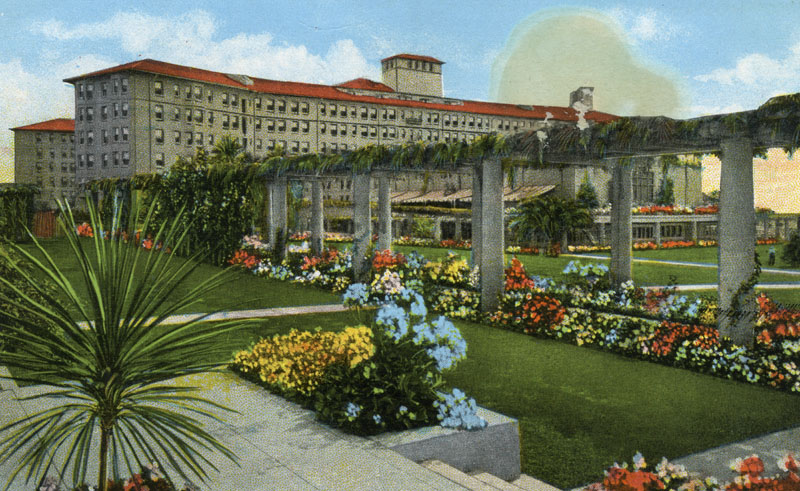
“Last Tuesday night, for the first time in 30 years, I found myself by one casual chance in a thousand on hand, in a small narrow serving pantry of the Ambassador Hotel in Los Angeles,” said a pained Alistair Cooke on his “Letter from America” broadcast of June 9th, 1968. He then vividly described that onetime playground of silver-screen royalty (and, from time to time, actual royalty) as “a place that I suppose will never be wiped out of my memory as a sinister alley, a roman circus run amok, and a charnel house” — the site, in other words, of the assassination of Sen. Robert F. Kennedy, five years after the similarly shocking murder of his brother, President John F. Kennedy, moments after his victory in California’s Democratic primary election.

Though it temporarily elevated that pantry into the canon of sacred American spaces, the bullet fired by young Palestinian radical Sirhan Sirhan ultimately killed not just Kennedy but the Ambassador Hotel itself. Already well past its glory days by the late 1960s, its decline hastened sharply thereafter until its demolition in 2005, sixteen years after its last guests checked out. Half a decade after that, the new complex of buildings newly risen on the Ambassador’s site opened its doors: the pharaonically expensive Robert F. Kennedy Community Schools, not just an educational facility, and not just a tribute to the slain dynastic politician, but a symbol of Los Angeles’ difficult search for coherence in both its architectural identity and its attitude toward the past.

Many still mourn the Ambassador, but who mourns the dairy farm the Ambassador itself displaced? When its construction began in the early 1920s, then marveled at by the Los Angeles Times as “the most stupendous hotel project in the history of the United States,” Wilshire Boulevard was nothing but a dirt road. To some Angelenos back then, its site three miles from downtown might as well have been 300 miles from downtown. But after the Ambassador opened its doors on New Year’s Day 1921, with its storied nightclub the Cocoanut Grove following a few months later, its presence (which one advertisement quoted pulp writer Gouverneur Morris describing as that of “a three-ring circus of indoor and outdoor amusements in a layout filled with happy conceptions”) helped turn Wilshire into the central economic artery of Los Angeles.

Read the whole thing at KCET.

Korea Blog: Will Korea’s Most Famous Monk and His Tweets of Zen Wisdom Play in America?

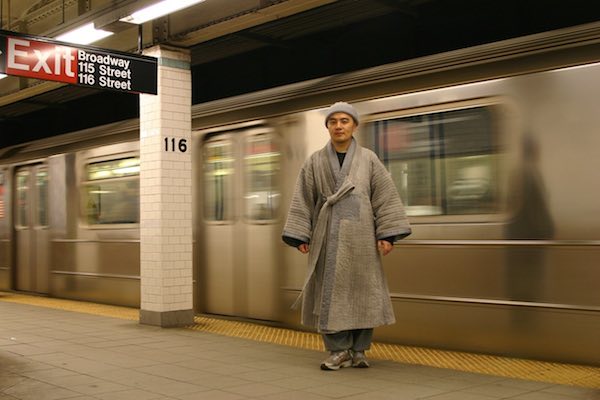
“Penguin’s English translation of The Things You Can See Only When You Slow Down comes out in America on February 7th,” tweeted South Korea’s most famous monk, in Korean, at the beginning of this year. “At about the same time, it’s scheduled to come out in fifteen other Western countries like England, Spain, Brazil, Russia, Sweden as well. Please understand my frequent tweeting in English.” Up to that point, communicating with his readers in only his and presumably their native language, Haemin Sunim (sunim, or 스님, being the honorific title for a Buddhist monk) amassed a crowd of followers now numbering 1.24 million. That would qualify him as a Twitter celebrity by any standard, but in beginning to tweet in English, Haemin Sunim effectively announced an attempt to take it the next level.

The Korean edition of The Things You Can Only See When You Slow Down (멈추면 비로소 보이는 것들), his second book, came out in 2010 and quickly turned bestseller, thus setting up high expectations, easily fulfilled, for his most recent, last year’s Love for the Imperfect (완벽하지 않은 것들에 대한 사랑). Both draw on the original source of this fresh-faced, gray-robed figure’s fame, his stream of tweets (as well occasional pictures of animals or of himself hugging fans), the most liked and retweeted of which — here translated by me, but in the English version of his book surely translated much better — include the following:

Do not beg for attention from other people. As your abilities grow, you will naturally receive attention from other people. When you feel yourself unconsciously begging for attention, think, “I still have to grow my abilities.” Never treat your noble self like a beggar.

When you’re troubled and anxious, ask yourself: is there anything I can change about this future that worries me? Don’t those worries make you miss out on the moment? If there’s nothing you can change, put your heart in the present and feel the preciousness of the moment.

Be good, even to you. While you gold-heartedly take on the tasks others don’t want to, don’t you also have a hard time? Hearing nice words from other people is fine, but being good to yourself is important.

Don’t try too hard to find out what other people think of you. The harder you try, the more you simply hand the leadership of your live over to the thoughts of others. Live life with the confidence to be its protagonist. Hwaiting!

That last term, a Koreanization of the English word “fighting” (English education in Korea having the mysterious tendency to conflate gerund and imperative), functions as an all-purpose cry of encouragement here, and Haemin Sunim provides nothing if not encouragement.

Read the whole thing at the Los Angeles Review of Books.

Korea Blog: When Chris Marker Freely Photographed, and Briefly Fell in Love with, North Korea

Even though I live there, I still only with difficulty perceive Northeast Asia through any lens not borrowed from Chris Marker. This owes mostly to the influence of dozens of viewings of Sans Soleil, his 1983 fact-and-fiction cinematic travelogue through places like Iceland, Cape Verde, San Francisco, and especially Japan, a feature-length realization of the peripatetic form of “essay film” he invented with 1955’s Sunday in Peking. Between that and Sans Soleil, he’d gone to Tokyo during the 1964 Olympics and come back with the materials for a 45-minute documentary about the titular young woman whom he happened to meet in the street there. Le Mystère Koumiko came out in 1965, just three years after his best-known work: La Jetée, the short drama of apocalypse, time travel, and memory made almost entirely out of still photographs.

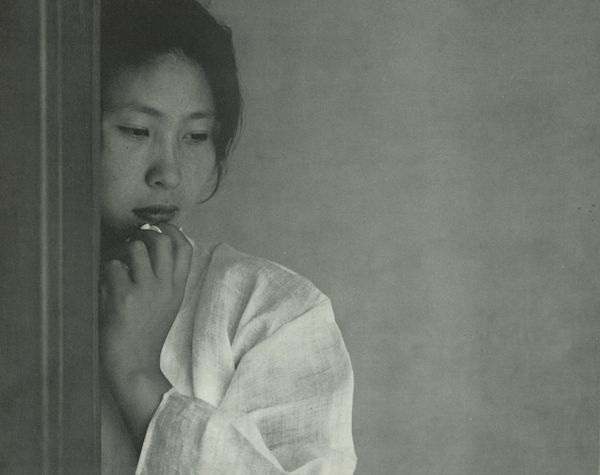
But Marker also made it, camera in hand, to the Korean Peninsula as well — and the northern half of the Korean Peninsula at that. He’d accepted an invitation in 1957 to join a delegation of French journalists and intellectuals including Claude Lanzmann, Armand Gatti, and Jean-Claude Bonnardot: Lanzmann, so the legend has it, fell in with a nurse there. Gatti and Bonnardot, more productively, made the feature film, the first and only North Korean-French co-production, Moranbong (not to be confused with the North Korean girl group of the same name). Marker took the pictures that would, in 1962, appear as the photobook Coréennes, titled with the feminine form of the French noun meaning “Koreans.” It brings to mind — or at least brings to my mind — Marker’s quotable quote: “In another time I guess I would have been content with filming girls and cats. But you don’t choose your time.”

Had Marker’s time been the 19th century of travelers like Percival Lowell, he would have enjoyed nary a glimpse of Korea’s hidden-away womankind, let alone its strictly hidden-away young womankind, but this “prototype of the twenty-first-century man” (in the words of collaborator Alain Resnais) paid his visit in the middle of the twentieth. While he could and did photograph plenty of girls (though, apart from historical representations of Korea’s much-mythologized tiger, no cats), he also captured the images of a host of other North Korean citizens besides: children, scholars, soldiers, vendors, pranksters. The title of Coréennes‘ Korean edition, 북녘사람들 or “Northern People,” thus more accurately reflects the content of the book, although its English-language edition stuck, as many of the English-language releases of Marker’s movies have, with the original French one.

Read the whole thing at the Los Angeles Review of Books.

콜린의 한국 이야기: 홍상수 영화의 힘

나는 지난주에 한국영상자료원에서 홍상수 감독의 최신 영화 <당신자신과 당신의 것>을 보면서 내가 로스엔잴래스에 살 때를 떠올렸다. 왜냐하면 한국어를 얼마 공부하지 않은 그 때 나는 로스앤젠네스에 본사를 둔 한국 신문 기자로부터 인터뷰를 요청받고 흥쾌히 응했다. 기자는 나에게 왜 한국에 대해 관심을 가지고 있냐고 물어봤고 나는 처음 본 한국 영화들 때문이라고 대답했다. 아버지께서 한국 영화 평론가라고 소개한 기자는 다음 번 질문으로 내가 어느 한국 감독을 가장 좋아하냐고 물어봤고 나는 자연스레 홍상수라고 대답했다. 나는 그 기자가 쓴 신문 기사에서 내가 “홍상수 작품이라면 닥치는 대로 보았고 영화제를 찾아 다니면서 홍상수 매니아가 됬습니다”라고 쓰여진 것을 보았다.

내가 그 기자가 쓴 말 대로 그렇게 말하지는 않았지만 기사에 쓰여진 말을 전부 거짓말이라고 부인할 수는 없다. 나는 로스엔잴래스로 이사오기 전에 살았던 조금 멀리 떨어진 산타바바라에 거주할 때도 홍상수 영화를 보러 몇 번 로스엔잴래스에 간 적이 있다. 그렇다면 나는 왜 홍상수의 작품들을 그렇게 즐기는 걸까? 그의 영화들은 흔히 볼 수 있는 액션도 없고 대스타도 없을 뿐만 아니라 특수효과도 전혀 없지만 그러한 것들이 없기 때문에 오히려 좋다고 할 수 있다. 하지만 그의 영화는 그러한 블록버스터 같은 요소 대신에 독특한 유며 감각을 지니고 있다. 홍상수는 그의 영화를 통해 평범한 삶자체와 그 평범한 삶을 사는 인간들의 행동과 태도의 부조리함에 대해 역설적인 즐거움을 보여 준다.

홍상수의 영화들이 거의 다 한국을 배경으로 촬영되었고 그 영화 속 인물들이 거의 다 한국인이지만 나는 한국어나 한국 문화를 잘 알지 못 했을 때도 그의 영화를 보면서 마음껏 웃을 수 있었다. 그렇지만 나는 그가 단순한 코미디 영화의 감독이 아니라고 확신한다. 그는 영화를 만들 때마다 일반 코미디와 달리 특이하거나 실험적이라고 말할 수 있는 구조를 사용하며 그 구조 속에서 그 만의 이야기를 풀어낸다. 예를 들면 한 영화에서 자세한 내용이나 시점을 달리하면서 그는 지루함 없이 같은 얘기를 두세 번 반복한다.

홍상수가 쓰는 시나리오들이 매우 사실적이고 촬영된 영상도 단순하지만 결과들은 의외로 예술적이다. 그 영화 속에 있는 술을 마시고 담배를 피며 서로 싸우고 모든 것을 얻으려고 하는 남자 인물과 여자 인물들은 많은 역경을 겪으며 서로 다른 그 역경의 배경 속에서 살아간다. 구체적으로 남자 인물들은 절대 진리나 절대 윤리와 같은 굳은 믿음을 신봉함으로 인해 그들의 삶자체가 고난이 되고 너무 쓸데없이 적극적이여서 낭비적인 삶을 살아간다. 이와는 반대로 여자 인물들은 어떠한 믿음이 부족하기 때문에 매 순간마다 뭘 해야 될지 알 수 없어서 남자 인물들에게 의존하며 수동적인 삶을 살아간다.

홍상수 영화 장면들의 대부분에서 인물들이 믿음의 유무와 상관없이 서로 피상적으로 대화한다. 그러한 대화로 인해 홍상수가 각본 없이 즉흥적으로 영화를 만든다고 짐작하는 사람들이 있을 수도 있지만 사실 그의 영화 제작 기법은 아침마다 그 날에 촬영할 장면의 대사를 꼼꼼이 쓰는 것이다. 그러한 그의 노력의 결실로 홍상수 영화 속 대화들은 다른 영화의 대화들과 달리 평범한 한국인들이 일상에서 나누는 대화처럼 자연스럽다. 그가 창조한 인물들은 마치 현실 속에 실존하는 사람들이 할 수도 있는 단절된 대화의 형태를 지니고 또한 아무 의미 없이 나열된 공허한 어리석음을 내포한 대화이거나 술 취한 상태에서 나올 법한 언어 일수도 있지만 어떻게 보면 이와는 상반적으로 제일 이해하기 쉬운 영화 대화라고도 말할 수 있다.

홍상수 영화에서 들리는 대화의 자연스러움은 나로 하여금 한국어를 공부하는 다른 사람들에게 그의 영화들을 추천하게 만들며 영화를 볼 때마다 한국어 표현들을 쉽게 습득할 수 있을 뿐만 아니라 서울에 대한 다양한 지식들도 알수 있게 해준다. 홍상수는 한국 지방과 프랑스를 배경으로 한 영화들을 만든 적도 있지만 대부분 서울에서 촬영해서 한국에 처음으로 온 나에게 그 동안 배워온 한국어의 익숙함 뿐만 아니라 서울의 친숙함도 선사했다. 한국에 이사오자마 처음으로 간 극장에서 본 영화가 그 당시 홍상수 감독의 최신 영화인 것은 재미있는 우연의 조우였다. 해마다 한 번쯤 새로운 작품을 만드는 그의 영화 주기로 인해서 그의 영화를 본 횟수를 더하면 내가 한국에 산 기간을 알 수 있을 뿐만 아니라 앞으로 있게 될 기간도 가늠할 수 있다. 한국에 오기 전보다 살면서 매일 한국어와 한국 문화에 대해서 새로운 걸 훨씬 더 많이 알게 되지만 홍상수 영화를 볼 때마다 내가 느끼는 감정은 그가 나에게 여전히 가르칠 게 남아 있음을 말해준다.