Tuesday, December 20, 2016
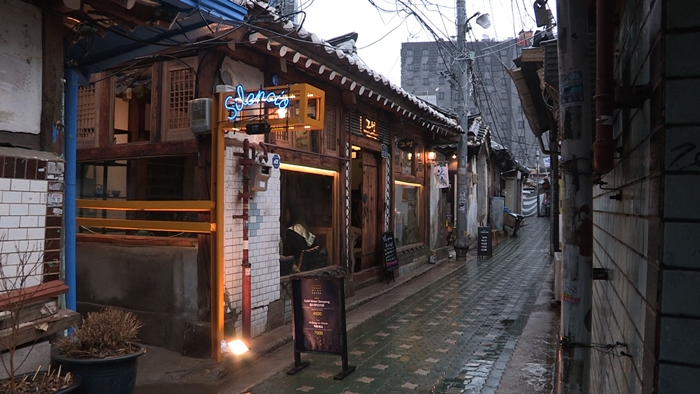
Each month I join Kurt Achin, host of Koreascape on Seoul’s English-language radio station TBS eFM, for an exploration of Seoul’s urban spaces. This time we’re joined by German-Korean architect Daniel Tändler of Urban Detail Seoul for a walk through Ikseon-dong Hanok Village, a 1930s-era housing development near downtown that has in recent years seen an influx of restaurants, bars, cafés, shops, and studios putting its traditional Korean residential architecture to whole new uses.
Stay tuned for further explorations of Seoul’s architecture, infrastructure, and other parts of the built environment. You can hear our previous segments here.
Sunday, December 11, 2016
I started writing the Los Angeles Review of Books Korea Blog on December 4th of last year, just three weeks after moving to Seoul from Los Angeles. One of my first posts covered a protest in Seoul Square; once of the most recent covered a series of demonstrations over the course of weeks that eventually brought up to a million citizens downtown to demand the resignation of President Park Geun-hye, the announcement of whose impeachment came just this past Friday. I’ll certainly be sticking around to see what happens next.
The year has proven stimulating politically but also culturally, what with events like novelist Han Kang and translator Deborah Smith winning the Man Booker International Prize for The Vegetarian. Charles Montgomery, who joined the Korea Blog after spending seven years teaching Korean literature in translation at Seoul’s Dongguk University, wrote about the victory and has since begun an ongoing serialization of his book-in-progress The Explorer’s History of Korean Fiction in Translation, the most recent installment of which you can read here.
Below you’ll find a selection of twelve of my essays from the Korea Blog’s first year, whose subjects range from Korea’s aforementioned protests to its educational culture to its cosmetic surgery to its art and architecture to its urban life to its Mexican food. It should provide something of a primer to readers new to the Korea Blog, but also a review of surfaces scratched. I look forward to going ever deeper into the literature, cinema, current events, and daily life of this fascinating country in the Korea Blog’s second year. As always, 읽어 주셔서 감사합니다.
Read the twelve selected essays at the Los Angeles Review of Books.
Tuesday, November 29, 2016
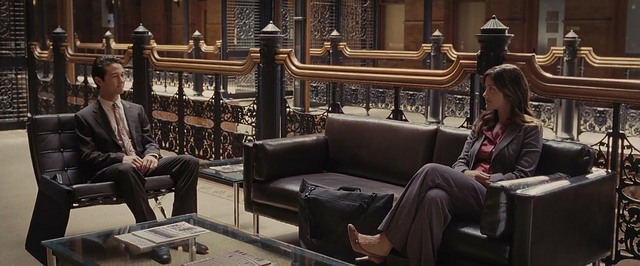
Though most moviegoers will have seen a lot of Bradbury Building, they may not recognize it as a landmark of Los Angeles architecture – unless, of course, they’ve seen Thom Andersen’s documentary “Los Angeles Plays Itself,” which devotes a solid block of its nearly three-hour runtime to the many roles it has played onscreen. “The movies discovered the Bradbury Building before the architectural historians did,” says its narrator. “The earliest appearance I know came in 1943: in ‘China Girl,’ it played the Hotel Royale in Mandalay, Burma. The following year, in ‘The White Cliffs of Dover,’ it played a London military hospital overflowing with wounded soldiers.”
Later films placed the Bradbury Building elsewhere: “Caprice” in Paris, “Wolf” in New York, “Murder in the First” in San Francisco. These and other roles may demonstrate the structure’s versatility, but they’ve surely also caused some confusion as to its actual location. Anyone seeking to satisfy an interest in Los Angeles architecture, though, will hear about the Bradbury Building’s place in its canon before they hear about anything else. It found that place thanks, in large part, to its celebration by influential Southern California architectural historian and Arts & Architecture Magazine contributor Esther McCoy, who launched her campaign in 1953, a decade after the building made its cinematic debut in “China Girl” and six decades after it first opened.
“There is nothing whatever accidental about it,” goes the quote from the magazine proudly included, for a time, on a handout provided to the Bradbury’s visitors. “There are no afterthoughts. It is a forever young building, out of a youthful and vigorous imagination. But it has left nothing to chance. Stairways leap into space because of endless calculations. The skylight is a fairy tale of mathematics.” This praise, like almost all the praise heaped upon the building ever since, focuses on its interior. When observers mention the exterior at all, they do so only do dismiss it: David Gebhard and Robert Winter’s “Architectural Guidebook to Los Angeles” describes its style as “mildly Romanesque,” but only in a parenthetical aside after they’ve first pronounced it “dull.”
Read the whole thing at KCET.
Sunday, November 27, 2016
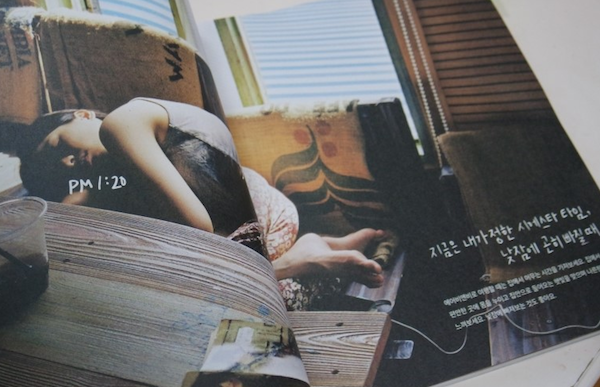
Stuff Koreans Like, a short-lived imitator of the mid-2000s satirical blog Stuff White People Like, only took ten posts to get to travel essay books. “Usually set in foreign cities (mostly New York or Paris),” writes its author, “they feature soft-focus photographs of café facades and interiors, coupled with inane text with no depth or historic/sociological insight into the destination being essayed about, just a lot of ‘Ooh this café was so pretty and its espresso so delicious. Ooh here’s another pretty café and its hot chocolate was so sweet.’” A tough assessment, but in its way a fair one: I come across dozens of (admittedly always well-designed) volumes that more or less fit that description whenever I browse the filled-to-bursting travel shelves at any of the bookstores here in Seoul.
The popularity of the Korean travel essay book is not lost on Airbnb, the hugely successful and rapidly expanding service that matches travelers in need of a place to stay with possessors of houses, apartments, spare bedrooms, or couches looking to rent them out. Not long ago, I noticed that piles of a paperback called 여행은 살아보는 거야, or Travel Is Living, had appeared on the counters of several of my usual Seoul coffee shops. At first glance, its production value seemed high enough — comparable to those carefully laid-out, photo-intensive travel books — that I assumed they were for sale. Then I realized that I could simply take one like I could take one of the cinema schedules or festival fliers stacked beside them, and soon after that, when I’d read a bit, I realized that I held in my hands a 200-page advertisement for Airbnb.
Not that Airbnb needs to convince me of their merits: over the past five years, I’ve used the site to book accommodations all over the United States, Europe, and Asia, including on my first trip to Korea. They’ve surely got their fair share of free advertising from me in the form of recommendations made to friends, or at least to friends on the young side: what I think of as an “Airbnb generation gap” seems to separate those less to use it (as guests rather than hosts, at least) from those more to use it, just as it once separated the venture capitalists more willing to fund it from those less willing to fund it. But Korea, where even grandma and grandpa show up in line for the latest-model smartphone, has less of a problem there.
Read the whole thing at the Los Angeles Review of Books.
Sunday, November 20, 2016

작년에 나는 한국에 살면서 일본에 다섯 번 여행을 갔고 거기에 도착할 때마다 일본에 있는 것에 대하여 기뻐했다. 다른 서양인들이 가끔 나에게 한국과 일본이 기본적으로 똑같지 않냐고 물어봐서 나는 그렇지 않다고 대답한다. 미국인이나 유럽인의 시각에서 보면 같은 아시아에 있는 한국과 일본이 비슷해 보일 수도 있지만 서로 비교하면 비슷한점들이 거의 없고 공통점도 거의 없다. 한국에 살고 싶었던 이유들 중 하나가 비행기를 한두 시간 동안만 타면 일본에 갈 수 있는 것인데 두 나라가 서로 지형적으로 가까움에도 불구하고 두 나라 사회의 모습은 정말 다르다.

일본에 대해서 내가 가장 좋아하는 점은 거기에 있는 사람들이 일본어를 한다는 것이다. 당연한 얘기일 수도 있지만 사실 한국과 비교하면 일본은 큰 차이점이 있다. 일본에서는 대부분의 일본인들이 내 얼굴을 봐도 나에게 일본어로 말하는데 반면에 많은 한국인들은 한국에서도 서양인을 보자마자 반사적으로 자신의 영어를 시험해 본다. 그 서양인이 한국에 오랫동안 살았거나 영어를 할 수 없을 지에 대해서는 상관하지 않은다. 나는 한국어를 잘 못 하고 일본어도 한국말에 비하여 더 잘 못하지만 일본인들이 외국인에게도 대게 일본어로 얘기하는 것에 감사한 마음을 가지고 있다. 그렇기 때문에 나는 일본에 머물때 마다 일본어를 조금 더 습득한다.

내가 좋아하는 또 다른 점은 일본인이 느끼는 성공의 개념이다. 일본에서 제일 중요한 점은 일의 과정이다. 모든 것을 어떻게 해나가는지에 대하여 초점을 맞춘다. 예를 들면 거기에서 성공이라는 것은 옷 팔기나, 커피 타기나, 초밥 만들기나, 만화 그리기 같은 한가지만을 선택하고 그 일에 열심히 집중하는 것이다. 그러한 전통 때문에 일본에서는 평범한 것을 포함해서 모든 것들이 약간 예술적인 분위기를 가진다. 대조적으로 한국에서 제일 중요한 점은 일의 결과이다. 그렇게 생각하지 않은 한국인들이 있을 수도 있지만 내가 보기에는 오늘날 한국에서는 대체적으로 돈과 사회적인 지위를 중요시한다. 한국에서 그 돈과 사회적 지위 자체는 성공이라 여겨지고 그 것들을 어떻게 얻었는지는 중요하지 않은 편이다.

일본에서는 미국에서 전혀 볼 수 없는 것들을 볼 수 있다. 예를 들면 어느 길거리에서나 자판기에서 음료를 쉽게 살 수 있다. 한국에도 일본과 비슷한 기계가 있긴 있지만 자판기의 음료는 비교적으로 다양하지 않다. 게다가 일본에서는 미국이나 한국에서 볼 수 없는 것을 볼 수 있다. 평일 아침마다 작은 마을뿐만 아니라 도쿄에서도 많은 일본 어머니들이 자전거로 아이들을 학교에 데려다주는 것은 하나의 좋은 예가 될 수 있다. 나는 한국인들이 그것에 대해서 어떻게 생각하는지 잘 모르겠지만 대부분의 미국인들은 아마 그런 일본의 어머니들이 미쳤다고 생각할 것이다. 내 생각에는 모든 사회에서 어머니들이 자전거로 아이들을 학교에 데려다줄 수 있게 되는 것이 바람직해 보인다.

일본에서 또 다른 좋은 볼 거리는 모든 도시 전체가 귀여운 마스코트들로 가득 차 있다는 것이다. 회사와 백화점과 교통 카드를 비롯하여 서로 다른 마스코트가 있고 지역마다 거의 다 의인화된 동물 마스코트들이 있다. (하지만 오사카에 본사가 있는 포키라는 빼빼로와 같은 과자를 만든 회사의 유명한 마스코트인 글리코의 달리기 선수는 예외이다.) 한국에도 그런 마스코트들이 있지만 대부분은 동물이 아니라 얼굴이 있는 물건이나 건물이나 음식물 같은 것이다. 일본의 시각적 문화와 한국의 시각적 문화는 완전히 다른 면을 보이고 그 두 나라의 광고와 건축물과 간판과 옷과 사탕 등을 통해 엿볼 수 있다.

나에게 일본은 재미있는 점들이 많지만 여러 가지 문제점들도 있다. 일본은 서로 다른 회사들이 다른 지하철을 운영하기 때문에 모든 지하철 노선을 한눈에 보여주는 지도를 찾기는 쉽지 않다. 일본은 첨단 기술로 대변하는 모습을 보이지만 일상 생활에서 낮은 수준의 기술도 생각보다 많이 보인다. 일본에서는 카드를 쓸 수 없고 현금으로만 내야 하거나 인터넷이 아닌 서류 업무만으로 해야 되는 경우가 한국보다 많이 있다. 일본에서 일상적인 대화는 틀에박힌 편이어서 놀랄만 한 점이 없고 대화뿐만 아니라 일상의 삶 또한 쉽게 예견할 수 있다.
나에게 좋은 면과 싫은 면이 있지만 한국은 놀라운 나라여서 참으로 흥미롭다. 일본인들이 항상 해왔던 것을 잘 하는 반면에 한국인과 한국 나라는 변화를 즐긴다. 그점 또한 내가 한국에 살고 싶은 이유 중 하나이다. 어찌됬든지 간에 일본에서 있다가 한국에 돌아올 때마다 한국에 돌아올 수 있음에 감사한 마음을 가지게 된다.
Monday, November 14, 2016

Since the election of Donald Trump last Tuesday, protesters across the United States, thousands of them in downtown Los Angeles alone, have taken to the streets to make their displeasure heard. Coincidentally, anti-presidential protests have also erupted in South Korea own over the past few weeks, culminating in the unrelieved crush of humanity, comprising 500,000 to one million demonstrators — an astonishing number, even in a country with a rich tradition of protest — that filled downtown Seoul on Saturday night. They came not to object to an undesireable president-elect, but to demand the resignation of Park Geun-hye, the president of more than three years who stands accused of having handed the reins of power to an unelected and previously obscure confidante, herself the daughter of a religious cult leader.
In a widely circulated breakdown of the scandal, a blogger known as The Korean lists the accusations against Park and her confidante Choi Soon-sil, who, under Park’s watch, has been “running a massive slush fund, as she extorted more than $70 million from Korea’s largest corporations,” who routinely received “confidential policy briefings and draft presidential speeches — all on a totally unencrypted computer,” and who “rigged the college admission process so that her daughter, not known to be sharpest tool in the shed, would be admitted into the prestigious Ewha Womans University.” That last struck an especially sensitive nerve in this society, which has always turned a blind eye at embezzlement at all levels and especially in politics, but which can’t stand anything that throws the prized “fairness” of its higher-education system into question.
“Having survived a particularly tumultuous modern democratic history, Korean people may be the world’s most cynical consumers of politics,” writes The Korean. “But this. Even the most cynical Koreans were not ready for this. At first, there was a tiny bit of perverse relief, as all the bizarre actions of Park Geun-hye administration suddenly began to make sense. Why did the president only hold just three press conferences in the first four years of her administration? Why does the president always speak in convoluted sentences that make no sense? Why did the president fly off the handle and sue the Japanese journalist who claimed that she was with Choi Soon-sil’s husband while the ferry Sewol was sinking in 2014, drowning 300 school children? Why did the ruling party randomly host a shamanistic ritual in the halls of the National Assembly? Ohhhh, the relief went. Now it all makes sense.”
Read the whole thing at the Los Angeles Review of Books.
Friday, November 11, 2016

“Is this what they mean by pure cinema?” New Yorker film critic Anthony Lane wrote in his review of “Speed” when the film came out in 1994. “The phrase sometimes hovers around people like Tarkovsky and Ozu, and with good cause, but Hollywood occasionally throws a punch so clean that it breaks through to the same hallowed sanctum.” Surprising praise, perhaps, for a blockbuster represented in poster form by an explosion, a runaway bus, and Keanu Reeves, but watch “Speed” again and you see much more: while it may not have gained intellectual depth with time, it has emerged, over the past couple of decades, as the standout Los Angeles action movie, one that makes fuller use of the city’s distinctive size, shape, and built environment than any other.
That bus plays a part in only one of the three shorter Los Angeles action movies that “Speed’s” nearly two-and-a-half hours comprise. The first, which takes place inside and on top of downtown’s Gas Company Tower, announces itself with a shot of a police car not just driving up to the building but flying up to it, catching at least three feet of air as it roars over the hill in order to deliver the protagonist, Reeves’ young LAPD SWAT officer Jack Traven, and his partner, Jeff Daniels’ Harry Temple. They’ve shown up to rescue an elevator full of office workers, trapped there by a mad bomber threatening to blow it loose and drop them all the way down that still-new high-rise’s 52-story height (established by the opening credit sequence, a long upward climb through a model of its elevator shaft) unless he gets three million dollars in cash.
Traven and Temple ascend to the rooftop, finding a crane to hook onto the elevator car in order to keep it from falling — temporarily, at least, as a well-constructed action movie demands that the solution to each crisis generate a crisis of its own. But when they get up there, we see Los Angeles’ seemingly endless cityscape stretch out below them, a smoggy horizontality of background that contrasts with the glossy, angular, Skidmore-Owings-and-Merrill verticality of the immediate setting. Though remarkably little about “Speed” dates it aesthetically, especially by fad-responsive Hollywood standards, a keen-eyed Los Angeles historian could, going by the amount of smog not yet cleared up and buildings not yet built, pin down almost the exact month of production from these shots alone.
Read the whole thing at KCET. See also my City in Cinema video essay on the movie.
Saturday, November 5, 2016

여자친구의 고모할머니께서 순천에 계셔서 나와 내 여자친구는 그 분을 방문하러 지난 주말에 순천에 갔다. 나는 처음으로 고속버스를 타고 전라도에 갔고 또한 한국에서 고속버스로 여행한 것도 처음이었다. 한국의 제일 맛있는 음식은 전라도 음식이라는 말을 많이 들었지만 여자친구의 고모할머니 집 밖에서는 밥을 먹을 기회가 전혀 없었다. 그러나 여자친구의 고모할머니께서 현지의 재료로 만든 우리에게 차려 주신 음식이 너무 맛있어서 기분 좋게 먹고 다른 식당에 갈 기회가 없었지만 전혀 후회하지 않았다. 주말 동안 먹은 음식이 너무 많아서 보통 때 일주일 동안 먹은 음식보다 더 많이 먹은 것처럼 느껴졌다.

나는 지방에 갈 때마다 거기에서 아이들을 쉽게 볼 수 있는 것에 항상 놀란다. 서울에도 아이들이 있긴 있지만 학교나 학원 같은 곳에서 하루 종일을 보내야 된다. 나는 고모할머니 댁의 창을 통해 밖을 내다보면서 단지 놀이터에서 아이들이 놀고 있는 것을 봤다. 한국에서 어디에서든지 쉽게 볼 수 있는 공사 중인 아파트 건물 몇 채도 보였다. 잘 알 수는 없지만 한국의 인구가 옛날과 비교해서 급속도록 팽창되지 않음에도 불구하고 심지어 서울에서 멀리 떨어진 이 곳에서도 건설업은 멈추지 않은 것처럼 보였다.

순천은 작은 도시지만 다양한 넓은 공원들이 몇 군데에 위치해 있다. 토요일 오후에 순천호수공원에서 여유로운 시간을 보내면서 공원의 이곳 저곳을 구경했다. 나는 언덕을 올라간 후 정상에서 간판을 읽고 그 공원이 찰스젱스라는 미국인 조경사에 의해 설계된 걸 알게 되었다. 그 이름은 나에게 친숙하게 들렸다. 왜냐하면 나는 몇년 전에 그가 쓴 로스앤젤레스 건축에 대한 흥미로운 책을 읽었기 때문이다. 책의 제목은 헤테로폴리스고 내용은 로스앤젤레스 건물들의 상당한 다양성을 포함하고 있다. 나는 로스앤젤레스 건축물과 서울 건축물을 둘다 다른 이유로 좋아하지만 찰스젱스 씨가 로스앤젤레스의 건물에 비교하면 다양하지 않은 편인 서울의 건물들을 어떻게 생각했는지 궁금하다.

우리는 해가 질 때까지 공원에서 걸어다녔다. 어둠 속에서 작은 모노레일 같은 기차의 전조등이 보였고 바위처럼 보이는 스피커에서 음악이 나왔다. 밤에 아주 조용한 순천을 운전해 지나가고 여자친구의 고모할머니 댁에 돌아가서 우리가 서울에서 가져온 와인을 마시면서 텔레비전 드라마 몇 편을 봤다. 여자친구의 고모할머니께서는 우리에게 풍부한 안주를 주시고 우리는 대화를 나눴다. 나는 여자친구의 고모할머니 세대 사람들의 말투를 잘 이해할 수 없지만 그럼에도 불구하고 대화의 대부분을 따라갈 수 있었다. 한국 전쟁을 겪으신 고모할머니께서 말씀하시기를 요즘 드라마의 문제는 한국 전쟁을 경험한 적 없는 시청자들의 대부분을 전쟁 때 한국의 생활이 얼마나 힘들었는지를 알 수 없게 만드는 것이라고 하셨다.

다음날 우리는 아침식사로 주로 먹지 않는 게를 맛있게 많이 먹고 나서 순천만 자연생태공원에 갔다. 주말이어서 관광객들이 많이 왔고 그들 중 일부는 화려한 등산복을 입고 일부는 샐카봉을 높이 들어올리면서 계속 걸었다. 긴 삼각대로 연결된 휴대폰을 가지고 통화하는 아저씨도 지나갔다. 나에게 이런 곳에 갈 때 풍경을 보는 것보다도 온 사람들을 보는 것을 더 흥미롭게 느껴질 때가 있다. 다음 주가 되면 내가 한국에 산지 일 년이 되지만 아직도 모든 것 즉 건물들과 사람들도 나에게 새롭고 흥미롭게 느껴진다.