Skip to content

콜린의 한국 이야기: 피터캣

%e1%84%92%e1%85%a1%e1%86%ab%e1%84%80%e1%85%ae%e1%86%a8-%e1%84%8b%e1%85%b5%e1%84%8b%e1%85%a3%e1%84%80%e1%85%b5-%e1%84%91%e1%85%b5%e1%84%90%e1%85%a5%e1%84%8f%e1%85%a2%e1%86%ba-1

나는 거의 매일 글을 쓰러 커피숍에 간다. 일주일마다 두 번 정도 가는 커피숍은 없지만 일주일마다 한 번씩 꼭 가는 커피숍은 몇 군대가 있다. 그 곳들 중에서 일본인 소설가 무라카미 하루키 씨를 테마로 한 피터캣이라는 북카페가 있다. 왜 카페가 그렇게 흔히지 않은 이름을 가지냐면 무라카미 씨 작가가 되시기 전 70년대에 도쿄에 있는 피터캣이라는 재즈바를 운영하셨기 때문이다. 서울에 있는 피터캣에서는 사장님이 어쩔 때는 재즈 음반을 틀고 어쩔 때는 무라카미 씨와 관련된 다른 음악을 튼다. 카페의 책장들에는 무라카미 씨가 쓰신 모든 책들을 찾을 수 있는데 무라카미 팬이 즐길 수 있는 다른 작가들이 쓴 책도 있다.

모든 나라에 있는 독자들은 현재 세계에서 제일 인기가 많은 소설가일 수 있는 무라카미 씨의 작품들을 즐긴다. 나는 일본어와 한국어 공부를 시작하기도 전인 12년 전에 무라카미 씨의 소설을 처음으로 읽었다. 베스트셀러였던 “노르웨이의 숲”을 읽으면서 그 1960년대의 일본을 배경으로 한 소설에서 평범한 것과 이상한 것이 섞여 있는 분위기는 내 관심을 사로잡았다. (“노르웨이의 숲”은 한국에서 원래 “상실의 시대”라는 제목으로 출판되었다.) 그 후로 나는 무라카미 씨가 쓰신 다른 소설들을 찾아서 읽었다. 피터캣의 사장님도 포함될 수도 있는 대부분의 무라카미 씨의 팬들은 앞서 말한 똑같은 경험을 한 적이 있을지도 모르겠다.

%e1%84%92%e1%85%a1%e1%86%ab%e1%84%80%e1%85%ae%e1%86%a8-%e1%84%8b%e1%85%b5%e1%84%8b%e1%85%a3%e1%84%80%e1%85%b5-%e1%84%91%e1%85%b5%e1%84%90%e1%85%a5%e1%84%8f%e1%85%a2%e1%86%ba-2

무라카미 씨가 쓴신 작품들이 왜 그렇게 인기가 엄청난지에 대한 질문에 대답하는 것은 사실 조금 어렵지만 결국에는 그의 소설을 읽은 대부분의 사람들이 중독자가 되는 경향이 있는 것 같다. 그러한 이유로 피터캣 같은 무라카미 씨를 테마로 한 모임 장소가 필요한 것이 아닐까? 그런데 피터캣에 오는 대부분의 사람들은 서로 대화를 잘 하지 않은 편이고 주로 혼자 음료를 마시면서 글을 쓰거나 책을 읽거나 공부를 하거나 음악을 듣는다. 여자친구와 같이 올 때도 있는 내 경우에는 몇 시간 동안 여자친구와 나란히 앉아서 그런 조용한 시간을 보낸다.

무라카미 씨의 소설 속에 등장하는 주인공들은 자주 혼자서 책을 읽거나 음악을 듣거나 도시의 길를 걸어다니거나 요리를 하는 등 피터캣에 오는 손님들처럼 비슷하게 생활한다. 나는 무라카미 씨가 쓰신 에세이 책들을 읽음으로써 무라카미 씨도 그런 사람이신 것을 알게 되었다. 내가 한국어를 배우기 전에는 무라카미 씨가 쓰신 많은 에세이 책의 대부분을 읽을 수 없었다. 왜 일본인 작가가 쓴 책들을 읽기 위해서 한국어를 배울 필요가 있었냐면 무라카미 씨가 쓰신 모든 소설들은 영어로 꼭 번역이 되지만 그의 대부분의 에세이 책들은 거의 영어로 번역되지 않는다. 그러나 일본어로 된 글은 영어보다 한국어로 훨씬 쉽게 번역될 수 있어서 무라카미 씨가 쓰신 모든 글들을 한국어로 읽을 수 있다.

앞서 말한 피터캣에는 무라카미 씨의 모든 글을 다 소장하고 있어서 누구나 쉽게 그의 책을 읽을 수 있다. 시간이 가면 갈수록 나의 한국어 읽기 속도가 빨라지고 있어서 피터캣의 책장들에 보관되어져 있는 무라카미 씨와 관련된 책들을 다 읽고 싶어졌다. 피터캣에는 무라카미 씨가 쓰신 에세이 책과 재즈에 대한 책과 여행기 뿐만 아니라 다른 작가들이 쓴 무라카미 씨에 대한 책들도 있다. 그 책들 중에서 가장 놀라운 것은 한국인 작가가 쓴 무라카미 씨와 연관된 레시피 책이다. 그 책의 표지에는 “무라카미 하루키의 책에서 꺼낸 위로의 요리들”이라는 글이 쓰여져 있다.

%e1%84%92%e1%85%a1%e1%86%ab%e1%84%80%e1%85%ae%e1%86%a8-%e1%84%8b%e1%85%b5%e1%84%8b%e1%85%a3%e1%84%80%e1%85%b5-%e1%84%91%e1%85%b5%e1%84%90%e1%85%a5%e1%84%8f%e1%85%a2%e1%86%ba-3

당연한 이야기일 수 있지만 내가 그 책들을 다 읽고 싶으면 피터캣에서 많은 시간을 보내야만 할 지도 모르겠다. 다행히도 거기에서는 오전에는 리필이 가능한 커피를 마시면서 책을 읽을 수도 있고 오후에는 무라카미 씨가 제일 좋아하시는 음료인 맥주를 마실 수도 있다. 하지만 피터캣에서는 나를 제외하고는 외국인 독자를 많이 볼 수 없음에도 불구하고 무라카미 씨의 독자들은 전 세계에 널리 퍼져 있다. 무라카미 씨가 쓰시는 이야기들은 전통이 약해져 가고 국경들이 그다지 중요하지 않게 인식 되어 가는 21세기의 현실과 어울린다.

무라카미 씨가 쓰신 책들은 거의 모든 언어로 번역되 있어서 어떠한 외국어를 배우고 있는 친구가 나에게 어느 작가의 책을 읽으면 좋겠냐고 물어보면 나는 항상 무라카미 씨가 쓴 책을 추천한다. 재즈 뿐만 아니라 야구와 탐정 소설에도 큰 관심이 있는 무라카미 하우키 씨가 쓰신 책들은 미국인인 나에게도 미국 문화를 이해하는데에 많은 도움을 준다. 나는 무라카미 씨가 쓰신 소설들의 스페인어 번역본을 읽을 때는 스페인어를 더 잘 이해하게 되었고 요즘 한국어 번역본을 읽으면서는 한국어를 더 잘 이해할 수 있게 되는 길목에 서 있는 것 같다. 나는 언젠가 원래 무라카미 하루키 씨가 쓰신 일본어로 된 책을 읽게 될 그 날을 희망해 본다.
Seoul Urbanism on TBS eFM’s Koreascape: the 63 Building

63-building

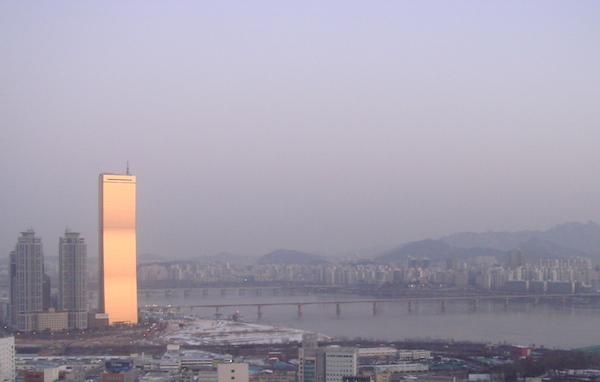
Last week I joined Kurt Achin, host of Koreascape on Seoul’s English-language radio station TBS eFM, for a journey around, through, and all the way up the observation deck of the 63 Building.

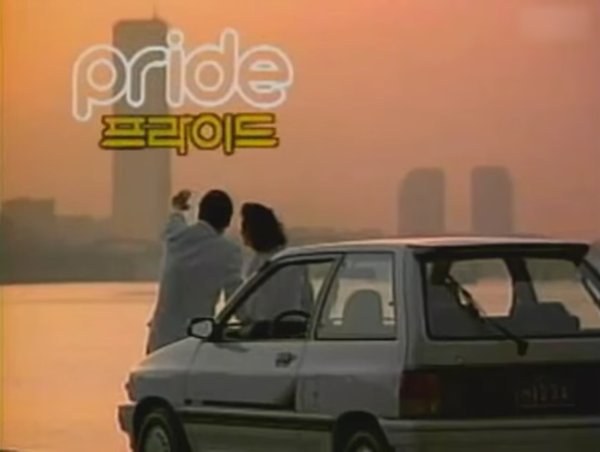
Known locally as the “gold tooth,” this iconic, gold-glassed skyscraper beside the Han River opened in time for the 1988 Olympics, providing a piece of the background for the torch-lighting ceremony that opened the games. Designed by architectural mega-firm Skidmore, Owings, and Merrill, it became a public attraction from the first day of its reign as the tallest building outside North America (having one-upped Tokyo’s Sunshine 60), offering not just office space, dining, and retail, but various attractions for the whole family such as an aquarium and Korea’s first IMAX theater. Having announced the country’s arrival into the developed world, it continues to inspire: the singer Forty’s song “63 Building,” for example, came out just last year.

This comes as the first in a series of monthly urbanism-themed segments Kurt and I will record for Koreascape. Stay tuned for further explorations of Seoul’s architecture, infrastructure, and built spaces of all kinds.

Korea Blog: Watching Korea Develop Through Sixty Years of Commercials

kb-commercials-1

Not long after I moved to Korea, an American expat of decades’ standing described the country to me as approaching the end of its “long 1950s.” He meant, I think, that all the qualities we rightly or wrongly associate with America in the 1950s — family solidity, lifetime employment at large companies, robust economic growth, national self-esteem, public morality, broad societal consensus on a host of issues — only recently began to break down here. Whether to revere that era or to revile it, American culture still revisits the 1950s fairly often, and it tends to play off an image many of us came to know through television, the medium that defined it.

Television in America, which began with experimental broadcasts in the late 1920s and early 30s, took the basic form we know today in the 40s, but only after World War II did televisions themselves enter widespread use. South Korean television, in line with the country’s late but rapid development by comparison to the West, began broadcasting 1956, just three years after the end of the Korean War, and blew up in the following decade. And so we in the 21st century can now take a glimpse into that and the subsequent periods in Korean history with that most convenient form of time travel, watching the massive quantities of old television commercials available on the internet.

When I now attempt to explain something of the nature of Korea, I often describe it as an almost brand-new society trying simultaneously become as modern as possible and to connect itself directly to the distant past. This plays out in the oldest Korean commercial I’ve seen, an advertisement for a soap and toothpaste brand called Lucky that, in the course of well over two minutes, combines a crudely animated scene set in the Joseon Dynasty (the pre-colonial period from the late 14th to the late 19th century constantly revisited by television dramas in the subsequent six decades) with no small amount of footage of the industrial marvel that is the Lucky Factory itself.

Read the whole thing at the Los Angeles Review of Books.

콜린의 한국 이야기: 윤정희 씨

%e1%84%92%e1%85%a1%e1%86%ab%e1%84%80%e1%85%ae%e1%86%a8-%e1%84%8b%e1%85%b5%e1%84%8b%e1%85%a3%e1%84%80%e1%85%b5-%e1%84%8b%e1%85%b2%e1%86%ab%e1%84%8c%e1%85%a5%e1%86%bc%e1%84%92%e1%85%b4-1

누군가 나에게 어떻게 한국에 대하여 관심이 생긴지 물어보면 나는 주로 한국 영화라고 대답한다. 대학교를 다닐 때보다 대학교를 졸업한 후에 대학교의 도서관을 더 자주 이용했다. 어느 날 도서관의 디브이디 수집품 중에서 아시아에 있는 나라라고 여겨지는 익숙하지 않은 많은 영화들을 발견했다. 그 당시에도 한국 식당과 교회의 간판들에서 한글을 본 적이 있어서 제목으로 쓰여져 있는 글자를 보고 그 영화들이 한국 영화인지도 모르겠다고 생각했다. 그리고 지금 생각해보면 어느 영화인지 잊어버렸지만 몇 편을 빌려서 집에서 봤다.

그 일이 있기 전 한두 해 전에 영화학 수업에서 나의 기억 속에 첫번째로 한국 영화라고 남아있는 박찬욱 감독의 “공동경비구역”을 봤다. 그 동안 보아왔던 아시아 영화와 굉장히 다른다고 생각했고 또한 한국이 다른 아시아 나라와는 굉장히 다른 나라라고 생각했었던 것 같다. 한국이라는 나라가 중국이나 일본과 다르다는 걸 느꼈지만 정확히 어떻게 다른지는 잘 몰랐다. 그 점을 알려고 계속해서 도서관에서 한국 영화 디브이디들을 빌려 보면서 한국 문화와 한국 언어에 대한 지식을 점점 더 습득했다.

대학교 도서관의 대부분 한국 영화들은 한국 영화진흥위원회에서 배포한 것이었다. 그 영화들 중에서 한국 사회를 강력히 비판하는 이창동 감독의 “밀양”을 감동 깊게 보고나서 그 감독의 다른 영화들도 좋을 것이라는 기대감 갖게 되었다. 그 기대감으로 말미암아 “밀량” 후에 나온 “시” 라는 영화를 즉시 보게 되었다. 그 당시 처음 보았을 때도 21세기 영화 중 제일 좋은 영화일 수도 있다고 생각했지만 그 영화에 얽힌 사연을 전혀 몰랐다.

%e1%84%92%e1%85%a1%e1%86%ab%e1%84%80%e1%85%ae%e1%86%a8-%e1%84%8b%e1%85%b5%e1%84%8b%e1%85%a3%e1%84%80%e1%85%b5-%e1%84%8b%e1%85%b2%e1%86%ab%e1%84%8c%e1%85%a5%e1%86%bc%e1%84%92%e1%85%b4-4

나중에 알고 보니 영화 “시”의 주인공인 할머니 역활를 하신 60년대와 70년대에는 매우 유명하셨던 윤정희라는 배우는 90년대 중반부터는 은퇴를 하시고 현재는 프랑스에 거주하시고 계시다. 윤정희라는 배우가 그 동안에 은퇴 생활을 접고 다시 영화계에 나온 이유는 이창동 감독이 영화 “시”의 주인공을 생각했을 때 윤정희라는 배우를 염두에 두고 글을 쓰셨기 때문이다. 또한 주인공의 이름을 윤정희의 본명인 미자라고 붙이셨다.

한국영상자료원이 옛날 영화를 유튜브 채널에 무료로 볼 수 있게 게시하자마자 나는 윤정희 씨 의 이전 작품들을 찾아 보기 시작했다. 내가 유튜브에서 본 윤정희 씨 가 나오는 영화 중에서 1967년의 흑백 영화인 “안개”가 대중에게 가장 잘 알려져 있는 것 같았다. 그 영화에 기반을 둔 소설가 김승옥의 “무진기행”은 꿈과 같은 하지만 또한 악몽과 같은 분위기를 자아내며 영화의 전반적인 분위기를 지배한다. 그 영화의 감독이 김수용이라는 것을 알게 되었고 그의 영화들의 대부분은 다 그러한 분위기를 가졌다. 특히나 70년대에 나온 윤정희 주연의 “야행”과 “화려한 외출” 또한 그러한 분위기의 영화이다.

말할 필요도 없이, 그렇게 예술적이고 다채로운 색깔을 가진 영화를 인터넷으로 보는 것보다 극장에서 보는 것이 훨씬 더 좋다고 생각하는 와중에 한국영상자료원의 시네마테크가 윤정희 영화 시리즈를 발표핬을 때 나는 기쁨을 감치 못 했다. 이 주 전 수요일 오후에 “안개”를 보러 갔고 생각보다 사람이 많아서 나는 맨 앞줄에 앉아야 되었는데 그러한 사실 또한 나는 개의치 않았다. 화면에 그렇게 가까이 앉아 있게 된 것이 영화의 신비스러운 외진 시골 마을의 배경에 실제로 있는 것처럼 느끼게 만들었다.

%e1%84%92%e1%85%a1%e1%86%ab%e1%84%80%e1%85%ae%e1%86%a8-%e1%84%8b%e1%85%b5%e1%84%8b%e1%85%a3%e1%84%80%e1%85%b5-%e1%84%8b%e1%85%b2%e1%86%ab%e1%84%8c%e1%85%a5%e1%86%bc%e1%84%92%e1%85%b4-3

“안개”를 본 후에 다음 영화를 보기 위해 줄을 서면서 나는 나를 제외하고 모든 관객들이 다 한국인 어르신인 걸 알아차렸다. 양복을 입으신 할아버지께서 나에게 다가오시고 윤정희의 영화들에 관심이 있는지 물어보셨다. 나는 그렇다고 대답했고 할아버지께서는 윤정희 씨의 나이가 나보다 훤씬 많은데 어떻게 아냐며 놀라셨다. 나는 그 사실이 왜 중요한지 몰랐고 그 순간에 배우 윤정희 씨가 들어오시자 모두가 그녀를 바라봤다.

한국영상자료원의 극장에서 윤정희 씨가 나오는 다른 영화 몇 편을 봤다. 전에 본 적 없었던 영화들도 봤지만 내가 전에 본 “화려한 외출”의 상영은 가장 기억할 만한 것이었다. 영화를 본 후에 커피를 마시고 책을 읽으려고 간 세니마테크의 카페에서 옆 자리의 탁자에서 남자 몇 명이 선글라스를 쓰신 할아버지의 말씀을 듣고 있었다. 갑자기 그 탁자에 앉아 있는 아저씨 한 분이 나에게 말 걸어온 후 영화가 어떠냐고 물어봤다. 내가 그 영화를 너무 좋아하해서 인터넷으로 이미 본 적이 있고 여전히 좋아한다고 대답한 후 아저씨는 나를 그 탁자에 초대하고 할아버지가 바로 김수용 감독님 이라고 소개했다!

그 후 반 시간 동안 김수용 감독은 “화려한 외출”과 그의 다른 영화에 대하여 말씀하셨다. 내가 그 대화의 초대 받을 수 있었던 이유는 평범한 한국인이 아닌 한국말을 어떤 정도까지 할 수 있는 외국인이었기 때문인 것 같다. (그 대화에 참여한 사람중 한명은 영화를 너무 사랑해서 강워도에서 온 대학생도 있었다.)

여려 날 동안 다른 영화를 기다리면서 여러 사람들이 나에게 다가오고 얘기했다. 어떤 기자도 나에게 한국말을 할 수 있냐고 물어보고 짧은 인터뷰를 녹음했다. 그는 내가 제일 좋아하는 한국 배우가 누구냐교 물어보았고 원래 배우에 관심이 없는 편인 나이지만 이 번에 쉽 게 대답할 수 있었다. 나에게 한국 영화 역사를 새롭게 경험하게 해준 윤정희 씨야말로 진정 내가 제일 좋아하는 한국 배우라고 자신있게 말 할 수 있었다.

콜린의 한국 이야기: 온천 추석

%e1%84%8b%e1%85%a1%e1%84%89%e1%85%a1%e1%86%ab-3

처음부터 우리는 추석 때 국내여행이 힘들 수도 있는 걸 알아서 추석을 일본에서 보낼 생각이었다. 그러나 항공편 가격를 검색해보니 일반 값의 다섯이나 여섯 배정도였다. 그 사실은 나에게 충격적이었다! 결국에는 지하철로 갈 수 있는 목적지로 결정하고 나는 천안을 제안했다. 만약 누군가 내가 어떻게 천안을 아냐면 물어보면 나는 로스앤젤레스에 살 때부터 천안에 대해서 알고 있었다고 말 할 수 있다.

로스앤젤레스에서 살 때 한국인 친구는 나에게 미국 와이오밍 주가 어떠냐고 물어봤다. (그녀는 왠지 모르겠는데 미국 시골에 매료된 것 같았다.) 그 당시에 내가 알고 있는 와이오밍 주에 대한 유일한 사실에 근거해서 미국 주 중에서 가장 낮은 인구의 주라고 대답했다. 그녀는 그 사실이 흥미롭다고 생각했는지 정확한 인구수를 찾아보고 나서 와이오밍 주에 586,107 명이 살고 있는 사실을 알게 되었다. 그리고 와이오밍 주와 비슷한 인구가 있는 한국 도시가 어디인지 궁금해서 찾아본 결과 천안이라는 것을 알게 되었다. 내가 천안이 어떤 곳이냐고 물어보았을 때 친구는 거기에 온천들이 있는 것 밖에 모른다고 대답했다. 항상 온천에 관심이 있었던 나는 그 후로 천안이 온천도시라고 생각했다. 그래서 추석 몇 주 전에 호텔을 알아보고 나서 온양온천호텔로 결정하고 예약했다.

%e1%84%8b%e1%85%a1%e1%84%89%e1%85%a1%e1%86%ab-1

사실 온양온천호텔은 천안이 아니고 아산에 위치해 있지만 그 두 도시들은 바로 옆에 붙어 있다. 천안까지는 급행 기차가 있는데 아산에 가려면 일반 기차를 탈 수 밖에 없다. 그래서 서울에서 지하철 1호선을 두 시간 이상 타고 가면서 책을 읽고 파드캐스트를 들었다. 가끔 등불이나 헤드폰이나 앞치마와 같은 물건을 파는 할아버지는 지나가면서 크게 소리 쳤다. (만약 그 할아버지께서 커피를 팔았으면 나는 아마도 그 커피를 샀었을 것 같지만 음료를 파는 할아버지를 한 번도 본 적이 없다.)

우리는 온양온천역에서 내리자마자 좋은 느낌을 받았다. 왜냐하면 건물 측면에 부엉이 몇 마리가 그려져 있었는데 부엉이를 정말 좋아하는 우리는 그것이 길조라고 생각했다. 길을 걸어다니면서 다른 부엉이를 계속 보고 나서 아산의 마스코트는 부엉이인 것을 나중에 알게 되었다. 온양온천호텔의 건너편에 부엉이 로고가 있는 다른 호텔이 있는데 다음에는 거기서 머물고 싶었다. 하지만 이 번 여행에서 온양온천호텔은 꽤 괜찮았다.

%e1%84%8b%e1%85%a1%e1%84%89%e1%85%a1%e1%86%ab-4

그 호텔은 적어도 100년 전에 지어졌지만 1920년대에 개축되고 70년대나 80년대 마지막으로 건물이 완공된 것 같았다. 그래서 한국 기준으로는 조금 오래된 건물이지만 그 사실이 나에게는 흥미롭게 느껴졌다. 나는 주로 역사적으로 중요한 곳들에 대해서 관심이 어쩔 때는 있고 어쩔 때는 없고 하지만 약간의 옛날 분위를 항상 동경한다. 어떤 면에서 온양온천호텔은 나에게 웨스 앤더슨 영화 감독 의 “그랜드 부다페스트 호텔”을 생각나게 했다. 낡고 흉한 점도 (가장 나쁜 것은 뒤에 있는 주차장) 있지만 그 점 때문에 나는 결국 더 좋아하게 되었다.

우리는 짐을 풀자마자 아산의 시장을 구경하러 갔다. 추석 전 수요일이라서 시장에는 사람들이 많았고 서울에서는 흔하지 않은 것을 많이 봤다. 예를 들면 문신이 있는 사람과 장애인들 그리고 오토바이를 타는 가족들 같은 풍경이었다. 서울에서도 외국인들을 그다지 쉽게 찾아 볼 수 없는 것 같은데 아산에서는 거의 찾아볼 수가 없었다. 더 정확히 말하자면 서양인들은 거의 없는 반면에 다른 아시아 나라에서 온 사람들은 쉽게 눈에 띄었다. 쇼핑하면서 몽골 사람들을 보았고 네팔과 인도네시아 식당에 갔을 때 그 나라 사람들 보았다. (가고 싶었던 캄보디아 식당도 발견했는데 갈 시간이 충분하지 않았다.)

%e1%84%8b%e1%85%a1%e1%84%89%e1%85%a1%e1%86%ab-2

셋 째 날 아산세계꽃식물원에 갔다. 온양온천 동네에서 가깝지 않아서 한 시간쯤 버스를 타야 되었고 버스를 탄지 30분이 지난 후에 노선의 끝까지 승객은 우리밖에 없었다. 한국 시골에 가 본 적이 없는 나는 버스를 타면서 창문을 통해 시골 경치를 바라보았다. (사실 아산에 도착 할 때까지도 충청남도에 아산이 있는 줄 몰랐다!) 어떤 면에서 한국의 시골은 미국 시골과 비슷하지만 큰 차이 점이 있다. 한국 시골에서는 몇 분마다 높은 건물을 볼 수 있지만 미국 시골에서는 높은 건물이 전혀 없을 뿐만 아니라 높은 건물이라는 개념도 없다.

꽃식물원을 구경한 후에 호텔로 다시 돌아와서 근처 포장마차에 저녁을 먹으러 갔다. 온양온천 동네의 포장마차들은 모두 한 쪽 길에 줄 지어 서있다. 나는 서울에서도 포장마차에 가는 것을 좋아하는데 지방에 있는 포장마차에 가는 것이 더 재미있다고 들은 적이 있다. 몇 개의 탁자가 있는 서울 포장마차에 비교하면 아산 포장마차는 조금 더 크고 탁자가 없는 대신에 손님 모두가 한 긴 카운터에 앉아 있다. 우리가 음식을 주문한 뒤에 사인 가족이 돌어와서 않았고 딸은 백설공주같은 옷을 입고 있었다. 서울과 다른 차이점은 아산에서는 포장마차같은 곳을 포함해서 어린 아이들을 어디에서나 볼 수 있다.

%e1%84%8b%e1%85%a1%e1%84%89%e1%85%a1%e1%86%ab-5

물론 우리는 온천을 즐기면서 여유로운 시간을 보내기도 했다. 천안과 아산은 여러 가지 온천으로 유명하지만 우리는 호텔 밑에 있는 곳밖에 가보지 못해서 다시 아산에 가보고 싶다. 걸어다니면서 옛날 분위기가 있서 보이는 좋은 커피숍과 찻집 몇 군데도 발견했다. 추석임에도 불구하고 아산은 작은 도시이지만 생각보다 할 것이 많이 있다.

나는 한국 여행을 더 하고 싶지만 아직 미국도 잘 모른다. 알고 보니 와이오밍 주도 온천으로 유명하다고 한다. 만약 우리가 온천에 가고 싶으면 와이오밍 주에 있는 온천에 갈 수도 있다.

Korea Blog: “Wangsimni, My Hometown,” a Gangster’s Pledge of Devotion to Korea

kb-wangsimni-1

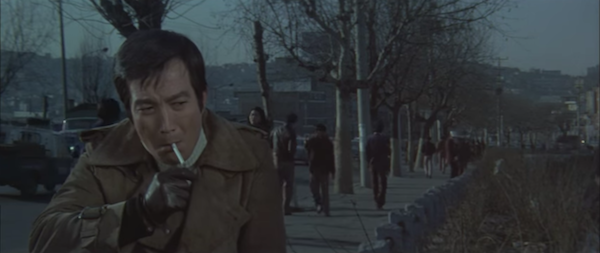
If you want to go see a movie in Seoul, you might well go to Wangsimni. Right above the neighborhood’s station on the central circular subway line stands a high-rise shopping complex whose multiplex theater boasts the largest IMAX screen in the country. It went up less than a decade ago, in 2008, but Seoul changes quickly. This has held true at least since the end of the devastating Korean War, when the capital of the new state of South Korea had nothing to do but develop. Still, Seoul remained in fairly rough shape a decade later, in the early 1960s, the time in which the protagonist of 1976’s Wangsimni, My Hometown (왕십리) last saw his homeland.

The disoriented but stylishly dressed Joon-tae first appears onscreen in a once deeply familiar Seoul, made strange in just fourteen years. As he struggles to place himself through the window of a cab, the driver asks what he’s looking for. “I don’t see the trolley,” says Joon-tae. “It’s been at least ten years since they got rid of the trolley,” the driver tells him. Joon-tae asks about another railcar he used to ride in his youth. “Trolley, railcar… that’s all history.” An Angeleno in the same era and in the same situation would have had the same conversation. Where did all the streetcars of the far-reaching Pacific Electric and Los Angeles Railways go?

Their disappearance looked dramatic enough to convince some of a conspiracy, but larger processes had converged to turn the city into something other than it had been before. Just as Los Angeles discarded the trappings of the late 19th and early 20th century it spent as a booming, barely-tamed settlement (and, to an extent, giant real-estate hustle) on the edge of the continent, Seoul discarded the trappings of the late 19th and early 20th century it spent as a subject of the Japanese empire. But that mid-1970s Angeleno riding back into town might also wonder about something else: where did all these Koreans come from?

Read the whole thing at the Los Angeles Review of Books.

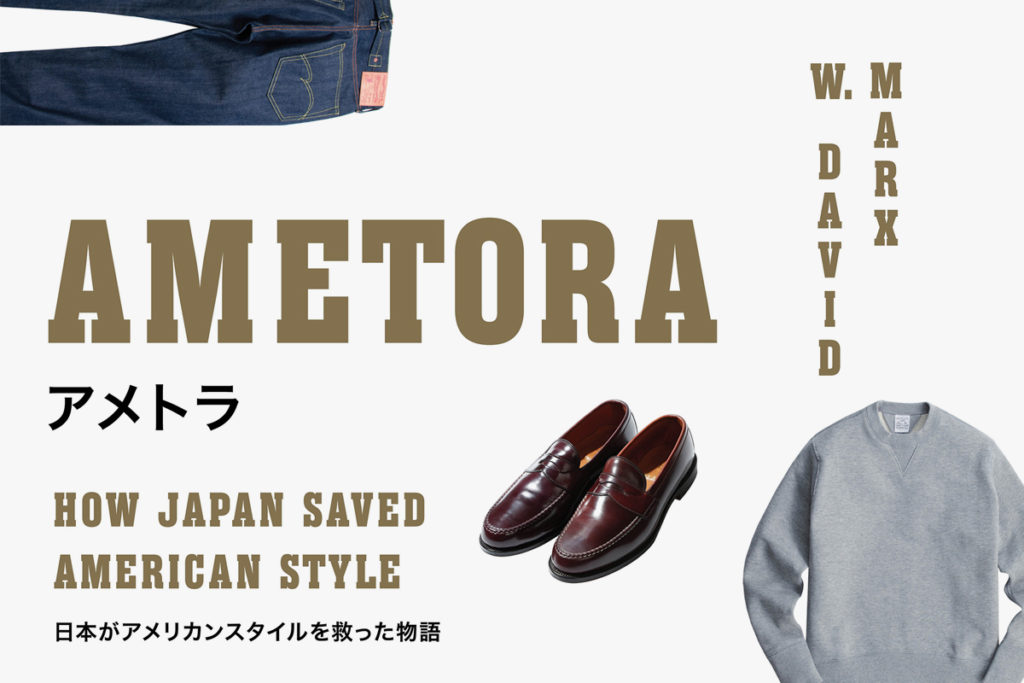
Los Angeles Review of Books: W. David Marx’s “Ametora: How Japan Saved American Style”

ametora

Forty years ago, four Japanese writers and photographers came to town and invented Los Angeles. Or rather, they invented an image of Los Angeles they could distill, package, and sell — first to Japan, then to the rest of the world — with the debut issue of Popeye, published July 1976. Described in its own subtitle as the “Magazine for City Boys,” Popeye would go on to stake out and ultimately dominate its territory in the world of Japanese men’s style print media, one of the most internationally visible branches of that country’s still shockingly robust print media ecosystem.

Popeye celebrated its 40th anniversary this year with a special 831st issue that contained a complete reprint of the first, with its extensive report on the lifestyles of the young and Californian, including instructions on how to jog, surf, skateboard, and hang-glide; seven pages of nothing but sneakers; and, most in-depth of all, a 27-page feature on the campus of a distant school called the University of California, Los Angeles. “It was all totally new,” the magazine’s first editor Yoshihisa Kinameri recalled to the Los Angeles Times. “In Japan at the time, students had maybe two kinds of sneakers, and they were cheap and not stylish at all. […] In Los Angeles, people looked happy and cheerful. It was magical; it was like heaven.”

The issue raised Japanese interest in UCLA to such a pitch that the bookstore in Ackerman Union, the subject of its own two-page spread, had to put up Japanese-language signage in order to handle the flow of tourists desperate for letterman jackets and gym shorts in blue and gold. This localized craze foreshadowed corporate Japan’s buying spree across the United States in the late 1980s, which was to be fueled by the asset bubble that briefly enriched the Japanese beyond even their own wildest dreams. It also came as a colorful moment in the story of Japan’s interest in American clothing, and specifically menswear, which W. David Marx tells in Ametora: How Japan Saved American Style.

Read the whole thing at the Los Angeles Review of Books.

콜린의 한국 이야기: 옥상에서

%e1%84%92%e1%85%a1%e1%86%ab%e1%84%80%e1%85%ae%e1%86%a8-%e1%84%8b%e1%85%b5%e1%84%8b%e1%85%a3%e1%84%80%e1%85%b5-15%e1%84%8e%e1%85%b3%e1%86%bc

우리 아파트는 15층 건물의 6층에 위치하고 있다. 나는 이따금 옥상에 올라가서 동네를 내려다본다. 우연히 옥상에 갈 수 있다는 것을 알게 되었다. 6층을 지나서 계속해서 계단을 올라갔다. 올라가면서 주변은 조용해지고 계단에는 화분에 심는 식물로 만든 작은 정원들도 있었다.

대개는 계단에서 담배를 피우는 사람과 전화통화를 하는 사람들이 몇 명 있지만15층에는 전혀 없는 것 같았다. 옥상에는 주거할 수 있는 공간을 짓지 않아서 아주 평화롭고 생각하기에 좋은 것 같다. (나는 거기에서 그렇게 생각하면서 때때로 맥주같은 음료를 마신다.)

처음 갈 때가 늦겨울이라서 눈이 조금 남아 있었다. 그리고 봄과 여름에 몇 번 다시 옥상에 올라가면서 동네가 변하는 걸 보게 되었다. 날씨가 점점 더워지면서 옥상에서 내려다본 작은 집들의 옥탑에 여러 가지 색들은 다시 보이게 되었다. 아파트 건물 바로 뒤에 있는 주민회관의 옥탑에서 할아버지들께서는 바둑을 다시 두기 시작하셨다.

%e1%84%92%e1%85%a1%e1%86%ab%e1%84%80%e1%85%ae%e1%86%a8-%e1%84%8b%e1%85%b5%e1%84%8b%e1%85%a3%e1%84%80%e1%85%b5-15%e1%84%8e%e1%85%b3%e1%86%bc-2

우리 동네의 건물외관도 변화하는 것을 느낀다. 나는 지난 몇 달 동안 몇 개의 오래된 건물을 철거한 것을 알아차렸다. 오래된 건물 철거가 끝나기도 전에 새로운 큰 건물이 빠르게 지어졌다. 나중에 알고 보니 그 건물은 또 다른 새로운 아파트의 모델하우스였다. 우리 아파트의 옥상에서 내려다보니 다양하게도 벽돌로 지은 저층의 주택과 멀리 있는 고층의 건물들도 보여진다.

앞으로는 우리 동네에 큰 고층 건물들이 들어와서 전체적으로 전반적인 모습이 지금보다 훨씬 높아질 거라고 확신하지만 내가 맨 처음에 이사온 작년 가을과 비교하고 이동네에 이사한지 1년이 되는 이번 가을과 비교해봐도 당분간은 여전히 지금의 모습이 유지될 것이라고 생각한다.

Korea Blog: Nam June Paik and the Society of Screens

KB - Nam June Paik Show 1

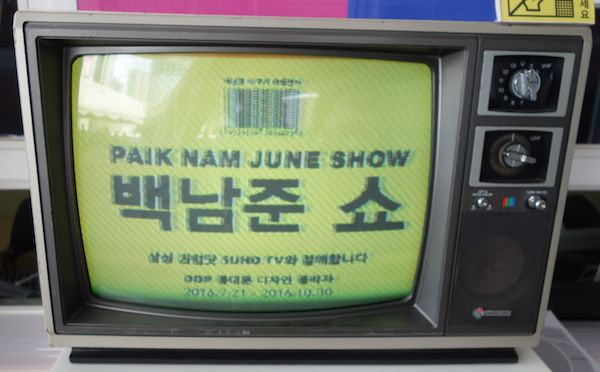
Video monitors started appearing on Seoul’s subway trains long before I arrived here. More video monitors — or, to be precise, old televisions — started appearing on those video monitors a few months ago, announcing a big show of the work of video artist Nam June Paik. (Paik made his name in the West, literally, with not just unconventional Romanization but a Western-style re-ordering that put his given name first and family name second.) The straightforwardly titled Paik Nam June Show (백남준 쇼), which runs through October at Seoul’s Dongdaemun Design Plaza, commemorates the tenth anniversary of the death of the most creative old-television enthusiast ever to live, as well as, for a time, the most famous Korean artist — and quite possibly the most famous Korean — in the world.

“I start in 1960, first time television sets become cheap, become secondhand, like junk,” said Paik in a 1975 profile by New Yorker art critic Calvin Tomkins. “I buy thirteen secondhand sets in 1962. I didn’t have any preconceived idea. Nobody had put two frequencies into one place, so I just do that, horizontal and vertical, and this absolutely new thing comes out.” He refers to his discovery that manipulating the electronics television sets use — or then used, anyway — to produce an image could produce, in an unpredictable fashion, another, stranger image.

This led to his creation, with Japanese engineer Shyua Abe, of the more controllable Abe-Paik Video Synthesizer, and ultimately to his status as the father of video art, builder of television robots, television cellos, television-watching Buddhas, and television maps and flags of the United States of America. While other artists began to use video around the same time he did, when the gear came down in size, down in price, and out of the studio, none displayed quite the same intensely zealous interest of the early adopter.

Read the whole thing at the Los Angeles Review of Books.

Guardian Cities: 45 Years of Reyner Banham’s “Los Angeles: The Architecture of Four Ecologies”

reyner banham los angeles

“Now I know subjective opinions can vary,” the journalist Adam Raphael wrote in the Guardian in 1968, “but personally I reckon LA as the noisiest, the smelliest, the most uncomfortable and most uncivilised major city in the United States. In short, a stinking sewer…”

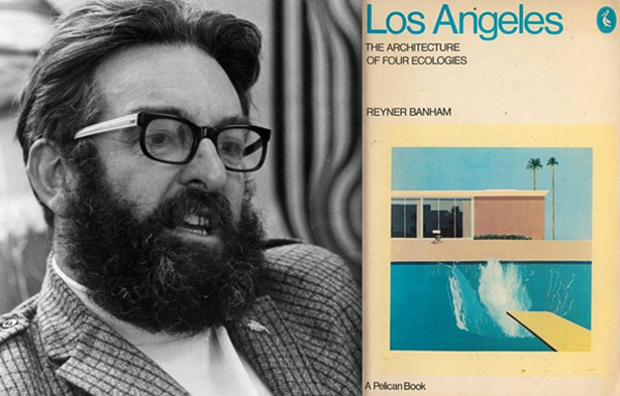
Three years later, Raphael’s words appeared in print again as an epigraph of Reyner Banham’s Los Angeles: The Architecture of Four Ecologies – the most exuberantly pro-Los Angeles book ever written. Ever since publication, it has shown up on lists of great books about modern cities – even those drawn up by people who consider Los Angeles anything but a great American city.

Somehow, this book that drew so much of its initial publicity with shock value (“In Praise (!) of Los Angeles”, sneered the New York Times review’s headline) has kept its relevance through the decades, such that newly arrived Angelenos still read it to orient themselves. But what can it teach us about the Los Angeles of today?

An architectural historian a decade into his career when he first visited, Banham knew full-well that his fellow intellectuals hated Los Angeles. How and why he himself came so avidly to appreciate it constitutes the core question of his work on the city, which culminated in this slim volume.

The “many who were ready to cast doubt on the worth of the enterprise”, he reflected in its final chapter, included a “distinguished Italian architect and his wife who, on discovering that I was writing this book, doubted that anyone who cared for architecture could lower himself to such a project and walked away without a word further.”

Read the whole thing at the Guardian.