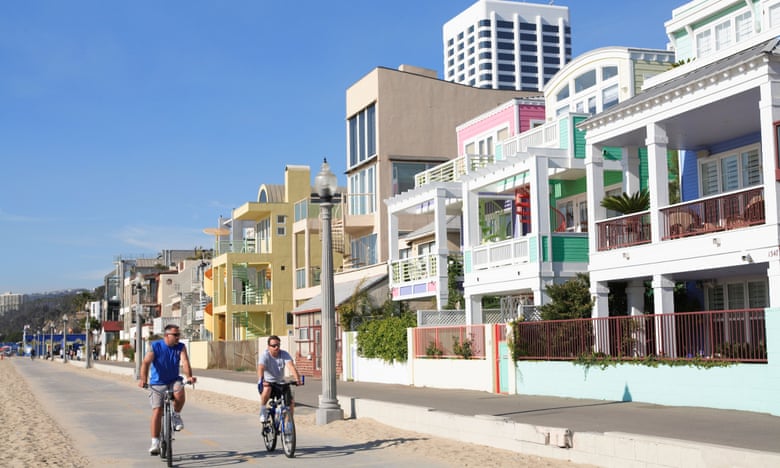
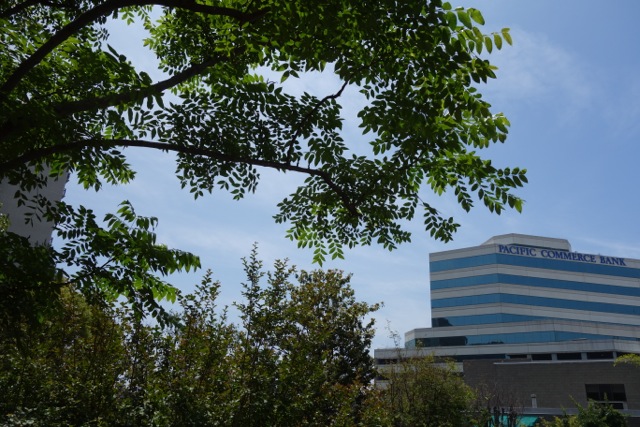
Those who envision themselves living in Santa Monica, the wealthy and politically progressive coastal enclave west of Los Angeles, no doubt envision themselves living happily there. It would seem to have everything: miles of coastline with beaches open to all, the striking Santa Monica mountains just to the north, plenty of equally striking southern-Californian architecture (its many celebrity residents include the illustrious architect Frank Gehry), top-rated schools, police and firefighters, and, of course, that world-famous pier.
It has also avoided some of the problems that plague Los Angeles, from the financial (its general fund reserve exceeds that of LA, which has over 40 times Santa Monica’s population) to the cultural (that population itself – among which you more often hear British accents than the babel of tongues that characterise the big city just east – appears to get along without much visible conflict). Given this sun, sea, stability and prosperity, one would imagine that one’s wellbeing would take care of itself.
However, starting in 2013, the city of Santa Monica began developing a means by which to gauge, both objectively and subjectively, whether its citizens really do enjoy such a famously high quality of life. The Wellbeing Project, funded by a million-dollar grant from Bloomberg Philanthropies’ first Mayors Challenge, a competition meant to spur city leaders to come up with, in the words of founder and former New York City mayor Michael Bloomberg, “innovative new ways to address urban challenges – and then share what’s working with the world”.
The same year the Mayors Challenge awarded a grant to Santa Monica for the Wellbeing Project, it also awarded grants to four other American cities – Chicago, Houston, Philadelphia, and Providence – to fund their own ideas. As the smallest in that cohort by a wide margin, Santa Monica looked like an outlier from the beginning, but its modest size also made its proposal more viable, given its stated ambition of not just breaking down overall quality of life into a set of measurable factors, but actually going out and measuring them in its population of 93,000.
This week, the new site Cureditor has brought me on as guest curator, meaning they’ve posted an interview with me and will put up a new one of my cultural recommendations each day. They asked for a selection from my own stuff (I picked the video essay on Speed) and then for four others from around the web: first up, Junot Díaz on Fukuoka. If you think they will continue to have to do with Los Angeles, Japan, other cities, and other parts of east Asia, you are right.
You can find other interviews and such at my about page.
I’ve passed through Sacramento fairly often, but only last weekend did I get a chance to really explore the city — by which, of course, I mean explore the city by bicycle. I’d had my suspicions that its flat, orderly downtown would prove highly bikeable, as indeed it did. And since I rode around on a Saturday and Sunday morning in a town dedicated to state government, traffic certainly never became an issue.
You can’t really get lost in downtown Sacramento. Train tracks border the north side of its ultra-regular grid, and freeways take the other three sides: the 50 to the south, the 80 to the east, and the 5 to the west — particularly unfortunate, that last, since it stands between downtown and the Sacramento River (with the wooden-sidewalked Gold Rush tourist trap of Old Sacramento wedged in between). You can only see so many waterfront freeways before you figure 20th-century urban planning is just punking you.
Downtown also seems, alas, to have gone all in on one-way streets, but what they lose urbanistically, they almost make up for orientationally, going from west to east in numerical order and north to south in alphabetical order. Between the east-west streets come smaller stretches called “Alleys”: Fat Alley, Jazz Alley, Quill Alley, Victorian Alley — they, too, adhere strictly to the alphabet.
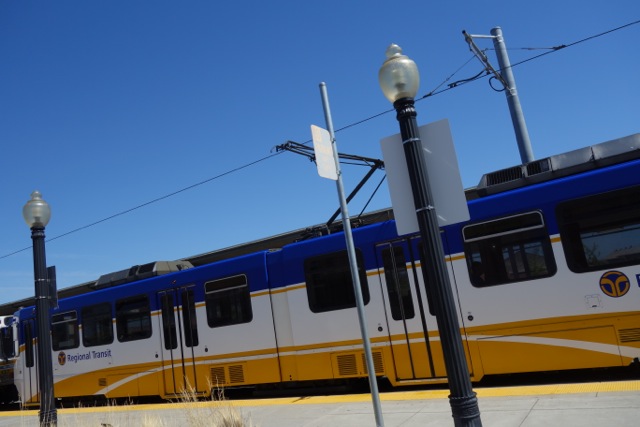
People who’ve lived in Sacramento in decades past tend to regard the city as a pretty dull place, possibly out of comparison to San Francisco a hundred miles to the west. For all I know it may still be, taken in the long term, but I found myself impressed by a number of its urban features. Most visibly, it has the beginnings of a rail system (which actually began operation in the mid-1980s), though it for the most part lacks dedicated lanes and, to look at the map and service schedule, seems mostly commuter-oriented.
That aligns with the description of Sacramento offered by one friend who grew up there as a city where “everyone sort of flees to the suburbs after work.” Perhaps that made me hyper-aware of the signs of nightlife I did see, up to and including a steady stream of pedicabs I watched pass while sitting outside at a wine bar. (One pedicab company offers complete crawls of the city’s wine bars — mental note.) But there I also had a view of the “could do better” column: the clubbing crowd looked demographically bland and rather trashily dressed even by clubbing standards, and street craziness clearly remains a problem: at one point I watched a tie-dyed tweaker chase a much cleaner-cut fellow down the street with a knife.
Seated at another sidewalk table for brunch the next morning (downtown Sacramento definitely has brunch covered, if that’s your metric), I watched a similarly afflicted middle-aged man whip off his shirt and start screaming about the government. Bring up this problem in California, and someone will usually reply, bitterly, that it only became a problem because “Reagan closed the mental hospitals” — and leave it at that, as if it precluded all further discussion. I mean, I don’t have a solution myself, but I figure much of it just comes down to outnumbering: if the meth-head or shirtless conspiracy theorist stands alone on the sidewalk, you sense a blighted neighborhood; if he’s surrounded by hundreds of “normal” people, you don’t even notice.
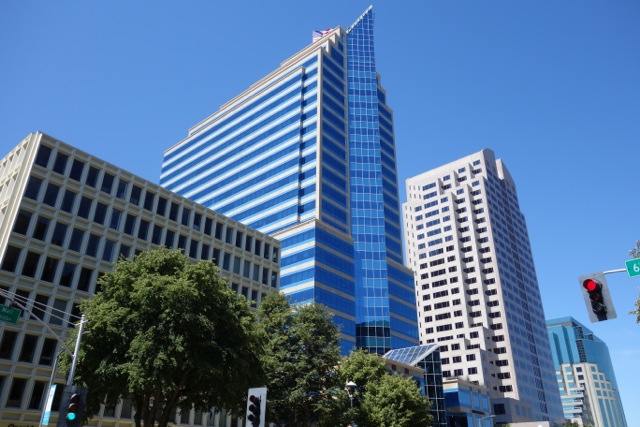
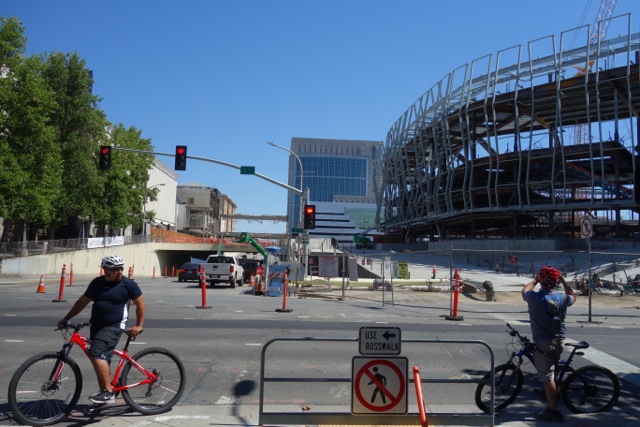
That’s happened to an extent in downtown Los Angeles, seemingly in line with how much new housing has appeared there. Downtown Sacramento has a fair few new-looking residential and mixed-used projects too, and scrolling through the archives of Living in Urban Sac I see plenty more on the way. Even apart from the much-publicized Kings stadium now under construction (which overwrites a 1990s-era mall), the place will probably change more over the next fifteen years than it has over the past 25, when all — all — of the ten tallest buildings on its skyline opened for business. The average newness of its built environment makes downtown Los Angeles look like Uruk by comparison.
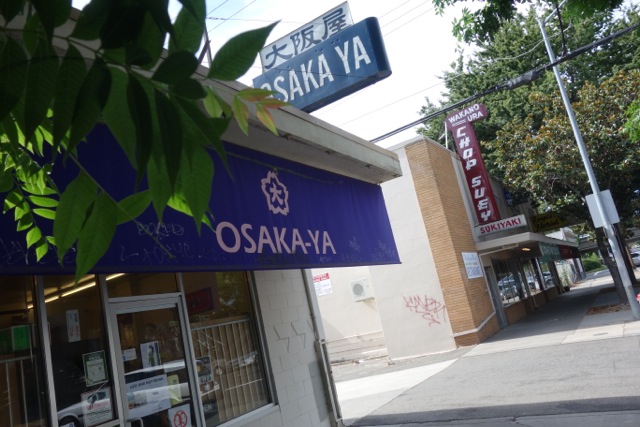
But the past still exists there. Riding through the quiet streets of trees (it turns out that “City of Trees” nickname isn’t just #branding) and modest houses out front of which oldsters read the newspaper and hipsters lounge around on junky lawn furniture, I happened upon the remains of a Japantown. I couldn’t resist stopping in to Osaka-ya, a century-old shop named after my favorite Japanese city, to buy a couple trays of their famous peanut butter mochi (one chunky, one smooth) to take home. According to the Sacramento Bee, the city’s original Japantown succumbed to the bulldozers during a mid-1950s building boom.
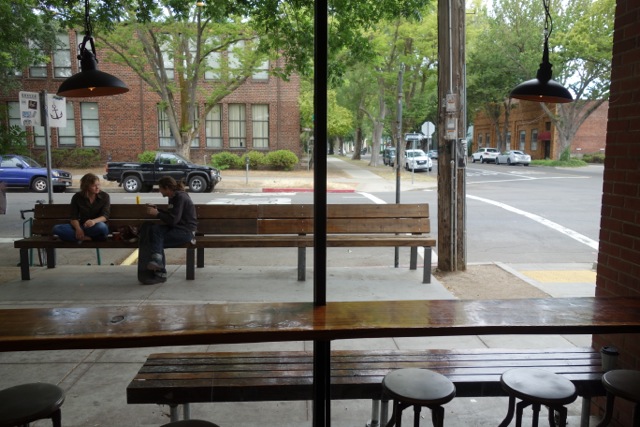
Not far from there stands Insight Coffee Roasters, the first of the company’s three locations in downtown Sacramento. I sought it out on the recommendation of Detroit-based math podcaster Samuel Hansen — who particularly endorses their decaf, but I went early in the morning, so, well, yeah. Sitting with my americano at their front window for an hour or two, I watched a couple of runaway types idle and chat on a bench outside.
It then occurred to me what other runaway-friendly city Sacramento reminded me of. Coffee, rail (at least some of it), a river (albeit not a well-used one), trees, bikeability (though it could use more infrastructure), a lot of low-rise skyscrapers built not that long ago, not that much diversity: why, it felt like no other place in California so much as it felt like Portland, Oregon. I’ll want to check in again after a decade not just to have a look at the new towers, but to see who’s successfully living the dream of the nineties.
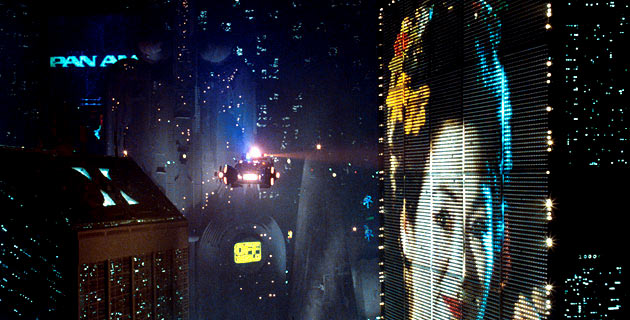
If you interpret the question “What’s your favorite movie?” as “What movie have you seen the greatest number of times?”, then Blade Runner is my favorite movie. (Actually, Sans Soleil remains a contender there — but in any case, my favorite movie surely has something to do with Japan and the early 1980s.) And so I happen to have written a great deal about Blade Runner over my years at Open Culture, a site for whom the film has provided rich subject matter in general.
And so I give you all my Blade Runner-related Open Culture posts so far:
Colin Marshall talks with Oliver Wang, a DJ, an associate professor of sociology at CSU Long Beach, and a former producer of the Los Angeles Review of Books podcast. He’s a writer on topics from Asian American hip-hop, retro soul music, the critical geography of the Kogi truck, and the nature of Universal CityWalk, and his new book is Legions of Boom: Filipino American Mobile DJ Crews in the San Francisco Bay Area.
You can stream the conversation just above, listen to it on the LARB’s site, or download it on iTunes.
We hit up a favorite Korean barbecue spot with my cinephile friend Michael, who recently came to Koreatown after five years spent in actual Korea. Naturally, the conversation turned to Korean films we both knew, and big names from the Korean cinema boom of the early 2000s came up: Joint Security Area (110 minutes), Memories of Murder (127 minutes), Oldboy (120 minutes), The Host (119 minutes). I include the runtimes to support the conclusion we happened to reach: Korean movies aren’t very long. Few of the major ones get much past the two-hour mark, and the average production feels closer to 90 minutes. And Korean three-hour films? Nonexistent, apparently.
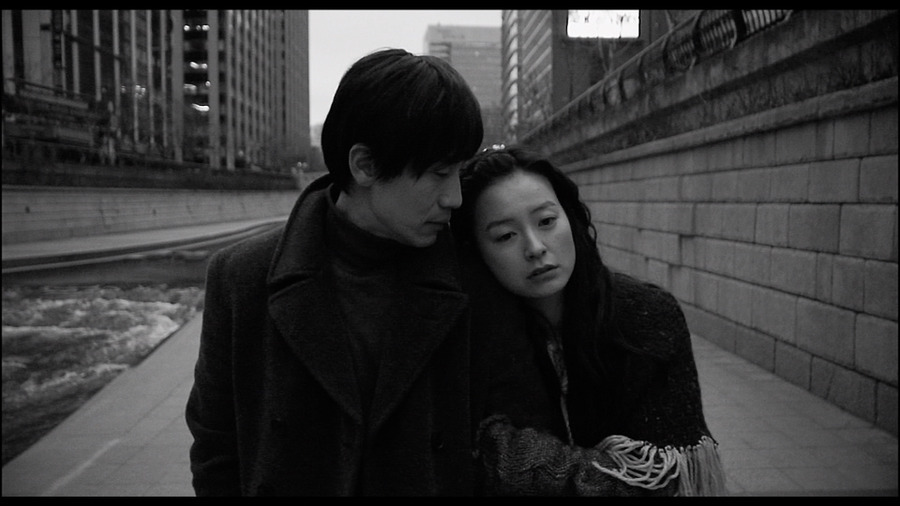
No sooner did we decide that than another friend, a Korean-American who gets back there every once in a while, presented us with the opportunity to watch Café Noir, a Korean film that, at 197 minutes in, gets over the three-hour mark by a pretty safe margin. It immediately became (maybe apart from the full version of Until the End of the World, whose screenings legally require the presence of Wim Wenders) the motion picture I most wanted to see in the world, not just because of its length, but because of the background of its director: Jung Sung-il began as a film critic — “a representative man of the first generation of Cinephile in Korea,” says KoBiz, “with furious and continuous writing about film” — and only later turned filmmaker, a career path that, to my great disappointment, seemed to have died with Truffaut. Wasn’t filmmaking supposed to be the ultimate act of film criticism?
Café Noir has another unusual thing going for it: its view of Seoul. Given my interest in cities in cinema, I often ask Koreans to name their favorite films about that particular city, and most of them respond as if I’d asked them the distance between the moon and sun. (The second most common response is, curiously, Cold Eyes, a local remake of a Hong Kong picture from a few years before.) This despite the fact that most Korean movies seem to take place in Seoul, a condition which has produced a sort of accepted cinematic view of the capital.
Café Noir has a different one: much of the second half takes place in the freeway-turned-public-space of the Cheonggyecheon Stream (which I wrote about for the Guardian), and several memorable sequences play out in locations high above the city, such as on the funicular running up to Seoul Tower. Other sequences involve long tracking shots which give a strong linear sense of the city — and often not the parts approved by the bureau of tourism. I’d call ita cinephile’s movie, not just because of its form, but because of the extent of its references to other works of Korean cinema, all the way down to D-War (which — you laugh — may yet show up among my Los Angeles video essays).
I can’t quite tell whether to call Café Noir an urbanophile’s movie — it hits the whole “isolation in the metropolis” feeling pretty hard — but I certainly enjoy its heightened awareness of a city that, like Los Angeles, so many films treat as nothing more than the default set of backgrounds. In my Notebook on Cities and Culture interview with long Korea-resident American film critic Darcy Paquet, we talk about films that take Seoul seriously (he mentions Cold Eyes), and more recently, for his 한국일 보 column on life in Korea, he wrote about the view of the rapidly-changing city you get if you watch the right movies from over the past few decades:
After beginning with some brief glimpses of the city in the years before the destruction of the Korean War, we see the outdoor markets and chaotic reconstruction of the 1950s and early 1960s, the slow urbanization of the late 1960s, and then the appearance of high rise buildings and overhead pedestrian crossings in the 1970s. (For some reason, every Korean film from the 1970s seems to prominently feature an overhead pedestrian crossing.) By the late 1980s, manifestations of wealth appear more obviously in the cityscape. There’s something unforgettable and bittersweet about the iconic helicopter shots of the Express Bus Terminal and Apgujeong Apartments at the end of Chilsu and Mansu.
You can watch Chilsu and Mansu, a picture we also discuss in our interview, free on the Korean Film Archive’s invaluable Youtube channel — or Marriage Story, a movie I watched just the other day, and which in most ways represents the polar opposite of Café Noir. Darcy writes about Marriage Story in his book New Korean Cinema: Breaking the Waves, describing that 1992 release as the first “planned film” in the industry’s history: not only did it get its financing from mighty conglomerate Samsung, it got not just tested but conceived by round after round of focus groups in which members of its target demographic dictated exactly that they wanted to see.
That sausage-factory of a process produced a more interesting movie than you might expect, and, like most works of Korean cinema, one with sharper edges that you might expect. (Its frank depiction of wife-beating alone would feel horribly incongruous in any equivalently major American film, let alone a rom-com.) But although set in Seoul, I wouldn’t call it urbanistically interesting. The couple at its center live a lifestyle almost implausibly middle-class by the standards of Korean newlyweds in the early 1990s, and in many ways a more Western one than I live myself: they drive everywhere, for instance, which half the time reduces the city to a gray smear outside the car window. Still, scenes like their big rooftop fight around which the camera revolves and revolves do reveal the Seoul of that era, a metropolis still very much under construction.
Why would I watch such an aggressively mainstream film in the first place? For the same reason Koreans plow through entire seasons of Friends: language practice. Seven years into studying it, Korean remains, for me, an infuriatingly difficult language to reliably understand (and no matter how long you live in Korea, as I heard Darcy say in another interview, you never really master catching anyone’s name over the phone the first time). According to long-term foreign residents of Korea, nothing trains your ear as well as watching Korean movies with Korean subtitles (which the Korean Film Archive helpfully provides) over and over again. Hence my usual answer to the usual question about what got me into Korea: most truthfully, it was the Korean language, but almost equally truthfully, it was Korean cinema. If I didn’t like the movies, I doubt I’d persist with learning the language — and my interest in Korean cities has kept that feedback loop going to the extent that, in a matter of months, I’ll live in an actual Korean city myself.
You can listen on the Soundcloud player just above, or you can download it from iTunes or the Bedrosian Book Club’s site. You can find my other recent media appearances on the about page here.
Crash drew great acclaim, up to and including an Academy Award for Best Picture, as a searing and incisive examination of racial tension and prejudice in Los Angeles, yet I’ve never met an Angeleno who likes it. Its indictment of the city — not, of course, a “real” city — as a tinderbox of incomprehension and resentment had genuine currency before the 1992 riots; it just had the bad luck to come out in 2004. But maybe viewers fifty years hence will look past all this overdetermination, overacting, and general overreaching to see how the film truly illustrates the great violence done to our society not by racism, but by the automobile.
The video essays of “Los Angeles, the City in Cinema” examine the variety of Los Angeleses revealed in the films set there, both those new and old, mainstream and obscure, respectable and schlocky, appealing and unappealing — just like the city itself.
I had lunch not long ago with Geoff Nicholson at Mr. Ramen, Little Tokyo’s finest perpetually reggae-soundtracked noodle shop. He reminded me of the existence of the James Irvine Japanese Garden, a fixture of (and fairly well-known wedding venue at) the Japanese American Cultural and Community Center. Built to the side of the JACCC’s not-particularly-loved gray concrete building (complete with “windswept plaza”) where I take Japanese classes each week and open to the public most days (although not the ones my classes happen on), it counts as one of the many features of downtown Los Angeles that you wouldn’t know about unless you knew about.
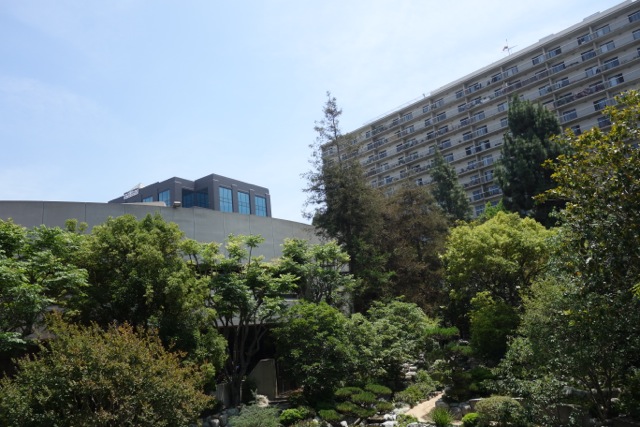
Though built below ground level, the James Irvine Japanese Garden garden doesn’t let you forget where you stand. A bank, a senior-housing high-rise, the JACCC’s also-concrete-y Aratani Theater: these and other visible modern structures keep downtown present, no matter how well-curated the east Asian plant life that partially obscures them. And in an urban Japanese garden, I want exactly that: the contrast between timeless botanical virtue and the starker claims of the slightly aging built environment.
By no means do only Japanese gardens pull this off. The low walls of the Lan Su Chinese Garden, located right in downtown Portland, allow in just enough of that city’s often low-rise but nevertheless highly reflective towers that I don’t mind paying its entrance fee. (Portland’s Japanese Garden, while nice enough, sits up in the hills as an escape from the city — not something for which I yearn.) But you can appreciate the Japanese gardens of Little Tokyo at no charge; the James Irvine Garden makes it explicit, while the garden on the third floor of the Doubletree Hotel works that way de facto, if not de jure.
The Doubletree dates from Japan’s property bubble of the 1970s and 80s, which resulted in a great many downtown Los Angeles towers built or bought with Japanese money, and has gone through a few names: when I moved here it was called the Kyoto Grand, and before that the New Otani. Through it all, its garden has remained, and remained accessible: sure, the signs say it’s for guests only, but just walk through the lobby (itself, despite an apparent renovation or two, something of a bubble-era time capsule) like you belong there and take the elevator to the garden level. (I still haven’t figured out which stairway leads there.)
The Doubletree’s vantage offers not just the contrast between garden and city, but between garden, city, and city to come. Newer buildings surround it, some so new that they’re still under construction. Several exemplify the “mixed-use” model, with retail and offices on the bottom and apartments and condos on top, that has finally gained traction here. I fear that the architectural blandness of many of these projects (though not necessarily the ones in Little Tokyo) will one day give mixed-use a bad name, but I still think about living in one of them in my next stint in Los Angeles. Hell, skybridges now have a bad name too, but whenever I visit the Doubletree’s garden, I leave by the one that connects it to the equally 1980s Weller Court; that way, I can go straight to Kinokuniya and browse their issues of Free & Easy. Could any mixed-use building I end up in, no matter how urbanistically sound, offer an amenity like that?
Colin Marshall talks with SamSweet, who has written on a variety of subjects, especially ones having to do with Los Angeles, in the New Yorker, the Paris Review, and Stop Smiling. He’s currently writing and publishing All Night Menu, a series of five 64-page books on “the lost heroes and miniature histories of Los Angeles.”
You can stream the conversation just above, listen to it on the LARB’s site, or download it on iTunes.