Saturday, December 31, 2016
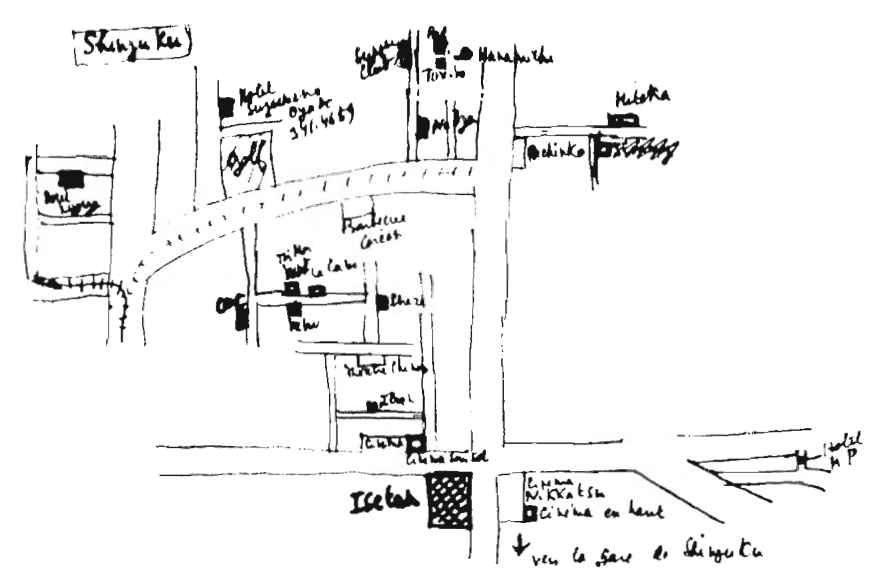
Roland Barthes first visited Japan in 1966, not long after the defeated and reconstructed country announced its return to the international community with the 1964 Summer Olympics in Tokyo. Japan would have hosted its first Olympic Games there in 1940, had World War II not caused the duty to pass to Helsinki. Now, half a century after the semiotician from Cherbourg walked its streets, the Japanese capital prepares for its second Summer Olympics in 2020, in hopes of signaling another reemergence: not from wartime devastation by the most advanced weapons known to man, but from the long hangover of the postwar economic bubble, burst in the 1990s, and the subsequent “lost decade” now turning into a lost quarter century.
By most economic and demographic indicators, Japan has long looked like a country in trouble, even though a foreign visitor sees signs of robust health everywhere: a refined and efficient service culture; reliable infrastructure; conspicuous displays of high technology; shops filled with an astonishing amount and variety of carefully designed products; lively packs of uniformed schoolchildren, the smallest of whom ride on the back seats of their mothers’ bicycles. The aftermath of 2011’s Tōhoku earthquake may have exposed deep and previously unsuspected societal frailties, and yet, on every one of my trips to Japan I marvel at all those well-put-together moms calmly biking their kids to school. Surely they indicate an achievement of which the rest of the developed world, no matter its wealth, can only dream — even if on paper the country itself looks about to lie down and die.
As a pioneer in the study of signs and symbols, Barthes would have enjoyed grappling with all the conflicting signals sent out by 21st-century Japan. He lived through most of the postwar years when the Japanese economy grew at an unprecedented rate, but he missed the downright grotesque inflation of Japanese asset prices in the decade after his death in 1980. By then the West, and especially the United States, nervously fixated on images of flush Japanese tourists landing in Hawaii and buying mansions in cash, sharp-suited Japanese businessmen lavishly entertaining on sinisterly vast expense accounts, and Croesan Japanese conglomerates snapping up Los Angeles’s movie studios and downtown high-rises.
Read the whole thing at the Los Angeles Review of Books.
Thursday, December 29, 2016
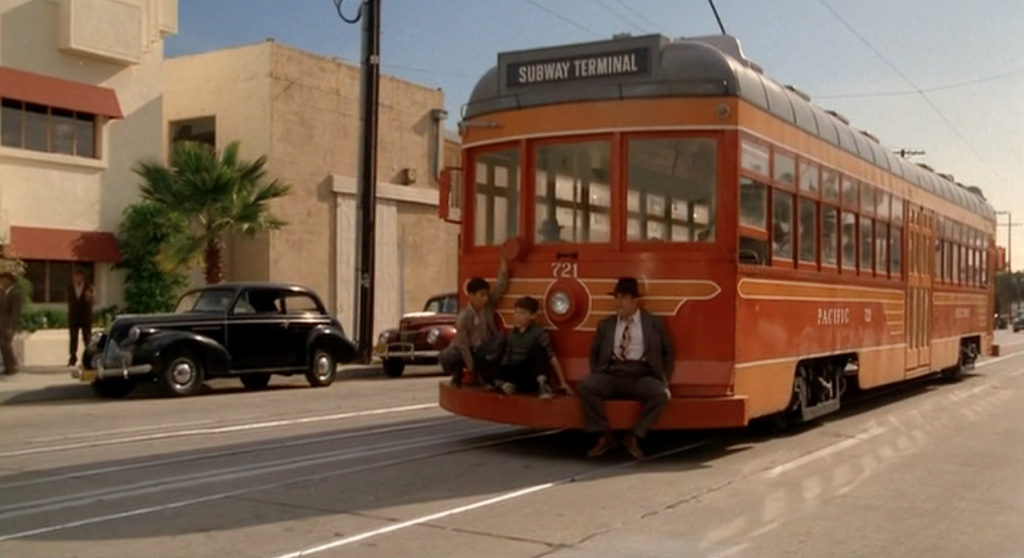
This week I talked with A Martinez, host of KPCC-FM’s Take Two, about how Who Framed Roger Rabbit? convinced Los Angeles that a General Motors-led conspiracy had taken away its streeetcars:
Los Angeles isn’t a cartoon, but it is a main character in the 1988 film “Who Framed Roger Rabbit?” The movie will be preserved this year in the National Film Registry by the Library of Congress along with 24 other important and influential films. On the surface, it’s a bright, noir comedy about cartoon actor Roger Rabbit who’s wanted for murder. But there’s an important plot point that has a basis in history: Roger is framed as an elaborate scheme by villain Judge Doom to demolish L.A.’s mass transit trolley system known as the Red Cars.
In their place, Doom plans to profit on the new project being developed by the city: freeways. “Eight lanes of shimmering cement running from here to Pasadena!” he monologues in the film’s climax. “Smooth, straight, fast. Traffic jams will be a thing of the past.” In real life, the Red Car system did fall by the wayside as automobiles took over the roads. Some say there was even a conspiracy at work to make it happen, just like in “Roger Rabbit” (but without the cartoons). What was fact and fiction about mass transit in the movie?
The Red Car network had veins that connected far-flung stretches of Southern California – Santa Monica to San Bernardino, Newport Beach to Van Nuys, Pasadena to Long Beach and more. Between it and the more local Yellow Car system, riders could ride on the rails on one of these streetcars to almost anywhere they wanted to. “It was the most extensive urban rail transit system in America, if not the world,” says historian Colin Marshall. “It’s farther than even the most ambitious Metro plans you see today of what’s going to happen in, like, 2050 or 2060 with the current wave of construction.”
You can hear the whole segment here. See also my Guardian article on the origins of the “Great American Streetcar Scandal.”
Monday, December 26, 2016

“LOS ANGELES NOVEMBER, 2019.” So, with that stark title card, begins the film that presented the most fully realized vision of the city’s future in cinema history to that point — and maybe still to this day. It also fixed its setting in the Western imagination as the go-to image of urban dystopia, though when Blade Runner premiered almost three and a half decades ago, that date must have felt comfortably distant. Now, a week before the year 2017 begins, Los Angeles may have got on track to become a densely built metropolis with high-rise-lined streets filled night and day with activity (and not just of the vehicular kind) later than Ridley Scott and company imagined, but the transformation looks well underway nevertheless.
Before its completion, however, it looks as if Hollywood will treat us to a new Los Angeles of the future with the sequel Blade Runner 2049, whose teaser hit the internet just last week. Speculation about a second Blade Runner movie has gone on for years and years, at least since the first’s recovery from its dismal initial release with improved director’s cuts and breathless critical re-evaluations. We know so far that the sequel will, like the original, take place in Los Angeles and feature Harrison Ford as Rick Deckard, the ex-LAPD artificial human-hunting (and possibly artificial human-being) Blade Runner of the title. Set 30 years after the events of Blade Runner, it will also introduce such new characters as its comparatively young protagonist, another Blade Runner called Officer K and played by Ryan Gosling (veteran of such impressive, and impressively dissimilar, recent Los Angeles movies as Drive and La La Land).
Blade Runner, dating as it does from an era of American fear and trembling over the skyrocketing value of the yen, posits a thoroughly Japanified Los Angeles: neon signs in untranslated kanji, ramen stands on the sidewalks, and most iconic of all, product-endorsing video geisha towering hundreds of feet in the air. That was, in some sense, the movie’s least fanciful element, given the number of businesses, properties, and towers in Los Angeles (downtown as well as over in Century City, that onetime downtown of the future) either built or purchased by Japanese money. Nobody could then have foreseen that Japan’s economy would stall out in the 1990s, taking whatever plans it may have had to render America its economic colony right off the table.
Read the whole thing at the Los Angeles Review of Books.
Tuesday, December 20, 2016
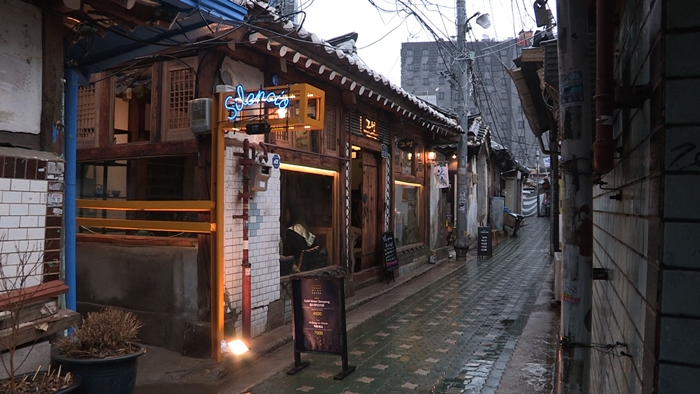
Each month I join Kurt Achin, host of Koreascape on Seoul’s English-language radio station TBS eFM, for an exploration of Seoul’s urban spaces. This time we’re joined by German-Korean architect Daniel Tändler of Urban Detail Seoul for a walk through Ikseon-dong Hanok Village, a 1930s-era housing development near downtown that has in recent years seen an influx of restaurants, bars, cafés, shops, and studios putting its traditional Korean residential architecture to whole new uses.
Stay tuned for further explorations of Seoul’s architecture, infrastructure, and other parts of the built environment. You can hear our previous segments here.
Sunday, December 11, 2016

I started writing the Los Angeles Review of Books Korea Blog on December 4th of last year, just three weeks after moving to Seoul from Los Angeles. One of my first posts covered a protest in Seoul Square; once of the most recent covered a series of demonstrations over the course of weeks that eventually brought up to a million citizens downtown to demand the resignation of President Park Geun-hye, the announcement of whose impeachment came just this past Friday. I’ll certainly be sticking around to see what happens next.
The year has proven stimulating politically but also culturally, what with events like novelist Han Kang and translator Deborah Smith winning the Man Booker International Prize for The Vegetarian. Charles Montgomery, who joined the Korea Blog after spending seven years teaching Korean literature in translation at Seoul’s Dongguk University, wrote about the victory and has since begun an ongoing serialization of his book-in-progress The Explorer’s History of Korean Fiction in Translation, the most recent installment of which you can read here.
Below you’ll find a selection of twelve of my essays from the Korea Blog’s first year, whose subjects range from Korea’s aforementioned protests to its educational culture to its cosmetic surgery to its art and architecture to its urban life to its Mexican food. It should provide something of a primer to readers new to the Korea Blog, but also a review of surfaces scratched. I look forward to going ever deeper into the literature, cinema, current events, and daily life of this fascinating country in the Korea Blog’s second year. As always, 읽어 주셔서 감사합니다.
Read the twelve selected essays at the Los Angeles Review of Books.
Tuesday, November 29, 2016
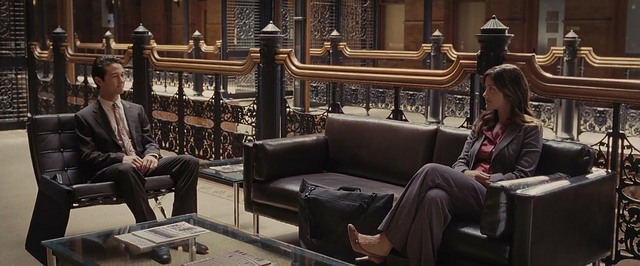
Though most moviegoers will have seen a lot of Bradbury Building, they may not recognize it as a landmark of Los Angeles architecture – unless, of course, they’ve seen Thom Andersen’s documentary “Los Angeles Plays Itself,” which devotes a solid block of its nearly three-hour runtime to the many roles it has played onscreen. “The movies discovered the Bradbury Building before the architectural historians did,” says its narrator. “The earliest appearance I know came in 1943: in ‘China Girl,’ it played the Hotel Royale in Mandalay, Burma. The following year, in ‘The White Cliffs of Dover,’ it played a London military hospital overflowing with wounded soldiers.”
Later films placed the Bradbury Building elsewhere: “Caprice” in Paris, “Wolf” in New York, “Murder in the First” in San Francisco. These and other roles may demonstrate the structure’s versatility, but they’ve surely also caused some confusion as to its actual location. Anyone seeking to satisfy an interest in Los Angeles architecture, though, will hear about the Bradbury Building’s place in its canon before they hear about anything else. It found that place thanks, in large part, to its celebration by influential Southern California architectural historian and Arts & Architecture Magazine contributor Esther McCoy, who launched her campaign in 1953, a decade after the building made its cinematic debut in “China Girl” and six decades after it first opened.
“There is nothing whatever accidental about it,” goes the quote from the magazine proudly included, for a time, on a handout provided to the Bradbury’s visitors. “There are no afterthoughts. It is a forever young building, out of a youthful and vigorous imagination. But it has left nothing to chance. Stairways leap into space because of endless calculations. The skylight is a fairy tale of mathematics.” This praise, like almost all the praise heaped upon the building ever since, focuses on its interior. When observers mention the exterior at all, they do so only do dismiss it: David Gebhard and Robert Winter’s “Architectural Guidebook to Los Angeles” describes its style as “mildly Romanesque,” but only in a parenthetical aside after they’ve first pronounced it “dull.”
Read the whole thing at KCET.
Sunday, November 27, 2016
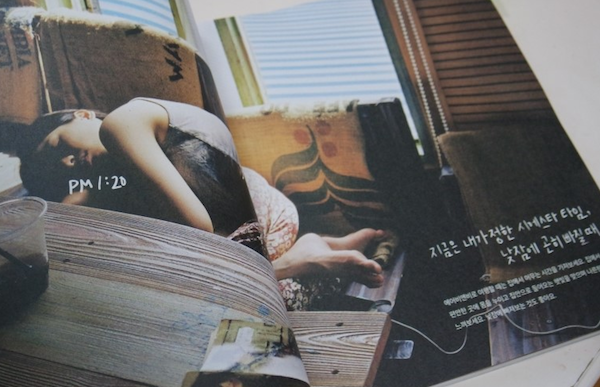
Stuff Koreans Like, a short-lived imitator of the mid-2000s satirical blog Stuff White People Like, only took ten posts to get to travel essay books. “Usually set in foreign cities (mostly New York or Paris),” writes its author, “they feature soft-focus photographs of café facades and interiors, coupled with inane text with no depth or historic/sociological insight into the destination being essayed about, just a lot of ‘Ooh this café was so pretty and its espresso so delicious. Ooh here’s another pretty café and its hot chocolate was so sweet.’” A tough assessment, but in its way a fair one: I come across dozens of (admittedly always well-designed) volumes that more or less fit that description whenever I browse the filled-to-bursting travel shelves at any of the bookstores here in Seoul.
The popularity of the Korean travel essay book is not lost on Airbnb, the hugely successful and rapidly expanding service that matches travelers in need of a place to stay with possessors of houses, apartments, spare bedrooms, or couches looking to rent them out. Not long ago, I noticed that piles of a paperback called 여행은 살아보는 거야, or Travel Is Living, had appeared on the counters of several of my usual Seoul coffee shops. At first glance, its production value seemed high enough — comparable to those carefully laid-out, photo-intensive travel books — that I assumed they were for sale. Then I realized that I could simply take one like I could take one of the cinema schedules or festival fliers stacked beside them, and soon after that, when I’d read a bit, I realized that I held in my hands a 200-page advertisement for Airbnb.
Not that Airbnb needs to convince me of their merits: over the past five years, I’ve used the site to book accommodations all over the United States, Europe, and Asia, including on my first trip to Korea. They’ve surely got their fair share of free advertising from me in the form of recommendations made to friends, or at least to friends on the young side: what I think of as an “Airbnb generation gap” seems to separate those less to use it (as guests rather than hosts, at least) from those more to use it, just as it once separated the venture capitalists more willing to fund it from those less willing to fund it. But Korea, where even grandma and grandpa show up in line for the latest-model smartphone, has less of a problem there.
Read the whole thing at the Los Angeles Review of Books.
Sunday, November 20, 2016

작년에 나는 한국에 살면서 일본에 다섯 번 여행을 갔고 거기에 도착할 때마다 일본에 있는 것에 대하여 기뻐했다. 다른 서양인들이 가끔 나에게 한국과 일본이 기본적으로 똑같지 않냐고 물어봐서 나는 그렇지 않다고 대답한다. 미국인이나 유럽인의 시각에서 보면 같은 아시아에 있는 한국과 일본이 비슷해 보일 수도 있지만 서로 비교하면 비슷한점들이 거의 없고 공통점도 거의 없다. 한국에 살고 싶었던 이유들 중 하나가 비행기를 한두 시간 동안만 타면 일본에 갈 수 있는 것인데 두 나라가 서로 지형적으로 가까움에도 불구하고 두 나라 사회의 모습은 정말 다르다.

일본에 대해서 내가 가장 좋아하는 점은 거기에 있는 사람들이 일본어를 한다는 것이다. 당연한 얘기일 수도 있지만 사실 한국과 비교하면 일본은 큰 차이점이 있다. 일본에서는 대부분의 일본인들이 내 얼굴을 봐도 나에게 일본어로 말하는데 반면에 많은 한국인들은 한국에서도 서양인을 보자마자 반사적으로 자신의 영어를 시험해 본다. 그 서양인이 한국에 오랫동안 살았거나 영어를 할 수 없을 지에 대해서는 상관하지 않은다. 나는 한국어를 잘 못 하고 일본어도 한국말에 비하여 더 잘 못하지만 일본인들이 외국인에게도 대게 일본어로 얘기하는 것에 감사한 마음을 가지고 있다. 그렇기 때문에 나는 일본에 머물때 마다 일본어를 조금 더 습득한다.

내가 좋아하는 또 다른 점은 일본인이 느끼는 성공의 개념이다. 일본에서 제일 중요한 점은 일의 과정이다. 모든 것을 어떻게 해나가는지에 대하여 초점을 맞춘다. 예를 들면 거기에서 성공이라는 것은 옷 팔기나, 커피 타기나, 초밥 만들기나, 만화 그리기 같은 한가지만을 선택하고 그 일에 열심히 집중하는 것이다. 그러한 전통 때문에 일본에서는 평범한 것을 포함해서 모든 것들이 약간 예술적인 분위기를 가진다. 대조적으로 한국에서 제일 중요한 점은 일의 결과이다. 그렇게 생각하지 않은 한국인들이 있을 수도 있지만 내가 보기에는 오늘날 한국에서는 대체적으로 돈과 사회적인 지위를 중요시한다. 한국에서 그 돈과 사회적 지위 자체는 성공이라 여겨지고 그 것들을 어떻게 얻었는지는 중요하지 않은 편이다.

일본에서는 미국에서 전혀 볼 수 없는 것들을 볼 수 있다. 예를 들면 어느 길거리에서나 자판기에서 음료를 쉽게 살 수 있다. 한국에도 일본과 비슷한 기계가 있긴 있지만 자판기의 음료는 비교적으로 다양하지 않다. 게다가 일본에서는 미국이나 한국에서 볼 수 없는 것을 볼 수 있다. 평일 아침마다 작은 마을뿐만 아니라 도쿄에서도 많은 일본 어머니들이 자전거로 아이들을 학교에 데려다주는 것은 하나의 좋은 예가 될 수 있다. 나는 한국인들이 그것에 대해서 어떻게 생각하는지 잘 모르겠지만 대부분의 미국인들은 아마 그런 일본의 어머니들이 미쳤다고 생각할 것이다. 내 생각에는 모든 사회에서 어머니들이 자전거로 아이들을 학교에 데려다줄 수 있게 되는 것이 바람직해 보인다.

일본에서 또 다른 좋은 볼 거리는 모든 도시 전체가 귀여운 마스코트들로 가득 차 있다는 것이다. 회사와 백화점과 교통 카드를 비롯하여 서로 다른 마스코트가 있고 지역마다 거의 다 의인화된 동물 마스코트들이 있다. (하지만 오사카에 본사가 있는 포키라는 빼빼로와 같은 과자를 만든 회사의 유명한 마스코트인 글리코의 달리기 선수는 예외이다.) 한국에도 그런 마스코트들이 있지만 대부분은 동물이 아니라 얼굴이 있는 물건이나 건물이나 음식물 같은 것이다. 일본의 시각적 문화와 한국의 시각적 문화는 완전히 다른 면을 보이고 그 두 나라의 광고와 건축물과 간판과 옷과 사탕 등을 통해 엿볼 수 있다.

나에게 일본은 재미있는 점들이 많지만 여러 가지 문제점들도 있다. 일본은 서로 다른 회사들이 다른 지하철을 운영하기 때문에 모든 지하철 노선을 한눈에 보여주는 지도를 찾기는 쉽지 않다. 일본은 첨단 기술로 대변하는 모습을 보이지만 일상 생활에서 낮은 수준의 기술도 생각보다 많이 보인다. 일본에서는 카드를 쓸 수 없고 현금으로만 내야 하거나 인터넷이 아닌 서류 업무만으로 해야 되는 경우가 한국보다 많이 있다. 일본에서 일상적인 대화는 틀에박힌 편이어서 놀랄만 한 점이 없고 대화뿐만 아니라 일상의 삶 또한 쉽게 예견할 수 있다.
나에게 좋은 면과 싫은 면이 있지만 한국은 놀라운 나라여서 참으로 흥미롭다. 일본인들이 항상 해왔던 것을 잘 하는 반면에 한국인과 한국 나라는 변화를 즐긴다. 그점 또한 내가 한국에 살고 싶은 이유 중 하나이다. 어찌됬든지 간에 일본에서 있다가 한국에 돌아올 때마다 한국에 돌아올 수 있음에 감사한 마음을 가지게 된다.