Skip to content

Seoul Urbanism on TBS eFM’s Koreascape: the first Seoul Biennale of Architecture and Urbanism

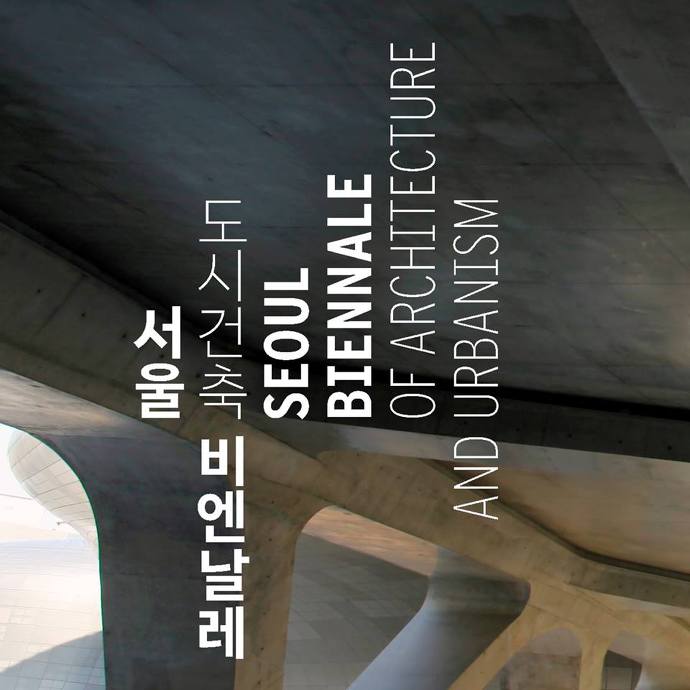
Each month I join Kurt Achin, host of Koreascape on Seoul’s English-language radio station TBS eFM, for an exploration of one of Seoul’s urban spaces. This time we visit the very first Seoul Biennale of Architecture and Urbanism, a months-spanning celebration and an exploration of how cities across the world have found innovative ways to use, preserve, and improve their urban and natural “commons.” At one of the Biennale’s main exhibitions at the Dongdaemun Design Plaza, we learn from more than fifty different world cities — Rome with its historical cultural spaces, Bangkok with its street food, Reykjavik with its hot tubs, and even Pyongyang, by a replica of one of its high-rise apartments — what Seoul could incorporate into the next phase of its history.

Stay tuned for further explorations of Seoul’s architecture, infrastructure, and other parts of the built environment. You can hear our previous segments here.

Los Angeles Review of Books: Down with the English Language

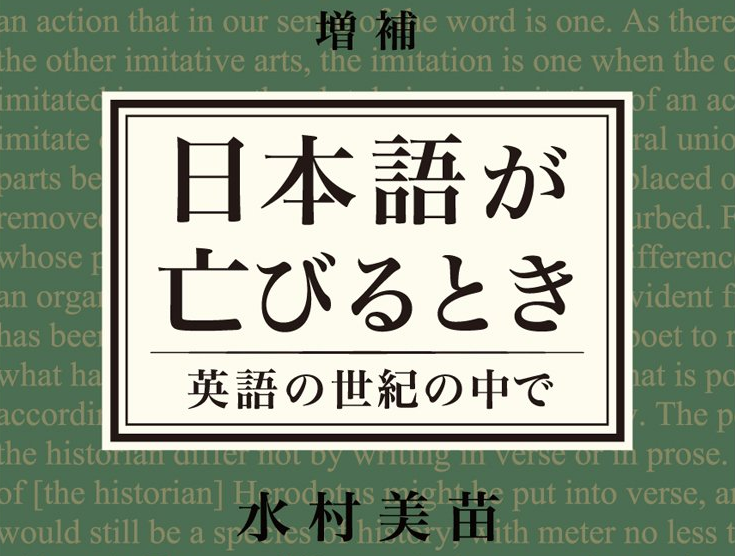
Linguistic Life in South Korea once moved me to write a short essay in Korean called “영어에 대한 네 가지 거짓말” or “Four Lies About English.” The first lie, to translate it back into that native language of mine, holds that English speakers can live comfortably in every country in the world; the second, that all those countries have agreed to communicate in English with each other; the third, that because the people of countries like Sweden or Germany speak English well in addition to their native languages, Koreans can and should do the same; and the fourth, that anyone unable to master English is a fool. These particular misconceptions, though I could have included others, have taken root in Korean society to the extent that many Koreans grow flabbergasted when I try to disabuse them.

Not that I alone can do much to mend Korea’s deeply unhealthy relationship with English, a language now slathered liberally on every surface of its cityscapes — except the advertisements for cram schools and practice apps, which shame their readers for having spent years and years studying English without any speaking ability to show for it. Japan, a country I visit often, hasn’t caught as virulent an “English fever,” as Koreans call it (or as I called it on LARB’s Korea Blog last year, “English cancer”), and so, despite my far weaker command of Japanese than Korean, I always feel a weight lift from my mind when I go there, taking comfort in the unambiguous fact that the language of Japan is Japanese: those I address in it will never, ever reply in English — and were I to speak in English, most of them would reply, often at length, in Japanese anyway.

The Japanese novelist Minae Mizumura, however, does believe that her countrymen labor under “the feeling that they ought to know English,” an “irrational obsession, a paranoia that has spread across the nation like a plague.” As in Korea, it happens because “most people, despite years of suffering from mandatory English courses in junior high, high school, and college, end up with little or no grasp of the language,” and so, “feeling defeated, and blaming themselves for the defeat, ordinary people have succumbed to a kind of mass hysteria, convinced despite all evidence to the contrary that they can and must master the language.” Mizumura makes this diagnosis in her treatise The Fall of Language in the Age of English, a surprise hit upon its original publication in Japan in 2008 and recently translated by Mari Yoshihara and Juliet Winters Carpenter.

Read the whole thing at the Los Angeles Review of Books.

Korea Blog: Korea’s New Comfort-Woman Comedy “I Can Speak”

Over the past few months, a publicity blitz of the caliber usually reserved for Hollywood superhero spectacles has urged Koreans to see a I Can Speak (아이 캔 스피크), a movie about a straight-laced young civil servant who reluctantly gives English lessons to an old battleaxe. Or at least that’s how it looked at first: as more detailed press and advertisements came out, people started to sense something more complicated than the Korean Harold and Maude (if that) they might have expected. Soon word spread that it actually deals with one of the most dangerously controversial issues in the country today: the plight of the “comfort women,” the young girls forced into prostitution for the Japanese military during the Second World War.

Even typing that last sentence, especially the word “forced,” feels as if it might set off an international incident or two. On my first trip to Seoul I had several appointments that brought me the the vicinity of the city’s Japanese embassy, at that time a grim, prisonlike building, demolished in recent years after many denied requests for permission to do so. I knew a now-iconic bronze comfort woman statue (officially called the “Statue of Peace”) had been installed near it, but I somehow hadn’t imagined it sitting right across the street, its placid, accusatory stare pointing straight ahead. The Japanese government has requested the statue’s removal time and again, to no avail, since it appeared in 2011. Young volunteers watch over it 24 hours a day, and protests, often involving the surviving and now elderly comfort women themselves, have happened in front of the embassy each and every Wednesday for more than 25 years.

Other comfort woman monuments have appeared elsewhere in the world, including a lawsuit-drawing State of Peace clone in Glendale’s Central Park, and just this past summer five of them started riding Seoul city buses. While all this might make an observer unfamiliar with east Asian affairs wonder if the Imperial Japanese Army and its human trafficking operation remains a going concern, current Korean objections specifically target the official Japanese attitude toward those wartime exploits, even as the exploits themselves slip out of living memory. Japan, in this view, captured and enslaved somewhere between 20,000 and 400,000 unwilling young girls from not just Korea but China, the Philippines, the Dutch East Indies, and other territories besides, yet has consistently refused to properly apologize for or even fully acknowledge its crimes.

Read the whole thing at the Los Angeles Review of Books.

This week’s city reading: Los Angeles’ varied images, the return of the city-state, Amazon’s search for a city with decent transit

Will the Real Los Angeles Please Stand Up? (Mia Lehrer, Foreground) “The fact that our past Governor filmed Terminator scenes in the LA River, or that The Italian Job shows Mini Coopers racing down the concrete river bed, signaling to other cities that you can concrete over your river and have fun.”

A New Approach to Designing Smart Cities (David Galbraith, Design Matters) “One day, I’d like to design a truly modern, functional city with the character of a medieval hill town. Rather than a blueprint, I’d like to design a series of recipes for how to create it, from the community to individual human level, from street plans to door handles. This outlines how and why that approach could work, compared to how cities are designed today.”

Amazon’s HQ2 Hunt Is a Transit Reckoning (Laura Bliss, Citylab) “The emphasis on transit seems to be creating, in particular, something of a come-to-Jesus moment for cities where high-level service has long been an afterthought. Cities with legacy subway systems, such as Boston and Washington, D.C., have risen to the top of more than one ranking; so has Denver, with its relatively forgiving traffic and expanded rail investments. In weeks of speculation and showdowns, a lack of transit connectivity has been one of the the great presumed disqualifiers for other towns.”

How Seoul Is Reinventing Itself as a Techno-Utopia (Susan Crawford, Wired) “I got an advance look at what might turn out to be a powerful tool in his reelection: a visually beautiful data dashboard—its formal name is “The Digital Civic Mayor’s Office”—that is tied to the broad themes the mayor identified in 2014: How safe is the city, how welcoming is it to the very old and the young, how green is it, how open are its operations?”

Return of the City-State (Jamie Bartlett, Aeon) “As today’s centres of urban global capitalism, major cities are more similar to each other than the provinces of their own nation-states. They are all hubs of finance, tech innovation, culture, and characterised by high levels of diversity and inward migration. While the UK voted to leave the EU 52/48, London voted to remain 60/40. London, as is often remarked by visitors, is nothing like the rest of the country. The same can certainly be said of the US east- and west-coast behemoths.”

The Happy City and Our $20 Trillion Opportunity (Mr. Money Mustache) “The average American gets the most expensive car he can afford, and drives it as much as he can – for virtually 100% of trips out of the house. And yet he has a net worth of nearly zero, and subpar physical health, for most of his life. The average American city builds the largest roads and parking lots it can possibly fund, maximizing the amount of available space for vehicles, in a noble attempt to reduce traffic and serve its citizens. But the result is that cities become nothing but wide, well-engineered, fast, deadly expanses of concrete.”

NPR Music: BTS breaks onto the Billboard charts

Making it to the top of the Korean pop music charts demands no small amount of blood, tears, and sweat — and even more to break beyond it. Few current groups know it as well as the boys of BTS, the young septet who this week became the highest-ranked K-pop act ever on the Billboard 200 chart, as well as only one to rise into its top ten and to appear on both the Billboard 200 and the Billboard Hot 100 at the same time. Their success marks one more step in a long campaign in the Korean pop music industry, and the Korean entertainment industry as a whole, to cultivate a robust fan base as far beyond the borders of South Korea as possible. But how far, K-pop observers have long wondered, can this unabashedly glossy, visually oriented, and aggressively young music really go?

Though 21st-century Korea’s intensively trained (and even more intensively groomed) squadrons of boy bands and girl groups may seem indistinguishable, BTS has had a way of standing out since they made their debut in the summer of 2013. Like every major pop act, they came vetted by the country’s talent oligarchy, specifically as a product of Big Hit Entertainment, an artist management company founded by Bang Si-hyuk, former songwriting partner of top star-making record executive Park Jin-young (known to anyone with an eye on Korean pop culture simply as “JYP”). Before they turned up to Big Hit’s auditions, two of their members were art-school students and two were underground rappers; some point to the group’s own active participation in the writing and production of their songs, heretofore an unusual practice in the highly specialized world of K-pop, as one reason for their rapid and outsized success.

Certainly no other boy band of any nationality has put out a hit single inspired by the work of Nobel Prize-winning German novelist Hermann Hesse, as BTS’ members described last year’s “Blood Sweat & Tears.” Its elaborate music video even features a passage from Hesse’s Demian, a novel near-universally known in South Korea and beloved by several generations of its people. The words come recited by member Kim Nam-joon, better known as “Rap Monster,” who has emerged as the group’s breakout star as well as something of a self-styled intellectual, having placed high on IQ tests and South Korea’s university entrance exams — a high mark of distinction in a ranking-obsessed society — becoming fluent in English, and continuing, on his own initiative, the Japanese-language studies all the BTS members received as trainees.

Read the whole thing at NPR Music.

This week’s city reading: the future of Detroit, a farewell to London, and the failings of transit in the San Francisco Bay Area

Detroit Open City (Aaron Robertson, Los Angeles Review of Books) “The species of loneliness one feels in New York is not the same in Detroit. There is an overwhelming awareness that in a city this large, things should be louder. ‘Detroit is the biggest small town in America,’ I once heard someone say. The slogan rings true. It is a city in which people talk more about lonely places than lonely people. Abandonment is keenly felt not as a conclusive sense of emptiness, but as absence, the peculiar suspicion that something which should be there has been devoured or disappeared.”

Credit Where It’s Due (Christopher Hawthorne, Los Angeles Times) “Wong, who died Sept. 1 at 94, often pared down the buildings he worked on to a single memorable gesture. There’s the swooping roofline of the Union 76 gas station in Beverly Hills, among postwar L.A.’s singular landmarks. The peaked silhouette of the Transamerica Pyramid in San Francisco. The glowing cube at the heart of CBS Television City. Those forms were memorable in part because they matched the spirit of the age in California. They were a visual shorthand for the future.”

Iain Sinclair’s Farewell to London (Iain Sinclair, The Guardian) “There was no longer an obligation to carry a notebook or a camera. Or to endure the madness of being overwhelmed by random voices, mendacious signage, tags and scribbles, snippets of intrusive mobile-phone babble: along with the moral imperative of shaping white noise into a coherent narrative. The rough sleepers, ranters on buses, spice zombies, station beggars I sourced as potential characters were taking their revenge by welcoming me into their survivalist sodality. Did I look like one of them now? Did my skewed, eyes-down trudge transmit a different code, a new set of pheromones?” (See also my interview with Iain Sinclair on Notebook on Cities and Culture.)

Connect the World? The Bay Area Can’t Even Connect Its Trains (Joe Mathews, Public CEO) “We didn’t know how to bridge this transportation gap. My son wasn’t up for a long walk. There is as yet no shuttle from plane to train. The public bus that would take us in the train’s direction didn’t show up on time. Uber wasn’t picking up at the airport. My Lyft app kept crashing. And the four cabbies parked outside the airport all refused to take us, saying they didn’t want to give up their place in line for such a short, cheap trip.”

Collective Dust (Yolanta Siu, Places Journal) “Today, the district’s main street, Dorim-ro, is a stage for revolving storefronts, where trendy restaurants and cafes come and go. Rents have quadrupled in a decade. Many of the new businesses borrow the “otherness” of the factories by using Mullae’s name and industrial aesthetic, but none are affordable to longtime residents. Cultural conflicts are open and pervasive. Most technicians spend their entire lives working six-day weeks, and they find it hard to understand the irregular habits of artists and the creative endeavors that sometimes disrupt factory work.” (See also my segment on Mullae-dong with Yolanta Siu on Koreascape.)

Why Can’t We Get Cities Right? (Paul Krugman, New York Times) “It’s not hard to see what we should be doing. We should have regulation that prevents clear hazards, like exploding chemical plants in the middle of residential neighborhoods, preserves a fair amount of open land, but allows housing construction. In particular, we should encourage construction that takes advantage of the most effective mass transit technology yet devised: the elevator.”

Seoul Urbanism on TBS eFM’s Koreascape: industry and culture grapple in Mullae-dong

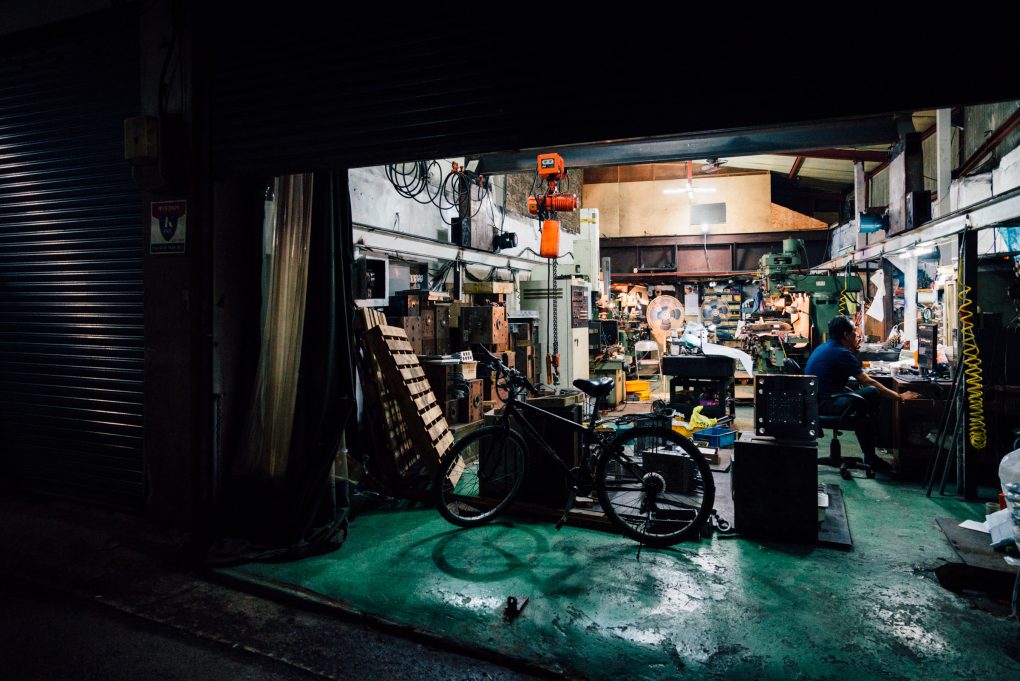
Each month I join Kurt Achin, host of Koreascape on Seoul’s English-language radio station TBS eFM, for an exploration of one of Seoul’s urban spaces. This time we go just south of the Han River for a nighttime journey — punctuated by cats, coffee, ukulele riffs, tap dancing, and showers of sparks — through Mullae-dong. There an established generation of industrial operations now coexist with a new generation of cultural venues, putting metalworkers and craftsmen right alongside artists and baristas. We’re joined by Yolanta Siu, whose recent piece “Collective Dust” in Places Journal  warns that “the situation in Mullae now calls for artists and factory owners to unite in resistance to speculative capitalism. Otherwise the neighborhood will follow the model of Daehangno, Bukchon, Seochon, Garosu-gil, and Jogno in becoming a generic shopping district,” whose popularity led to rising rents that brought about “not prosperity but hollowness.”

Stay tuned for further explorations of Seoul’s architecture, infrastructure, and other parts of the built environment. You can hear our previous segments here.

Korea Blog: Why K-Pop Is the Same as Classic Rock

Pet Sounds passed the 50th anniversary of its release about half a year after I moved to Korea. That same day, I later learned, also marked the 50th anniversary of Blonde on Blonde; this year brought that of Sgt. Pepper’s Lonely Hearts Club Band. Despite never having owned any of these iconic albums myself, I know them when I hear them (mostly, these days, at Peter Cat), as, no doubt, do plenty of kids in the West 20 years younger than me. Or at least they know a fair number of their songs, many having developed that familiarity almost inadvertently. Many in their great-grandparents’ generation probably went through a similar process: even if they loathed the then-audacious sounds of the Beach Boys or Bob Dylan or the Beatles, they eventually grew to recognize them, and even, sometimes, to grudgingly appreciate them.

One common reaction to these records’ semicentennials involves lamenting a perceived decline in all the popular music since, a long, slow erosion of craftsmanship and adventurousness perceptible in the comparatively low quality of newer songs’ lyrics, composition, performance, and even recording. Westerners in Korea, given to complaint even in the best of times, must agree and then some, surrounded as they constantly are by the sounds of modern “K-pop,” that synthetic, artificially sweetened, assembly-line-manufactured product of interchangeable (and often indistinguishable) idol singers and the boy bands or girl groups from which they emerge — or at least Westerners in the West might imagine.

When trying to explain the place of K-pop in everyday Korean life, I often talk about gyms. When I work out at the one in my neighborhood in Seoul, I do it to its soundtrack of K-pop, its volume set, typically, a few notches higher than background music in other countries. (Even the gym itself, part of a national chain, has its own K-pop-style theme song, played at 8:00 every evening while its staff of uniformed trainers marches around the weights and through the treadmills greeting every member individually.) When I worked out back in America, no matter when or where, I did to a soundtrack of “classic rock,” an FM radio format that, like the current K-pop playlists in Korea, doesn’t thrill anyone excited with its curatorial genius, but doesn’t draw any complaints either.

Read the whole thing at the Los Angeles Review of Books.

This week’s city reading: dying alt-weeklies, recanting Richard Florida, and anti-urbanist Margaret Atwood

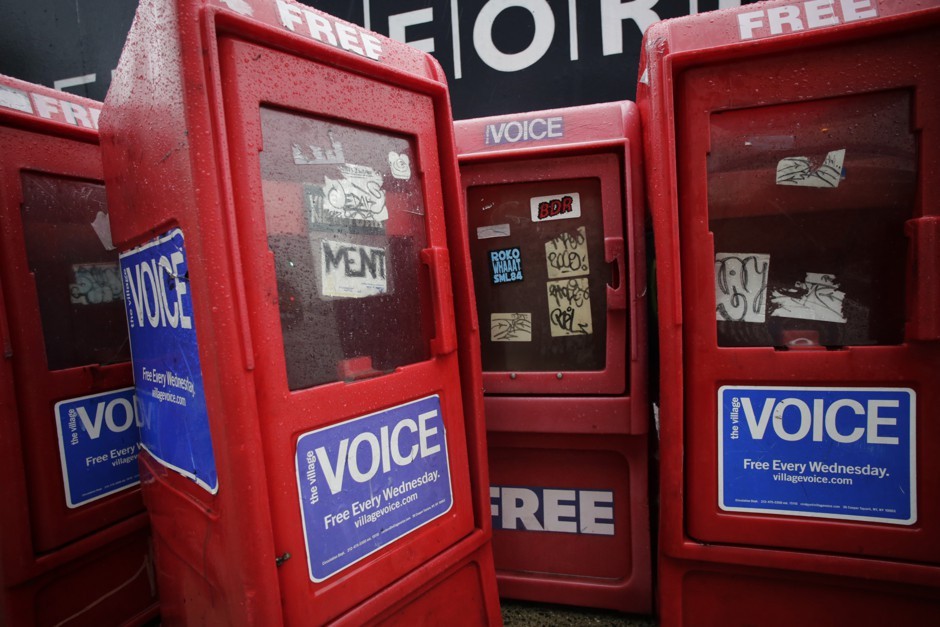
What Cities Lose When an Alt-Weekly Dies (David Dudley, Citylab) “The thing the Voice and its descendants gave readers was something more important than the occasional scoop: They served as critical conveyors of regional lore and scuttlebutt and intel. Dailies may have told you what was going on; alt-weeklies helped make people locals, a cranky cohort united by common enthusiasms and grievances. The alternative media was the informal archive of the city’s id, a catalog of fandom and contempt that limned the contours of the populace. And this part of their role, as it turns out, is a lot harder to replace in the digital era.” Growing up, I had my choice between Seattle Weekly and The Stranger, and for reasons I still don’t fully understand chose the former without exception.

Why Center City Parking Garages are Disappearing (Inga Saffron, The Philadelphia Inquirer) “For decades, the conventional planning wisdom has been that free-standing garages and surface lots are the urban equivalent of the Great Pacific Garbage Patch, lifeless zones that squeeze the energy out of cities and make walking less pleasant and safe. Urbanist websites like Streetsblog have made a specialty of mapping the amount of land devoted to parking in America’s downtowns, and the acreage is staggering.”

Helmets May Be Seattle law, but Many Bike-Share Riders Don’t Wear Them (David Gutman, The Seattle Times) “There are virtually no cities, anywhere in the world, that have both a successful bike-share program and a mandatory helmet law.”

Richard Florida Is Sorry (Sam Wetherell, Jacobin) “Though he stops just short of saying it, he all but admits that he was wrong. He argues that the creative classes have grabbed hold of many of the world’s great cities and choked them to death. As a result, the fifty largest metropolitan areas house just 7 percent of the world’s population but generate 40 percent of its growth. These “superstar” cities are becoming gated communities, their vibrancy replaced with deracinated streets full of Airbnbs and empty summer homes.”

How Public Transit Helped the 1932 Olympics Move Around Los Angeles (Robert Petersen, KCET) “During the Opening Ceremonies, hundreds of official cars and the 68 buses carrying nearly 2,000 athletes were able to travel in dedicated lanes, without stopping, through the dense traffic created by the 105,600 spectators going to the stadium. The running time of the buses from Olympic Village to the Colosseum averaged 10-12 minutes. The Olympic Committee happily noted that ‘not a single accident of any kind was reported involving any athlete or official’ and that ‘traffic accidents actually decreased during this period in spite of the increased traffic caused by the Games.'”

The Storeys Margaret Atwood Condemns (Alex Bozikovic, The Globe and Mail) “The 1960s generation of planners, activists and politicians locked down these areas to protect them. Similar regimes are in place in other North American cities, including Vancouver and San Francisco, Calif., – each of which have absurdly high housing prices. That is no coincidence. If you constrain the supply of a commodity, it gets expensive. Yet, this practice continues, because homeowners hold all the political cards.”

From my interview archive: Los Angeles graphic designer and dingbat appreciator Clive Piercy (RIP)

This year, I’m listening again to selections from the archive of long-form interviews I conducted on the public radio program The Marketplace of Ideas and podcast Notebook on Cities and Culture between 2007 and 2015.

I started Notebook on Cities and Culture in large part as a way of understanding one city in particular: Los Angeles, to which I’d just moved a few months earlier. It went along with the practices I’d already undertaken, which included wandering around every day with a camera in hand, reading everything I could in the Los Angeles history stacks down on the bottom floor of the Central Library, and making frequent reference to Reyner Banham’s Los Angeles: The Architecture of Four Ecologies. Though forty years old at that point, Banham’s book could still point me toward some of the elements of the city that revealed its distinctive nature, Exhibit A being the dingbat.

“Normally a two-storey walk-up apartment-block developed back over the full depth of the site, built of wood and stuccoed over,” the dingbat, made of the same “materials that Rudolph Schindler and others used to build the first modern architecture in Los Angeles,” displays “simple rectangular forms and flush smooth surfaces” at the back. But out front it makes “a commercial pitch and a statement about the culture of individualism,” using a range of styles so novel and questionable Banham has to invent names on the spot: “from Tacoburger Aztec to Wavy-Line Moderne, from Cod Cape Cod to Unsupported Jaoul Vaults, from Gourmet Mansardic to Polynesian Gabled and even — in extremity — Modern Architecture.”

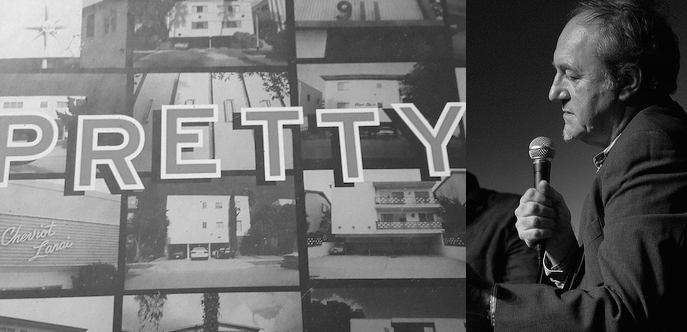
I read aloud Banham’s brief but astute analysis of the dingbat, “the true symptom of Los Angeles’ urban id, trying to cope with the unprecedented appearance of residential densities too high to be subsumed within the illusions of homestead living,” to open my interview with Clive Piercy, the man who wrote the book on them. Or rather, he shot the book on them: a prominent graphic designer by day, he created Pretty Vacant: The Los Angeles Dingbat Observed as a work of visual art, a way of letting others see dingbats as he saw them, more than anything else. When the book came to my attention, it was already approaching the tenth anniversary of its publication: a marvelously effective excuse (or “peg,” as they say in the news industry) to invite him on the show.

My research revealed to me that, like Banham, Piercy came to Los Angeles from England, placing him in the grand tradition of Englishmen — Christopher Isherwood, David Hockney, Richard Rayner — who, each in his own way, take to the city as if born for it. He even settled in Santa Monica (his surname, he told me, was pronounced like “the Santa Monica Pier, see?“) , which at times still feels to me like an English colony, and at his design firm’s offices there, in whose pocket garden we recorded our conversation while an assistant served us tea, I felt I was in the presence, perhaps for the first time, of someone truly living their Los Angeles dream, although that dream could, by his own admission, have its nightmarish aspects.

Though it sounded as if Piercy reveled in his large, brightly colored automobiles (such as the Nash Metropolitan, which he mentioned owning in both England and America), he also had to endure a commute to Pasadena to teach at Art Center — a drive that would’ve seemed trivial in the Los Angeles of 1982 in which he arrived, where one would think nothing of “driving thirty miles to dinner.” I asked him quite a lot about that era, since I’d also found out that he created two of the images I’ve long kept in my mind as representative of it: the cover of Read My Lips, the solo album by Fee Waybill from The Tubes, and poster for Michael Mann’s Manhunter. (The latter prompted him to tell a story, before we started recording, about the time he made Mann a set of business cards. The director wanted them in the same shade of blue as his Ferrari, but he insisted that a reference photograph wouldn’t do, demanding instead that Piercy work in the presence of the car itself.)

“It was so exciting to be here in the eighties,” he said, recalling his proficiency with the “pastel colors and ripped paper” aesthetic so popular then, his early “dream job” reworking the look of Santa Monica’s Shangri-La Hotel, and the time he designed a daily newspaper supplement on the 1984 Olympics, perhaps the purest expression of the glorious 1980s Los Angeles aesthetic — which, of course, would end up as a garish, out-of-scale, pseudo-postmodernism used on every cheap street-corner mini-mall. As much as he might have been living out his own Los Angeles dream, Piercy seemed to regard the Los Angeles dream in general as long soured, since at least the days of the O.J. Simpson trial.

The old, optimistic model of Los Angeles — now represented in part by those “sad characters” the dingbats, named for the meaningless, modernity-evoking symbols mounted on their exterior walls, usually alongside names like “Sea Breeze” or “The Capri” — had ceased to function so well, but a new one hadn’t fully replaced it. It still hasn’t, although when Piercy said to me that “in five years’ time you’ll be able to come out here on the train,” he actually wasn’t optimistic enough, or not optimistic about the right things; the Expo Line’s service out to Santa Monica started two years earlier than that. But to a degree, even the most forward-thinking people who come to Los Angeles remain, psychologically, in the Los Angeles they found upon arrival, continuing to perceive the city in accordance with the bygone virtues and flaws to which they first adapted.

I could have talked with Piercy for a long, long time, much more for the hour and change we actually had on that sunny Santa Monica day back in 2013. But I’ve kept thinking back to our conversation ever since, meaning to revisit it; the news of his death yesterday, which I heard from the many tributes his former students posted to Facebook, gave me a reason to do so. I’ve often wished I could see Los Angeles as one of its expatriate Englishmen do, especially if they came in one of the eras that fascinate me, and Piercy’s 1980s-inflected view of Los Angeles will continue to influence my own. He even made sure I’d have the proper reference material, giving me a pristine copy of Pretty Vacant to replace the dilapidated one I’d brought with me. He’d scribbled on its front page before handing it to me, and only later did I have a look at what I thought would be an autograph but turned out to be a drawing, in neon green ink, of a dingbat.