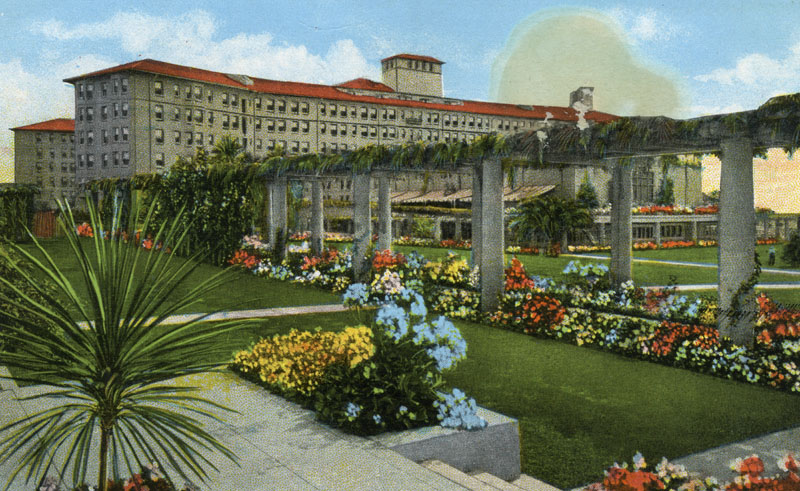
“Last Tuesday night, for the first time in 30 years, I found myself by one casual chance in a thousand on hand, in a small narrow serving pantry of the Ambassador Hotel in Los Angeles,” said a pained Alistair Cooke on his “Letter from America” broadcast of June 9th, 1968. He then vividly described that onetime playground of silver-screen royalty (and, from time to time, actual royalty) as “a place that I suppose will never be wiped out of my memory as a sinister alley, a roman circus run amok, and a charnel house” — the site, in other words, of the assassination of Sen. Robert F. Kennedy, five years after the similarly shocking murder of his brother, President John F. Kennedy, moments after his victory in California’s Democratic primary election.
Though it temporarily elevated that pantry into the canon of sacred American spaces, the bullet fired by young Palestinian radical Sirhan Sirhan ultimately killed not just Kennedy but the Ambassador Hotel itself. Already well past its glory days by the late 1960s, its decline hastened sharply thereafter until its demolition in 2005, sixteen years after its last guests checked out. Half a decade after that, the new complex of buildings newly risen on the Ambassador’s site opened its doors: the pharaonically expensive Robert F. Kennedy Community Schools, not just an educational facility, and not just a tribute to the slain dynastic politician, but a symbol of Los Angeles’ difficult search for coherence in both its architectural identity and its attitude toward the past.
Many still mourn the Ambassador, but who mourns the dairy farm the Ambassador itself displaced? When its construction began in the early 1920s, then marveled at by the Los Angeles Times as “the most stupendous hotel project in the history of the United States,” Wilshire Boulevard was nothing but a dirt road. To some Angelenos back then, its site three miles from downtown might as well have been 300 miles from downtown. But after the Ambassador opened its doors on New Year’s Day 1921, with its storied nightclub the Cocoanut Grove following a few months later, its presence (which one advertisement quoted pulp writer Gouverneur Morris describing as that of “a three-ring circus of indoor and outdoor amusements in a layout filled with happy conceptions”) helped turn Wilshire into the central economic artery of Los Angeles.
Read the whole thing at KCET.
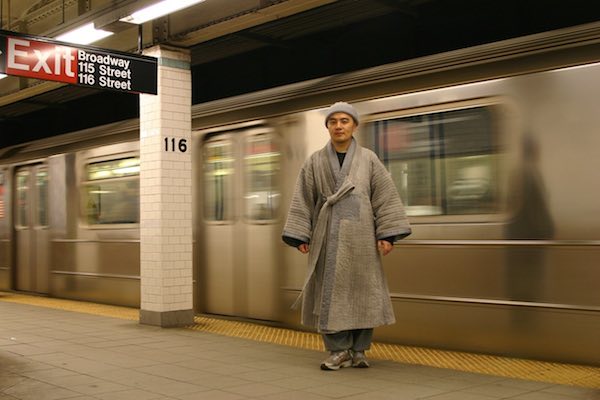
“Penguin’s English translation of The Things You Can See Only When You Slow Down comes out in America on February 7th,” tweeted South Korea’s most famous monk, in Korean, at the beginning of this year. “At about the same time, it’s scheduled to come out in fifteen other Western countries like England, Spain, Brazil, Russia, Sweden as well. Please understand my frequent tweeting in English.” Up to that point, communicating with his readers in only his and presumably their native language, Haemin Sunim (sunim, or 스님, being the honorific title for a Buddhist monk) amassed a crowd of followers now numbering 1.24 million. That would qualify him as a Twitter celebrity by any standard, but in beginning to tweet in English, Haemin Sunim effectively announced an attempt to take it the next level.
The Korean edition of The Things You Can Only See When You Slow Down (멈추면 비로소 보이는 것들), his second book, came out in 2010 and quickly turned bestseller, thus setting up high expectations, easily fulfilled, for his most recent, last year’s Love for the Imperfect (완벽하지 않은 것들에 대한 사랑). Both draw on the original source of this fresh-faced, gray-robed figure’s fame, his stream of tweets (as well occasional pictures of animals or of himself hugging fans), the most liked and retweeted of which — here translated by me, but in the English version of his book surely translated much better — include the following:
Do not beg for attention from other people. As your abilities grow, you will naturally receive attention from other people. When you feel yourself unconsciously begging for attention, think, “I still have to grow my abilities.” Never treat your noble self like a beggar.
When you’re troubled and anxious, ask yourself: is there anything I can change about this future that worries me? Don’t those worries make you miss out on the moment? If there’s nothing you can change, put your heart in the present and feel the preciousness of the moment.
Be good, even to you. While you gold-heartedly take on the tasks others don’t want to, don’t you also have a hard time? Hearing nice words from other people is fine, but being good to yourself is important.
Don’t try too hard to find out what other people think of you. The harder you try, the more you simply hand the leadership of your live over to the thoughts of others. Live life with the confidence to be its protagonist. Hwaiting!
That last term, a Koreanization of the English word “fighting” (English education in Korea having the mysterious tendency to conflate gerund and imperative), functions as an all-purpose cry of encouragement here, and Haemin Sunim provides nothing if not encouragement.
Read the whole thing at the Los Angeles Review of Books.
Sunday, February 19, 2017
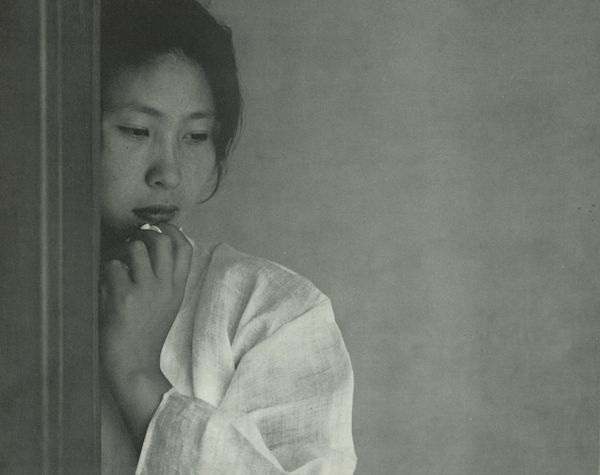
Even though I live there, I still only with difficulty perceive Northeast Asia through any lens not borrowed from Chris Marker. This owes mostly to the influence of dozens of viewings of Sans Soleil, his 1983 fact-and-fiction cinematic travelogue through places like Iceland, Cape Verde, San Francisco, and especially Japan, a feature-length realization of the peripatetic form of “essay film” he invented with 1955’s Sunday in Peking. Between that and Sans Soleil, he’d gone to Tokyo during the 1964 Olympics and come back with the materials for a 45-minute documentary about the titular young woman whom he happened to meet in the street there. Le Mystère Koumiko came out in 1965, just three years after his best-known work: La Jetée, the short drama of apocalypse, time travel, and memory made almost entirely out of still photographs.
But Marker also made it, camera in hand, to the Korean Peninsula as well — and the northern half of the Korean Peninsula at that. He’d accepted an invitation in 1957 to join a delegation of French journalists and intellectuals including Claude Lanzmann, Armand Gatti, and Jean-Claude Bonnardot: Lanzmann, so the legend has it, fell in with a nurse there. Gatti and Bonnardot, more productively, made the feature film, the first and only North Korean-French co-production, Moranbong (not to be confused with the North Korean girl group of the same name). Marker took the pictures that would, in 1962, appear as the photobook Coréennes, titled with the feminine form of the French noun meaning “Koreans.” It brings to mind — or at least brings to my mind — Marker’s quotable quote: “In another time I guess I would have been content with filming girls and cats. But you don’t choose your time.”
Had Marker’s time been the 19th century of travelers like Percival Lowell, he would have enjoyed nary a glimpse of Korea’s hidden-away womankind, let alone its strictly hidden-away young womankind, but this “prototype of the twenty-first-century man” (in the words of collaborator Alain Resnais) paid his visit in the middle of the twentieth. While he could and did photograph plenty of girls (though, apart from historical representations of Korea’s much-mythologized tiger, no cats), he also captured the images of a host of other North Korean citizens besides: children, scholars, soldiers, vendors, pranksters. The title of Coréennes‘ Korean edition, 북녘사람들 or “Northern People,” thus more accurately reflects the content of the book, although its English-language edition stuck, as many of the English-language releases of Marker’s movies have, with the original French one.
Read the whole thing at the Los Angeles Review of Books.
Wednesday, February 15, 2017
As of today, I’ve been writing for Open Culture on a variety of ever-more-interesting subjects, from wherever in the world I can get wi-fi, every single weekday for five years. My total post count now comes to over 1,300, but here are twenty of my hand-picked favorites to give you a sense of both the site itself and the sort of cultural figures, works, and concepts I’ve spent much of the past half-decade considering:
- All of Wes Anderson’s Cinematic Commercials: Watch His Spots for Prada, American Express, H&M & More
- Close Personal Friend: Watch a 1996 Portrait of Gen-X Definer Douglas Coupland
- David Byrne: From Talking Heads Frontman to Leading Urban Cyclist
- A Drone’s Eye View of Los Angeles, New York, London, Bangkok & Mexico City
- Famed Art Critic Robert Hughes Hosts the Premiere of 20/20, Where Tabloid TV News Began (1978)
- Good Morning, Mr. Orwell: Nam June Paik’s Avant-Garde New Year’s Celebration with Laurie Anderson, John Cage, Peter Gabriel & More
- Haruki Murakami’s Passion for Jazz: Discover the Novelist’s Jazz Playlist, Jazz Essay & Jazz Bar
- Hergé Draws Tintin in Vintage Footage (and What Explains the Character’s Enduring Appeal)
- How Chris Marker’s Radical Sci-fi Film La Jetée Changed the Life of Cyberpunk Prophet, William Gibson
- How Steely Dan Wrote “Deacon Blues,” the Song Audiophiles Use to Test High-End Stereos
- An Introduction to Yasujiro Ozu, “the Most Japanese of All Film Directors”
- Join Clive James on His Classic Television Trips to Paris, LA, Tokyo, Rio, Cairo & Beyond
- Martin Scorsese Introduces Filmmaker Hong Sangsoo, “The Woody Allen of Korea”
- The Philosophy of Bill Murray: The Intellectual Foundations of His Comedic Persona
- Take a Road Trip with Cyberspace Visionary William Gibson, Watch No Maps for These Territories (2000)
- Three Films Capture 1940s New York, Chicago & Los Angeles in Vivid Color
- The Tokyo of Solaris (1972), Andrei Tarkovsky’s Haunting Vision of the Future
- Trains and the Brits Who Love Them: Monty Python’s Michael Palin on Great Railway Journeys
- A Wealth of 20th-Century Korean Cinema, Free Online from the Korean Film Archive
- A Wonderful Archive of Historic Transit Maps: Expressive Art Meets Precise Graphic Design
Friday, February 10, 2017

I’ve seen ― and learned ― so much about this city from the windows of buses. They’ve shown me the hillside urban villages normally blocked from view by high-street towers; the less-developed and lower-key but nevertheless fascinating urban spaces between well-known districts like Hongdae and Insadong, Myeongdong and Itaewon (all filled with tourists who seldom stray outside their boundaries); and the veritable hidden labyrinth of covered market streets threaded through the neighborhoods between where I live in Sinchon and downtown.
Soon after I first came to Korea, I made the effort to better understand the nature of Seoul’s distinctive and ever-changing urban fabric by avoiding the subway whenever possible ― no matter how much I admire it.
Veteran subway riders may know the subway map intimately, but that hardly translates to knowing the city itself; they may grow familiar with many individual neighborhoods, but without much understanding of how those neighborhoods connect to one another and what lies between them.
The seeming complexity of the Seoul bus system, in not just its extent but variety of routes and the shapes, sizes and colors of the vehicles that run them, can intimidate potential riders, especially foreign ones. But even a basic understanding of how the buses work enables ― for tourists and longtime residents alike ― the discovery of Seoul, not in fragments, but as a whole.
Read the whole thing at the Korea Times. See also the broadcast on Seoul by bus I did one of the monthly urbanism segments on TBS eFM’s Koreascape.
Thursday, February 9, 2017
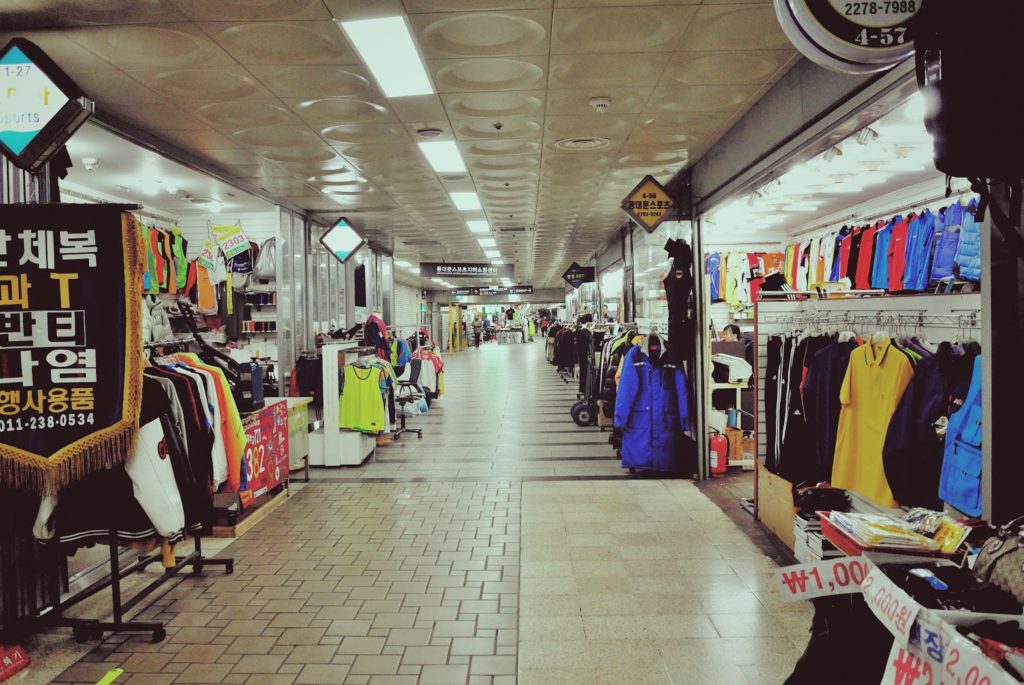
Each month I join Kurt Achin, host of Koreascape on Seoul’s English-language radio station TBS eFM, for an exploration of another one of Seoul’s urban spaces. This time we head down into the Euljiro Underground Shopping Center, a nearly two-mile-long subterranean street running beneath downtown from the City Hall to the Dongdaemun History and Culture Park Line 2 subway stations. Initially opening for business in 1983 at the same time Line 2 itself did, its ever-changing selection of shops supply everything from tailored clothing to computer equipment to medical supplies to punch clocks to electronic cigarettes to freshly baked bread and freshly roasted coffee — not to mention a safe haven from the weather during cold winters like this one. The Euljiro Underground Shopping Center can feel like a part of the city time forgot, but now that it has begun providing space for art installations and hosting exhibits like those of the recent Seoul Architecture Festival, what does its future hold?
Stay tuned for further explorations of Seoul’s architecture, infrastructure, and other parts of the built environment. You can hear our previous segments here.

Whenever someone has made progress studying a foreign language and asks which author they should try reading in that language, I always recommend the same one: Haruki Murakami. Though perhaps an obvious choice for students of Japanese, his mother tongue and the language in which he writes, his work has now made it into about fifty different languages in total. His stories’ globally appealing style, their abundance of non-Japanese cultural references, and their translation-ready prose style (legend has it he overcame an early bout of writer’s block by writing his first novel in what English he knew, then converting it back to Japanese) make them work just about as well in French, Polish, Turkish, Hebrew, or Mandarin as they do in the original.
When first reading novels in a foreign language, it helps to start with ones you already know from your own; undistracted by the plot, you can then focus exclusively on the mechanics of the words and sentences delivering it. Given Murakami’s enormous popularity (not to mention the evangelical nature of many of his readers) most enthusiasts of current fiction will already have read or at least encountered a few of his books. I first found my way into his work, as many do, through his first big bestseller Norwegian Wood, the vaguely autobiographical tale of a college student in 1960s Tokyo caught between two young ladies, one his dead best friend’s countryside sanatorium-committed ex-girlfriend, the other a lively and independent urbanite. From there I went on to read all of Murakami’s books available in English, then started over again with Tokio Blues — Norwegian Wood in Spanish.
During that re-reading of his oeuvre — or rather, obra — Murakami published a few more novels. The year before I moved from Los Angeles to Korea, I showed up at Skylight Books for the midnight release of Colorless Tsukuru Tazaki and His Years of Pilgrimage, his most recent. My girlfriend managed to snag the last signed copy they had, but I think the effort still establishes my own fan credentials. All of us around the world thrilled to the news that Murakami’s next novel, a “very strange story” called Killing Commendatore, will go on sale in Japan just a few weeks from now. Translations will surely follow over the next year or two, and the English one will bring that language’s Murakami book total up to twenty: fourteen novels, three short story collections, two non-fiction books, and a novella. That number makes Murakami look decently prolific, or at least I thought it did until I came to Korea.
Read the whole thing at the Los Angeles Review of Books.
Thursday, January 12, 2017
I once took a Los Angeles Conservancy architecture tour whose leader, having brought us atop Bunker Hill, gestured toward an old building over on Spring Street and told us a story from his former career as a city employee. One day he needed a ride home and a higher-up in his department offered it. Generous though that act might make him seem, this man’s job, as our tour guide described it, required the opposite of large-heartedness: he spent most days at the office finding reasons to reject as many of the building or rebuilding proposals that crossed his desk as possible, and spent the entire hour’s drive to Long Beach laying acerbically into the developer responsible for the latest pile of paperwork in his inbox: some guy who wants to do a residential conversion of some empty offices downtown, a dreamer so delusional that “he actually believes people are going to live on Spring Street!”
That developer, as anyone with an eye on the transformation of modern Los Angeles will have guessed, was Tom Gilmore, the gregarious New Yorker now widely credited with sparking the return of a large residential population, and the varied day-and-night activity such a population brings, to a largely forgotten downtown. That anecdote gets a reliable laugh in the midst of a boom that makes its starring city official look like a blinkered record label executive sending away the Beatles or investor passing on Facebook. But by the late 1990s when Gilmore launched into his mission in earnest, longtime Angelenos had grown accustomed to hearing rumors of a coming downtown revival at least once a decade, rumors that never seemed to produce much enticement to go there, let alone move there. Yet at some point in the 2000s, it became undeniable that this one had actually taken.
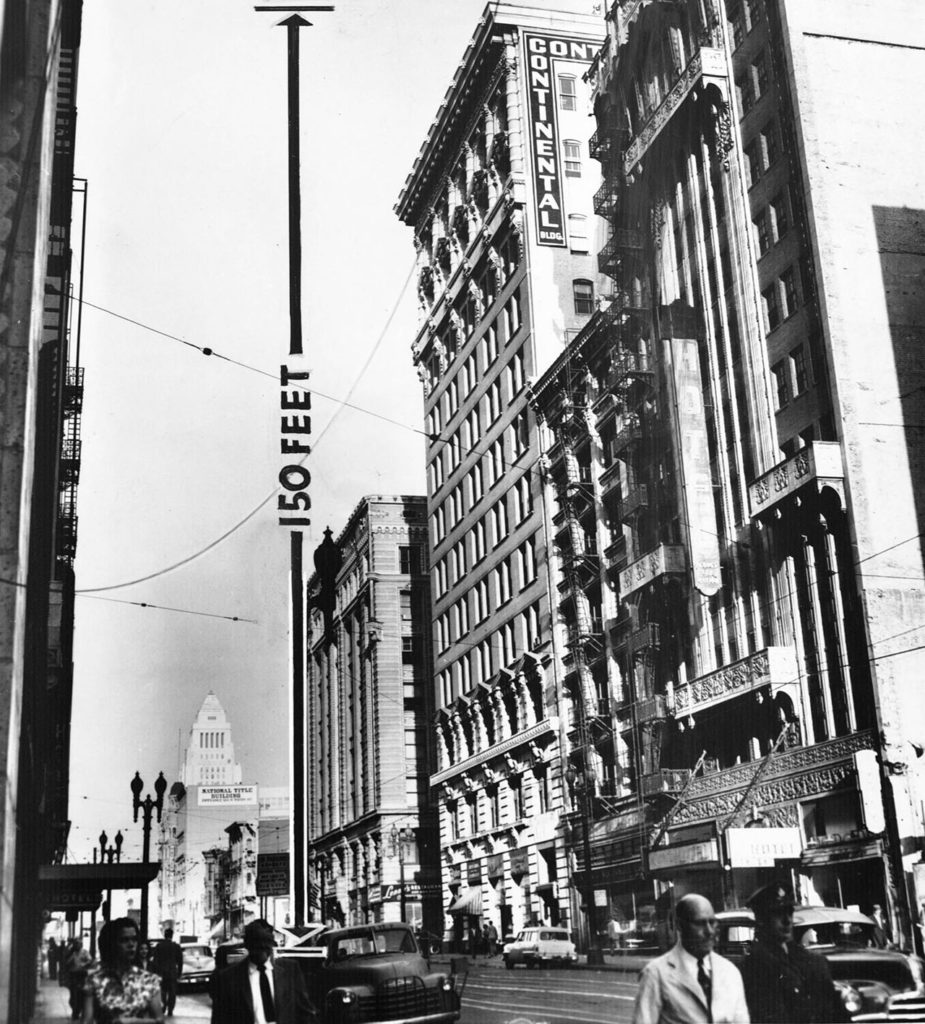
The Spring Street structure the Conservancy guide pointed out was the Continental Building, first known when it opened in 1904 as the Braly Block. “That’s L.A.’s first skyscraper,” says Tom Hansen, the young aspiring architect protagonist of Marc Webb’s “(500) Days of Summer,” gesturing toward the building from his own Bunker Hill perch beside his titular romantic interest. That movie, one of the first set amid the renewed (if occasionally exaggerated) street life of 21st-century downtown Los Angeles, prominently features the architecture of the central city, or at least its architecture of the late 19th and early 20th century. Though he goes unnamed in the dialogue, no single architect had as much responsibility for the look and feel of Los Angeles’ built environment at that time than John Parkinson, designer of the Braly Block.
Read the whole thing at KCET.