Monday, December 31, 2018
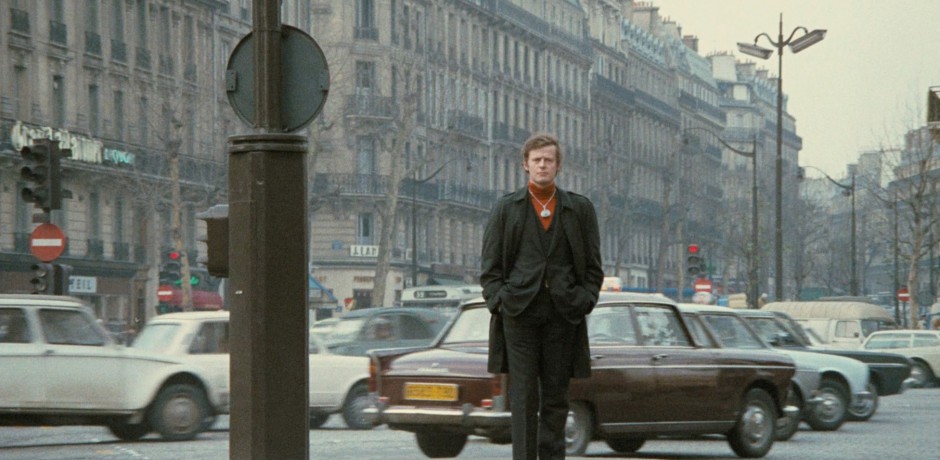
For nearly seven years now, I’ve written a post every weekday at Open Culture, usually to do with literature, film, music, art, television, radio, or language. The total comes to more than 1800 so far, and here are ten of my favorites from the more than 250 I wrote in 2018:
See also my ten favorite Open Culture posts of 2012, 2013, 2014, 2015, 2016, and 2017.
Sunday, December 23, 2018

I’ve got a trip to America planned next month, and even though I’ve only lived in Korea for three years, I now know more or less where to expect the moments of reverse culture shock. They begin with the uniforms, the contrast in which makes itself felt right away at the airport where I land. I’ve never had to fly an American airline out of Korea — knock on wood — but one look at the uniforms on their attendants, especially by comparison to the Korean-airline uniforms I’ve been seeing for the past dozen or so hours in flight, always underscores that I’ve left one society and entered another. Few American institutions not related to defense or law enforcement now seem to hold their uniforms in high regard, or even to demand much effort in the wearing of them. Sometimes their uniforms scarcely read as uniforms at all; I think, for example, of the Hawaiian shirts at Trader Joe’s, a beloved American institution unknown in Korea.
Only recently has it occurred to me that the difference between Korean and American uniforms reflects a difference in the value each culture places on androgyny. Emphasis on, let alone exaggeration of, classically male or female traits seems to have fallen into relative disrepute in America, regarded as unprofessional in some milieux and — ironically — insufficiently rebellious in others. If 21st-century American uniforms tend not just to be near-aggressively casual but sexless as well, so does 21st-century American dress in general. The same could certainly not be said of 21st-century Korean uniforms, nor of 21st-century Korean dress in general, nor of the many areas of Korean life and society where dress and uniform converge. Those areas provide the material for The Social Uniforms Project, an Instagram account on which a model and photographer collaborate to vividly depict the many uniforms, both official and unofficial, worn by modern Korean women, as well as the contexts in which they appear.
Read the whole thing at the Los Angeles Review of Books.
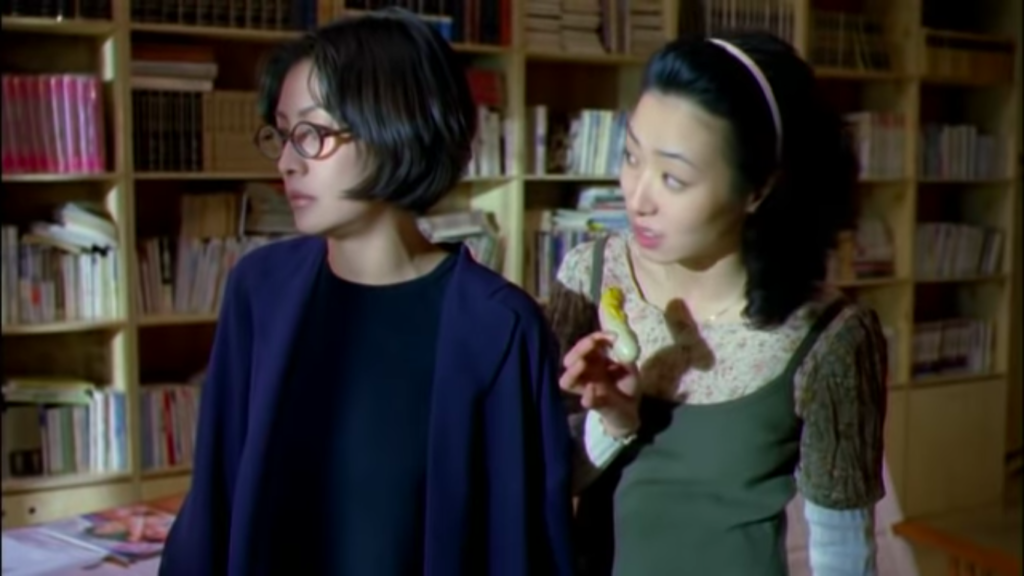
Different foreigners who move to Korea struggle with different aspects of life here, but it’s safe to say that none warm up immediately to the ways of Korean food-waste disposal. The country’s ban on food waste of any kind from its landfills necessitates that it be disposed of, and thus stored, separately from the rest of the trash. Instead of under-the-sink garbage disposals, a rarity here whose unauthorized installation can bring about enormous fines, most households have cans just for food waste, which over the course of a few days can become an awful visual and olfactory spectacle indeed. If that sounds bad, imagine taking out your food trash and having a glance inside the container around the back of the apartment building where everyone else has been throwing theirs out for the past few days, especially in the heat of the summertime.
The most disgusting scene of Park Chul-soo’s 301, 302 (삼공일 삼공이) — and perhaps the most disgusting scene in all of Korean cinema, even given its reputation in some quarters for “extremity” — evokes the same feelings as does the sight of a long-filled food-trash bin but even more so, though the film came out a full decade before the passage of the law that put the current disposal system into effect. It comes about halfway into a battle of wills between two thirtysomething women, neighbors across a hallway. The newly divorced Yun-hee, having grown fat from all the elaborate meals she cooked for her ex-husband, moves into unit 302 of the New Hope Bio Apartments with ambitions of slimming down and starting life afresh. She can think of no better way to introduce herself to Song-hee in unit 301 than by delivering her a plate of food, which Song-hee promptly tosses into the garbage after taking a moment to vomit at the very sight of.
Read the whole thing at the Los Angeles Review of Books.
Sunday, November 25, 2018

Ask Seoulites in their twenties and thirties where they shop, and much of the time you’ll get an answer along the lines of, “I buy everything online.” The density of every kind of store here in the capital seems exceeded only by the popularity of avoiding stores entirely by buying things online. You can’t argue with the convenience: food ordered on the internet arrives within the hour — or within a fraction of the hour — and same-day delivery delivery can be arranged for most everything else. This trend has begun put a fair few legacy retailers in tight spots, and the industry as a whole has found itself in search of a fresh way to appeal to the cohort that in America would be called (and in Korea is increasingly called) the Millennials. Enter a chain that has announced itself loudly, in every sense of the word, as Korea’s “New Shopping Paradigm“: Pierrot Shopping.
Since opening its first location last summer in the mall at Coex, Gangnam’s big convention center, Pierrot Shopping has also begun pumping out its brand-making farrago of color and sound from a couple other locations around Seoul as well, with more already under construction. If you happen to get near one of them, its surrounding advertising blitz — including but not limited to flapping wind-sock figures and animations looping on wall-covering video screens — won’t let you remain ignorant of that fact. “It sells luxury brands but it’s not a department store,” announces one billboard-sized notice at Coex. “It sells adult products but it’s not an adult shop. It sells makeup, colored contact lenses, perfume, body and hair products, diet foods, and health products but, regrettably, it’s not a drugstore. It sells products for dogs, but people are more welcome.” What, then, is Pierrot Shopping? Only the place’s physical reality can offer an answer.
Read the whole thing at the Los Angeles Review of Books.
Saturday, November 17, 2018

내가 서울에 이사온 후에 제일 먼저 산 책은 오영욱의 <그래도 나는 서울 이 좋다>이었다. 오영욱 자신은 본명으로 건축계에서 일을 하고 오기사라는 필명으로는 책을 쓰고 삽화을 넣는다. 서울에 대한 관심이 이미 많았지만 한국어 독해 실력이 지금보다 훨씬 낮았던 그 당시의 나로서는 그림이 생생하게 그려져 있고 독특하며 글이 짧은 <그래도 나는 서울 이 좋다>같은 책을 살 수 밖에 없었던지도 모르겠다. 책을 사고 나서 몇년 간은 서울 그 자체를 발견해 가면서 점차적으로 책을 재미있게 읽었다. 그러나 그 동안 서울에 대한 불평이 전혀 없었던 나에게는 궁금한 것 한 가지가 항상 남아 있었다. 그 것은 제목에 왜 그래도라는 단어가 들어 있을까였다.

내 생각에 그 질문의 핵심에는 한국인과 외국인이 서울을 다르게 본다는 사실에 근거를 두고 있다. 서구에서 방문하러 오는 대부분의 내 친구들은 서울을 보자마자 그 동안 그들이 살아 왔던 도시들과 비교해서 서울 그 자체를 미래의 아주 멋진 도시라고 느끼게 된다. 그들에게 서울의 엄청나게 많은 인상적인 특징 중의 특색있는 것들은 지하철로 어디로든지 갈 수 있는 것을 비롯하여 그러한 모든 지하철 역에 화장실이 있는 것 뿐만 아니라 밤에도 안전하게 걸어 다닐 수 있는 것은 서구의 여러 나라들과 비교해 볼 때 다른 점이고 미국이나 유럽 도시에 구석구석에 있는 노숙자가 거의 보이지 않는 것 또한 그들을 놀라게 한다. 그러나 서양인들이 받은 인상과는 정반대로 많은 한국인들에게는 서울이 불편하고 단점투성이인 도시인 것 같다. 서양인만이 인식할 수 있고 한국인은 인식할 수 없는 것이 있거나 이와는 달리 한국인만이 인식할 수 있고 서양인은 인식할 수 없는 것이 있을까?
서울 출신인 오기사의 경우에는 서울을 명확히 보기위해 서울을 떠나고 다시 되돌아 와야 되었다. 한동안 스페인 바르셀로나에서 여유로운 남유럽식 생활을 하고 나서 오기사는 고향인 서울을 새로운 시각으로 보게 되었다. 다르게 말하자면 스페인에서 돌아와서 서울을 제대로 볼 수 있게 되었다. 어느 도시에서도 사람들이 매일매일 봐서 익숙해진 환경을 볼 수 없게 되긴 하지만 서울에서는 그러한 현상이 특별히 강하다고 나는 느껴 왔다. 서울에 살면서 서울을 모르는 사람들이 많다는 것을 아는 사람들은 의외로 부지기수다. 예를 들면 내가 서울 사람에게 서울에 대한 영화를 추천해달라고 하면 주로 그들은 생활이든지 영화든지 서울을 너무 자주 봐서 서울에 대한 영화라는 개념조차 없는 경우가 많다.
오기사가 제시하는 그러한 문제의 해결책은 서울에서 살아가는 생활을 서울시민으로서가 아니라 마치 여행자가 여행하듯 살아 보는 것이다. 그러기 위해서 그림 솜씨가 있는 건축가인 오기사가 주로 하는 습관들 중의 하나는 서울 근처 한강의 강둑이나 공항 또는 카페의 옥외 테이블에 앉아서 그 주변을 그리는 것이다. 콜라주처럼 사진들과 합쳐진 이 그림들은 <그래도 나는 서울 이 좋다>속에 많이 포함되어 있고 그 그림은 실존하는 서울과 오기사가 보는 서울을 동시에 보여준다. 책 속에 나오는 적지 않은 그림들에서 오기사의 빨간색 안전모를 쓴 작은 다른 자아가 냉소적인 논평을 하려고 등장하게 된다. 나는 서울을 알게 되면 될수록 빨간색 안전모를 쓴 인물이 생각보다 널리 알려져 있다는 것을 깨달았다. 심지어 내가 살고 있는 신촌의 현대 백화점에는 오기사의 그림이 붙혀진 에스컬레이터 벽 여기 저기에서 그 빨간색 안전모를 볼 수 있다.

그림에서든지 글에서든지 오기사는 서울에 대한 여러 가지 불평을 나열한다. 그러한 불평들은 우리가 흔히 들을 수 있는 일반적인 불평 뿐만 아니라 서울에 대한 불평들 속에 녹아 내려진 감상다. 오기사가 서울에서 싫어하는 것들과 좋아하는 것들은 마치 동전의 양면과 같다고 할 수 있다. 그러나 오기사는 <그래도 나는 서울 이 좋다>에서 서울을 묘사하는 것 뿐만 아니라 서울을 개선할 수 있는 제안들도 다방면에서 제시한다. 오기사가 제시하는 구체적인 해결책들 중의 일 부분은 건물 앞에 의자와 탁자가 있는 공간들을 더 많이 짓고 건물 사이사이를 공중다리로 연결하는 것이며 건물의 옥상 위에 마당을 만드는 것이다. 이러한 시설물들이 지어지면 사람들이 서울을 더이상 못생긴 도시로 인식하지 않지 않을까? 아니면 결과는 예쁘게 성형 수술한 배우의 코가 코 자체는 예쁘지만 전체적인 조화는 부자연스럽듯이 서울이라는 도시의 세부세부가 각각은 뛰어나도 하나의 서울으로서 잘 어울릴 수 없지 않을까?
Monday, November 12, 2018

No matter how much of an effort I make to explore Seoul, every so often something reminds me how much of the city I still haven’t discovered. That goes for the far-flung districts to which I haven’t yet made it as well as out-of-the-way parts of my own neighborhood, the same one I’ve lived in ever since moving here from Los Angeles. The first big hint of how much I might be missing out came when I happened upon a small bookstore not five minutes’ walk from my building, one nearly hidden on a quiet street running through part of an old neighborhood right next to one being scraped for a development of high-rises. Its storefront struck me as almost European, not least because of the dozens of empty wine bottles lined up on the ground outside. Even more intriguing was its name, written only on a sandwich board placed in the street: 퇴근길 책한잔, or “A Glass of Book on the Way Home.”
But one thing drew me in more than any other: the poster, taped up on the door, for Hong Sangsoo’s Right Now, Wrong Then (지금은 맞고 그때는 틀리다), a movie I wrote about here on the Korea Blog not long before discovering A Glass of Book on the Way Home. I’ve come up with few more reliable predictors of whether I’ll get along well with someone I meet here in Korea than whether they enjoy the films of Hong Sangsoo, which combine social comedy, formal experimentation, and a distinctive (usually budget-enforced) kind of rigor, with artistic results deeply rooted in both the culture of Korea and the culture of cinema itself. To get the biggest possible laughs at Hong Sangsoo’s movies requires a familiarity with Korea as well as resistance to taking the place too seriously; to fully appreciate them requires a sense of where cinema has been as well as a certain frustration with how timidly it has explored its possibilities thus far.
What Hong Sangsoo has done for Korean cinema, A Glass of Book on the Way Home’s proprietor Kim Jong-hyeon seems to have made it his mission to do for Korean life. Or rather, that has become a side-effect of his last few years of lifestyle choices, all of which might strike many of his countrymen as unthinkably radical: quitting a safe corporate job, couch-surfing through Europe, renting out a vacant former air-conditioner repair shop in an unfashionable area and turning it into a bookstore with no particular business plan. These and other decisions he explains in a new book called 한번 까불어 보겠습니다, which I might loosely translate as I’ll Goof Off for Once. In its 45 short essays, Kim lays out his philosophy of life as reflected by his thoughts on everything from travel (which he does by deliberately getting lost, a strategy whose employment he also recommends in daily life) to family (an entity that, in its controlling traditional Korean form, he rejects, though he does mention still living with his somewhat unconventional parents) to atheism and existentialism (“I am an existentialist,” he writes. “Don’t be scared”) to love and — in a chapter titled “I Like Sex” — sex.
Read the whole thing at the Los Angeles Review of Books.

Sometimes, flipping channels at night here in Korea, I run across a show about Youtubers. Each episode features three different creators of online video content (or kontencheu, as it’s commonly rendered in Konglish) and documents each of them making a representative episode of their series. The host comments on the footage together with the vloggers, asking questions and making the occasional joke to complement the barrage of onscreen text and graphics that characterizes the modern TV aesthetic here. Some of the guests do cooking shows, some do comedy shows, and some go in more idiosyncratic directions. (The 29-year-old pharmacist who painstakingly recreates K-pop music videos, entirely by himself in his small room down in Daegu, comes to mind.)
Seeing this show reminds me how much television Korea makes — I haven’t watched even 10 percent of the channels in my cable package — as well as how much internet video it makes. When the world hears about Koreans broadcasting themselves, it usually hears about things like meokbang (먹방), those live streams of young people eating large quantities of food that made Westerners scratch their heads a couple years ago. But the society of screens cannot live by ingestion alone, and Korean vlogging has grown capacious enough to accommodate more esoteric pursuits, up to and including the reading books. America has its book vloggers as well, of course, but none of them seem to have reached quite the proportional level of fame quite as quickly as, say, Kim Kyeoul (a name she translates as Winter Kim, which doesn’t exude the same hippie-parents vibe in Korea as it would in America), creator and host of the Youtube channel Winter Bookstore.
Kim has put up more than 120 episodes since she started Winter Bookstore at the beginning of last year, most of them shot in front of her filled-to-capacity bookshelves, all of them dealing with one subject or another related to books. She leads tours of those bookshelves, she gives reading recommendations, she describes her own reading methods (not neglecting such details as her preferred style of marginalia-making and which brand of coffee-cup warmer she uses), she compares translations of foreign books and electronic reading devices, she reads sections of books out loud (including my personal favorite Los Angeles novel, Christopher Isherwood’s A Single Man), she goes to publishers’ sales up in Paju Book City. Occasionally an episode crosses over with another cultural vlogger’s series, as when she gets together with a movie specialist to compare and contrast Stephen King’s The Shining with Stanley Kubrick’s version, or Do Androids Dream of Electric Sheep? with Blade Runner.
Read the whole thing at the Los Angles Review of Books.
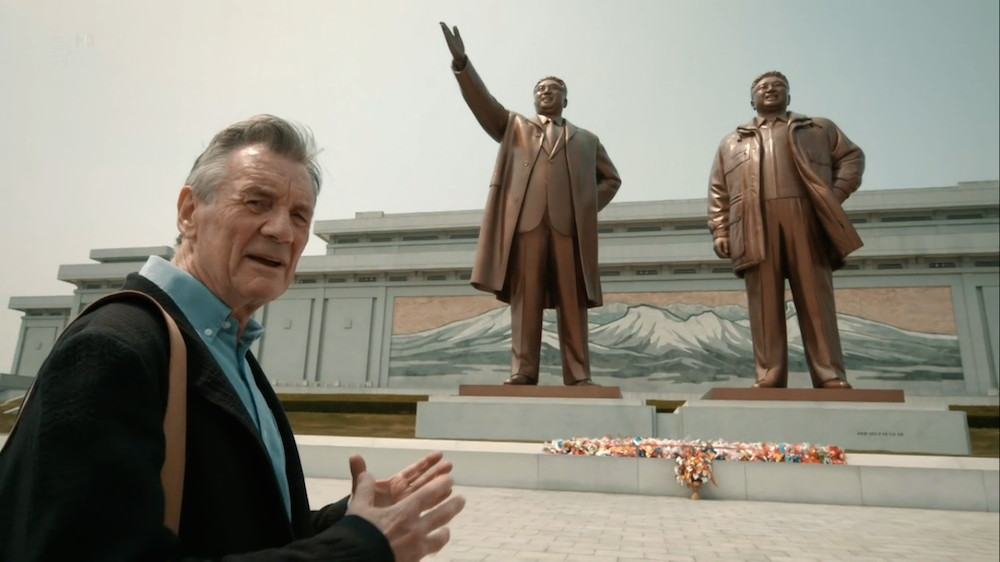
A few weeks ago I watched Monty Python’s Michael Palin toss an inflatable globe to a classroom full of North Korean schoolchildren. The sight took my mind back across the Pacific Ocean and more than a quarter-century in time, from my current home in Seoul to the childhood home in California where I first saw that same inflatable globe — or one very much like it, anyway — on Around the World in 80 Days, the series that made Palin, already long famous as a Python, a beloved television traveler as well. I’ve watched each and every one of what are now called the Palin’s Travels shows since, following along as the onetime dead-parrot salesman went from the North Pole to the South, circled the Pacific Rim, crossed the Sahara and the Himalayas both, and made his way through a great deal of the rest of the world as well.
The announcement earlier this year that Palin’s latest journey would take him into North Korea thus struck me as the logical extension of the enterprise. Any fan could sense that Palin has wanted to enter that most secretive of all countries at least since 1997’s Full Circle, whose Pacific Rim-tracing itinerary naturally included South Korea. Here he found, as he writes in the series’ companion book, a country tirelessly at work “making itself bigger,” channeling its historical resentment into an “intense commercial competitiveness” and an “almost manic drive to modernize in the international way.” Its sense of national destiny, it seemed to him, “transcends individual aspirations. Things like privacy, holidays and time off, which we value so much in the West, are considered luxuries, always ready to be sacrificed to the national effort.”
Palin’s travels took him through this country many years before I arrived, but his observations of the developmentalist South Korea in the mid-1990s, just before the Asian financial crisis took the wind out of its sails, jibes with other accounts of that time. Now, though, the bit about all the sacrifices for the national effort sounds more like a description of North Korea, which at that time Palin and his crew could barely even see over the border, let alone enter and shoot a documentary. “North Korea is not really interested in seeing you, especially if you’re from the West and carrying a film camera,” he writes in the book of his first serious obstacle to progress around the Pacific Rim. “Global glasnost has barely dented the protective shell of one of the last remaining communist dictatorships and the closest we can get to it is the Demilitarized Zone, the DMZ, which has separated the two countries since the end of the Korean War in 1953.”
Read the whole thing at the Los Angeles Review of Books.
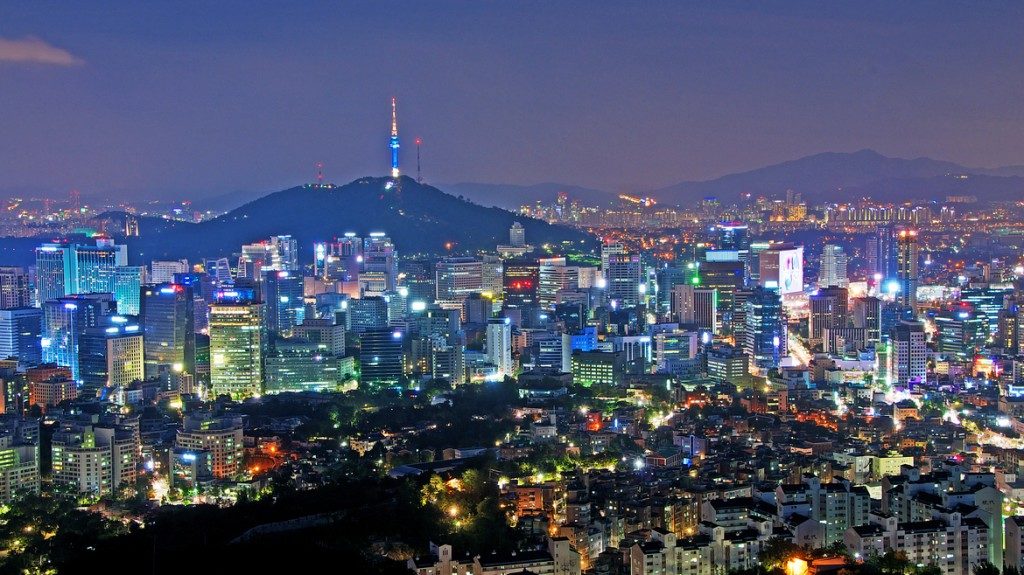
Each month for the past two years I’ve joined Kurt Achin, host of Koreascape on Seoul’s English-language radio station TBS eFM, for an exploration of one of Seoul’s urban spaces. With the end of Koreascape this month comes the end of the Seoul urbanism segment, and so we look back at all we’ve covered over the past two years. We also ask what the future holds for some of our past destinations, from the 63 Building to Ikseon-dong to Seoullo 7017 to Sewoon Sangga, and what they say about the likely direction of the city itself. Have a listen and you’ll surely gather at least a few ideas for your own urbanistic journeys in Seoul to come.
You can hear our previous explorations of Seoul’s architecture, infrastructure, and other parts of the built environment here or download them on iTunes.


