Skip to content

Just 24 hours left to fund Notebook on Cities and Culture’s Year in Seattle on Kickstarter


As of this writing, just 24 hours remain in the Kickstarter drive to fund Notebook on Cities and Culture‘s sixth season, A Year in Seattle. But we still need to raise more than $3300 before the show can go on. If you haven’t backed the season yet, you still have an opportunity to help make it happen, get postcards from Seattle, get your project or message mentioned on an episode, or even get your project or message mentioned on all the episodes — but if you want that one, you’d better hurry, since it only has two slots left.

If you’d like a taste of the season before you pledge, have a listen to its special preview episode, an interview with Seattle-based comic artist Peter Bagge, creator of Hate and author of graphic novels like Apocalypse Nerd and Woman Rebel: The Margaret Sanger Story. There’s at least 51 more where that came from, but only if we can raise that $3300 or so over the next day. Thanks.

Notebook on Cities and Culture’s Year in Seattle Preview: The Young Cynic with Peter Bagge

This is a special preview episode of A Year in Seattle, Notebook on Cities and culture’s upcoming sixth season. Or rather, it will come as long as we raise its budget on Kickstarter by Saturday. Check out its Kickstarter page to find out how you can help make it happen. Thanks.

peter bagge drawingIn downtown Seattle, Colin talks with comic artist Peter Bagge, creator of the legendary alternative comic series Hate, contributing editor and cartoonist at Reason magazine, and author of such graphic novels as Apocalypse Nerd, Other LivesReset, and Woman Rebel: The Margaret Sanger Story. They discuss whether Seattle is still the place to be for the Buddy Bradleys of the world; the cheap “place to invent yourself” he first found there; the ever-increasing importance of place in his work, and its necessity in telling longer stories; how Seattle won out as a storytelling location versus the other “cities where hipsters gather”; what Seattle once looked like from his perspective in Manhattan; the feeling of a “pioneer town” then and now; how he found Seattleites who took the time to live elsewhere differed from Seattleites who’d never left, and what it has to do with the Seattle inferiority complex; the relationship between Seattle and the alternative comics scene; how he convinced his publisher Fantagraphics to come join him in Seattle, and how the town came subsequently to crawl with cartoonists; Buddy Bradley as a young cynic, and Seattle’s accommodation of the young cynic; what the fictional life of Buddy Bradley and the real life of Margaret Sanger have in common, beginning with their premises of “doing exactly what they want to do”; which of Sanger’s many accomplishments and battles (which she never fought on straight gender lines) he usually uses to explain her life; why Sanger’s achievements in birth-control legalization became so important to all society; our transition out of “the age of stuff”; the probable fate of bookstores, and how they might succeed through the social dimension; why conventions have become more important than ever to comics, and why cities have become more important than ever to life; the impossibility of the Spokane swinger; what his visit to the depleted city of Detroit taught him, especially about the ways the government itself holds back a potential revitalization; where he thinks Seattle goes too far, politically; why he prefers the monorail Seattle might have built to the light rail system it is building; whether governments just can’t build transit right, or whether specifically American governments just can’t do it right; what happens when anyone’s shovel hits an Indian artifact in Seattle; and how to win mayoral office by campaigning against the inevitable.

Download the interview here as an MP3 or on iTunes.

The Notebook on Cities and Culture Guide to the Pacific Northwest

NCC Guide to the Pacific Northwest

The Notebook on Cities and Culture Guide to the Pacific Northwest indexes all the show’s Pacific Northwest city-recorded and Pacific Northwest city-related interviews. But 52 more Seattle interviews could appear over the next year if we successfully Kickstart season six, A Year in Seattle, before Saturday morning. Check out its Kickstarter page to find out how you can help make it happen.

Seattle:

  • Leslie Helm, former Tokyo correspondent for Business Week and the Los Angeles Times, editor of Seattle Business, and author of Yokohama Yankee: My Family’s Five Generations as Outsiders in Japan

Vancouver:

  • Paul Delany, professor of English at Simon Fraser University and editor of Vancouver: Representing the Postmodern City
  • JJ Lee, menswear writer, broadcaster, and author of The Measure of a Man: The Story of a Father, a Son, and a Suit
  • Gordon Price, Director of the City Program at Simon Fraser University and former Councillor for the City of Vancouver
  • Dave Shumka, comedian and co-host of Stop Podcasting Yourself
  • Timothy Taylor, novelist, author of Stanley Park, Story HouseThe Blue Light Project, and the short story collection Silent Cruise

Portland:

  • Camas Davis, food writer and founder of the Portland Meat Collective
  • Dan Halsted, head programmer at the Hollywood Theatre with Dan Halsted and founder of the 35mm Shaolin Archive
  • Jarrett Walker, public transit consultant and author of the book Human Transit: How Clearer Thinking About Public Transit Can Enrich Our Communities and Our Lives
  • Kevin Sampsell, publisher of Future Tense Books, editor of Portland Noir, author of the memoir A Common Pornography, and employee of Powell’s Books
  • Carl Abbott, Portland State University professor of urban studies and planning and author of Portland in Three Centuries: The Place and the People
  • Matt Haughey, founder of Metafilter
  • Mia Birk, president of Alta Planning + Design and author of Joyride: Pedaling Toward a Healthier Future
  • Mike Russell, comic artist and film critic

Marketplace of Ideas interviews:

  • Peter Bagge, Seattle-based comic artist, creator of Hate [first interview MP3] [second interview MP3]
  • Dave Weich, director of marketing and development at Portland’s Powell’s Books [MP3]
  • Ethan Rose, Portland-based electro-acoustic musician who composed for Gus van Sant’s Paranoid Mark and recorded an album with the 1920s Wurlitzer in the city’s famous Oaks skating rink [MP3]
  • John Raymond, Portland-based author of the Portland-set short story collection Livability, two of whose stories served as bases for Kelly Reichardt’s films Old Joy and Wendy and Lucy [MP3]
  • Nicholas Sherman, director of Soundtracker, a documentary on Washington-based field recordist Gordon Hempton [MP3]
  • Aaron Katz, Portland-raised filmmaker, director of the Portland-set high-school drama Dance Party USA and “Portland noir” Cold Weather [MP3]

Supplementary material:

Notebook on Cities and Culture’s Year in Seattle Kickstarts Now!

As I announced last weekNotebook on Cities and Culture‘s sixth season will take place in Seattle — for an entire year. As we together explore the city of grunge, Microsoft, Amazon, the Space Needle, Buddy Bradley, Archie McPhee, sleeplessness, and Starbucks, we’ll discover how much there really is to it in at least 52 in-depth conversations with its novelists, journalists, comic artists, filmmakers, broadcasters, explorers, academics, architects, planners, cultural creators, internationalists, observers of the urban scene, and more.

The Kickstarter drive to make it all happen begins now. But wait: the season could easily bring you more than 52 episodes, depending on how the Kickstarting goes. Once we raise the full $6000 budget, the show will go on as planned. And for every $200 we raise over that $6000, the season will include an additional episode. In other words, if we raise $10,000 rather than $6000, you’ll get 72 Seattle interviews rather than 52.

Depending upon the amount you pledge to back Notebook on Cities and Culture‘s year in Seattle, you could get a mention at the end of each episode, you could get postcards from the city, you could get me talking about your project or message at the top of one episode and its associated post, or you could get me talking about your project or message at the top of all of them and their associated posts. But do note that we only have five days to raise the money, since nobody likes prolonged Kickstarting.

Before the drive ends on Saturday at 10:00 a.m. Pacific time, I’ll put up a special preview episode featuring a new interview with a favorite Seattle-based guest from whom, if you’ve followed my interviewing career for a long time indeed, you’ve heard a couple provocative and funny hours of conversation before. Stay tuned, and pledge at season six’s Kickstarter page if you feel so inclined. Thanks!
The History of Cities in 50 Buildings: The Home Insurance Building

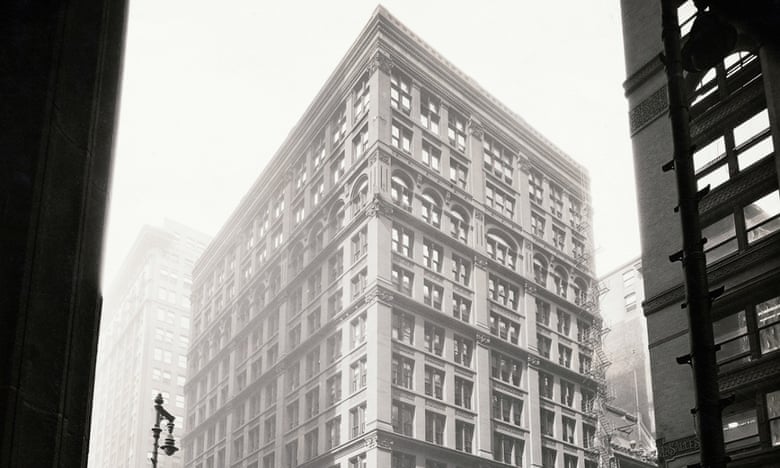
I’m writing several architectural essays for the Guardian‘s History of Cities in 50 Buildings. My first, and the series’ ninth, deals with the world’s first skyscraper, William Le Baron Jenney’s Home Insurance Building in Chicago:

It won’t surprise anybody to learn that the very first skyscraper went up in the United States, but it will surprise some to learn that it went up in Chicago. While it didn’t take Manhattan long to claim the steel-framed high-rise as its own, the skyscraper boom began in the capital of the American Midwest in 1885 with William Le Baron Jenney’s Home Insurance Building, which rose to its then-impressive height of 10 storeys (and, after an 1890 addition, 12) by means of metal, rather than just masonry.

Legend has it that Jenney, an engineer by training and an École Centrale Paris classmate of Gustave Eiffel (designer of the eponymous tower), first suspected that an iron skeleton could hold up a building when he saw his wife place a heavy book atop a small birdcage, which easily supported its weight. This opened a new chapter in the history of towers, helped by the Great Chicago Fire (in which more than three square miles of the mostly wooden central city burned to the ground in 1871), and by Chicago’s surging 1880s economy.

For obvious reasons, when the New York Home Insurance Company wanted a new Chicago headquarters in the city’s cleared-out downtown, they wanted it fireproofed – but they also wanted it tall, accommodating “a maximum number of small offices above the bank floor”. Jenney’s metal-framed design won their open contest, not only thanks to the relative fire-resistance of its materials, but to the additional protection offered by its outer iron columns, covered in stone.

Read the whole thing at the Guardian.

And Notebook on Cities and Culture’s next destination is…

ncc season six logo med

Over its past five seasons, Notebook on Cities and Culture has taken you to Los Angeles, San Francisco, Portland, Vancouver, Osaka, Kyoto (see the show’s guide to Japan), Seoul, and Busan (see the just-completed Korea Tour), to name only a few extremely interesting Pacific Rim cities. Next season, the show has another one in its sights for its most in-depth exploration yet: A Year in Seattle.

Just think of that name, and you think of the city of rain, the city of grunge, the city of Microsoft and Amazon, the city of the Space Needle, the city of Buddy Bradley, the city of Archie McPhee, the city of sleeplessness — the city of Starbucks. But having spent my own adolescence hanging out there, I know Seattle as even more than that, and it’s only grown more interesting since I’ve grown up.

So it’s time to explore, the Notebook on Cities and Culture way — through a year of in-depth conversations with Seattle’s novelists, journalists, comic artists, filmmakers, broadcasters, explorers, academics, architects, planners, cultural creators, internationalists, observers of the urban scene, and more. We’ll Kickstart the season as usual a little later this week. I certainly won’t delay in letting you know when!

Los Angeles, the City in Cinema: Speed (Jan de Bont, 1994)


Speed, the quintessential Los Angeles action movie, actually comprises not one but three Los Angeles action movies, each a contest of wills between a SWAT hot-shot and an ex-LAPD mad bomber: the first high in a downtown office tower, the second in a bus careening across town on a freeway, and the third underground in an out-of-control subway train. No action movie before or since — and certainly no other so transit-oriented — has taken more advantage of Los Angeles’ mixture of horizontality and verticality as well as its vast size and seemingly perpetual incompleteness.

The video essays of “Los Angeles, the City in Cinema” examine the variety of Los Angeleses revealed in the films set there, both those new and old, mainstream and obscure, respectable and schlocky, appealing and unappealing — just like the city itself.

Presenting the Notebook on Cities and Culture Guide to Japan

ncc japan guide header

The Notebook on Cities and Culture Guide to Japan indexes all the show’s Japan-recorded and Japan-related interviews. Stay tuned for much more and about the Land of the Rising Sun.


Osaka:

Kyoto:

Nara:

  • Pico Iyer, author of Video Night in Kathmandu, The Lady and the Monk, The Global Soul, and most recently The Man Within My Head
  • Christopher Olson, artist, critic, and teacher

Kobe:

  • Tim Olive, guitarist, improviser, and sound artist

Los Angeles:

  • Todd Shimoda, author of “philosophical mystery” novels with science, engineering, Japanese and Japanese-American themes (this interview covers Subduction)
  • Roland Kelts, visiting scholar and lecturer at the University of Tokyo, contributing editor to literary journals A Public Space and Japan’s Monkey Business International, and author of Japanamerica: How Japanese Pop Culture Has Invaded the U.S
  • Leslie Helm, former Tokyo correspondent for Business Week and the Los Angeles Times and author of Yokohama Yankee: My Family’s Five Generations as Outsiders in Japan
  • Dan Kuramoto, founding member of the band Hiroshima
  • Eric Nakamura, founder of Asian-American aesthetic culture and lifestyle brand Giant Robot

Marketplace of Ideas interviews:

  • John Nathan, translator of Yukio Mishima and Kenzaburō Ōe, filmmaker, and author of the memoir Living Carelessly in Tokyo and Elsewhere [MP3] [MP3]
  • Ian Buruma, writer, documentarian, Henry R. Luce Professor of Human Rights and Journalism at Bard College, and author of The China Lover, a historical novel examining on life and career of Manchurian-born Japanese actress Yoshiko Yamaguchi [MP3]
  • Kim Richardson, executive producer at The Criterion Collection and producer of box set Pigs, Pimps and Prostitutes: Three Films by Shohei Imamura [MP3]
  • Nick Currie, a.k.a. Momus, musician, writer, artist, “avant-gardist,” and Osaka resident [MP3]
  • Todd Shimoda, author of “philosophical mystery” novels like 365 Views of Mt. Fuji, The Fourth Treasure and now Oh!: A Mystery of Mono No Aware [MP3]

Notebook on Cities and Culture’s complete Korea Tour

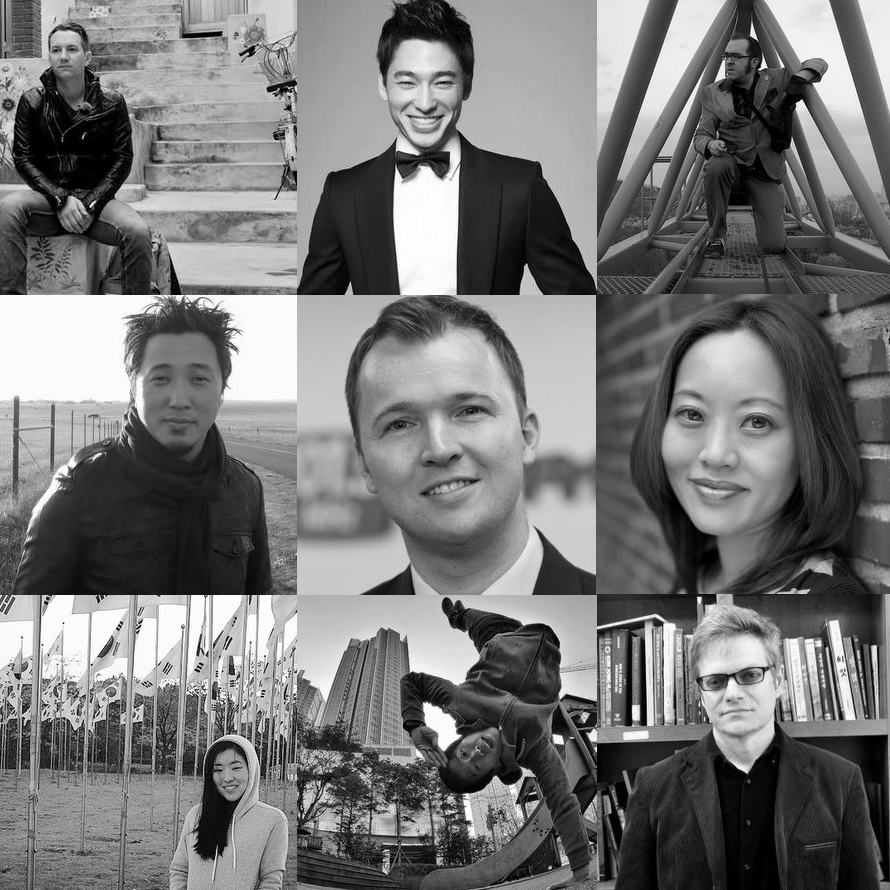
Korea Tour guest images Boing BoingYou can download every individual interview by following the links below:

  • Hyunwoo Sun, founder of the Talk to Me in Korean language-learning podcast empire
  • Bernie Cho, president of DFSB Kollective, a creative agency that provides digital media, marketing, and distribution services to Korean pop music artists
  • Laurence Pritchard, writer, teacher, enthusiast of Korean literature, and “English gentleman”
  • Mark Russell, author of the books Pop Goes Korea, K-Pop Now!, and Young-hee and the Pullocho
  • Mipa Lee, proprietor of Itaewon’s vegan (!) bake shop and café PLANT and author of the blog Alien’s Day Out
  • Marc Raymond, film scholar, teacher at Kangwoon University, and author ofHollywood’s New Yorker: The Making of Martin Scorsese
  • Adrien Lee, French-Korean host of Arirang TV’s Showbiz Korea and Arirang radio’sCatch the Wave
  • Michael Breen, author of The Koreans: Who They Are, What They Want, Where Their Future Lies
  • Stephen Revere, CEO of 10 Media, co-founder and managing editor of 10 Magazine, author of two Survival Korean books, and for three years the teacher on Arirang television’s Let’s Speak Korean
  • Open Books acquiring editor Gregory Limpens
  • Charlie Usher, author of the blog Seoul Sub→urban and the book 찰리와 리즈의 서울 지하철 여행기 (Charlie and Liz’s Seoul Subway Travelogue)
  • Danny Crichton, researcher and writer on regional innovation hubs and a contributing writer for TechCrunch
  • Darcy Paquet, critic of Korean film, founder of koreanfilm.org and the Wildflower Film Awards, author of New Korean Cinema: Breaking the Waves, teacher, and occasional actor
  • Stephane Mot, “conceptor,” writer of fiction, nonfiction, “nonsense,” and author of the blog Seoul Village as well as the collection Dragedies
  • Jon Dunbar, urban explorer, editor of long-running Korean punk zine Broke in Korea, and author of Daehanmindecline
  • Nikola Medimorec, co-author of Kojects, an English-language blog on transport, urban planning, and development projects around Korea
  • Chance Dorland, host of TBS eFM’s “Chance Encounters” segment and the podcasts Chance and Dan Do Korea
  • Keith Kim, creator of the travel and culture site Seoulistic
  • Steve Miller, creator of the Asia News Weekly podcast and the vlogger formerly known as QiRanger
  • Charles Montgomery, editor of the site KTlit.com and global ambassador of Korean literature in translation
  • Alex Jensen, host of weekday news show This Morning on TBS eFM
  • Daniel Gray, creator of the site Seoul Eats, proprietor of craft beer restaurants Brew 3.14π and Brew 3.15π
  • Barry Welsh, host of the Seoul Book & Culture Club and Seoul Film Society
  • Writer Krys Lee, author of the acclaimed short story collection Drifting House
  • Literary translator Bruce Fulton
  • North Korea analyst B.R. Myers, author of A Reader’s Manifesto and The Cleanest Race: How North Koreans See Themselves and Why It Matters
  • James Turnbull, author of The Grand Narrative, a blog on Korean feminism, sexuality, and popular culture
  • Broadcaster, teacher, rapper, and television star Chad Kirton (a.k.a. Fusion)
  • Jeff Liebsch, managing editor and partner at the magazine Busan Haps
  • Sofía Ferrero Cárrega, film critic and enthusiast of Korean cinema
  • Changwon bikeshare system outreach coordinator Coby Zeifman
  • Daniel Tudor co-founder of craft beer pizza pub chain The Booth, author of Korea: The Impossible CountryA Geek in Korea, and (with James Pearson) North Korea Confidential
  • Andrew Salmon, author of To the Last Round: The Epic British Stand on the Imjin River, Korea 1951Scorched Earth, Black Snow: Britain and Australia in the Korean War, 1950; and All That Matters: Modern Korea
  • Michael Elliott, creator of the English-learning site for Koreans English in Korean and the Korean-learning site for English-speakers Korean Champ
  • Architect Minsuk Cho, principal at Mass Studies, designer of the Golden Lion-winning Korean pavilion at the Venice Architecture Biennale 2014
  • Matt VanVolkenburg, author of Gusts of Popular Feeling, a blog on “Korean society, history, urban space, cyberspace, film, and current events, among other things”
  • Brother Anthony of Taizé, renowned translator of Korean poetry, president of the Royal Asiatic Society Korea Branch, and naturalized citizen of South Korea

Supplementary material:

Notebook on Cities and Culture’s Korea Tour: Opting for Korea with Brother Anthony

Brother Anthony 2Notebook on Cities and Culture‘s Korea Tour is brought to you by Daniel Murphy, David Hayes, and The Polar Intertia Journal, an outlet for artists and researchers documenting the urban condition.

In an officetel in Seoul, Colin talks with Brother Anthony of Taizé, one of the most renowned translators of Korean poetry, president of the Royal Asiatic Society Korea Branch, and naturalized citizen of South Korea. They discuss the frequency with which he’s heard “Why Korea?” in the 35 years since he first arrived as a member of Taizé; the Korean lack of belief that anybody would actually opt for Korea rather than their own homelands; what fills Korean taxi drivers with strong opinions; Korea’s aging rural population versus Japan’s even more aging rural population; the Seoul he arrived in in 1980, and how it compared with the Philippine slum in which he’d spent years previous; the “trickery and violence” involved in the city’s redevelopment; how a “shame culture” deals with modernization (and especially with thatched roofs); how Japanese society accommodates a kind of “nonconformism” that Korean society doesn’t; how he began translate Korean poetry, and why he got into poetry rather than other forms of Korean literature; how Korean fiction came into being after the war, and what it often lacks; how the concept of separation has been expressed as “the great Korean thing,” and younger Korean writers’ desire to get away from it; why “Koreans can’t speak Korean”; the endless pattern drills he endured while studying Korean at Yonsei University; how he began “doing tea,” and where in Asia the interest has taken him; how China has used Korea as a developmental model; why he isn’t sure he wants to live in a “fascinating country”; how some foreigners love traditional Korean music and architecture while most Koreans themselves don’t; whether Korea can gain the confidence it has long lacked; why we should rightfully be able to ride the train from Busan to Paris.

Download the interview here as an MP3 or on iTunes.